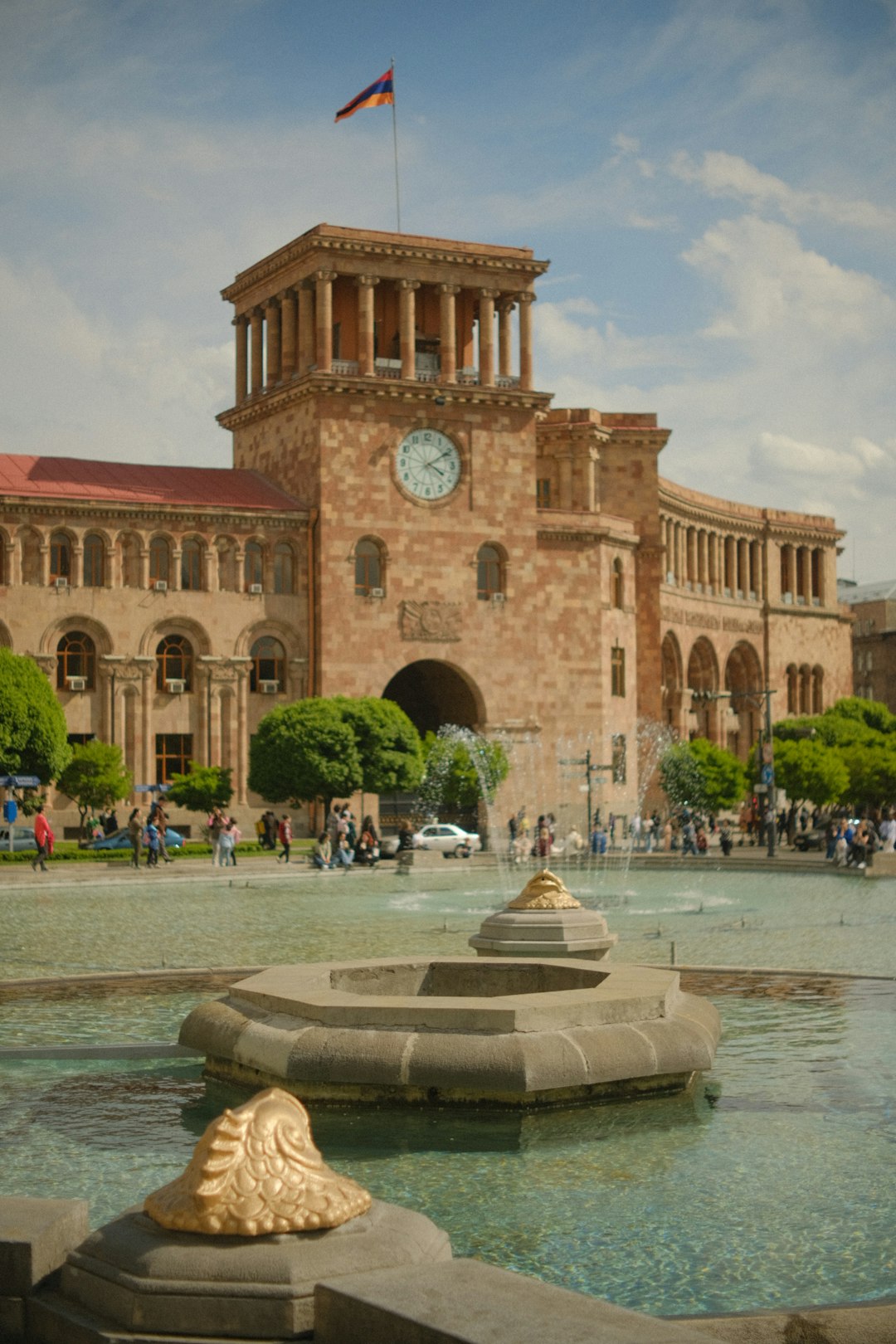
Yerevan is one of the oldest continuously inhabited cities on Earth - and one of the most liveable. Built from the distinctive pink and orange volcanic tuff that gives it its nickname (“the Pink City”), the capital sits at 1,000 metres altitude on the Ararat plain, with a view of Ararat itself on a clear day, the mountain standing across the Turkish border 50 km to the southwest. For where to eat while you’re here, see our Yerevan eating out guide, and for a place to stay, our where to stay in Yerevan guide covers neighbourhoods and hotel recommendations.
The city is compact, walkable, and packed with things to see and do - from UNESCO-linked architecture and genocide memorials to brandy distilleries, manuscript museums, and wine bars. A long weekend is enough to cover the essentials; a week turns Yerevan into a base for exploring the broader country.
For guided options, browse Yerevan tours and activities - most of the city’s best experiences can be joined with an English-speaking guide, and several operators run combination tickets.
Republic Square: The Heart of the City
Republic Square is the centrepiece of Yerevan - an enormous oval plaza ringed by six matching neoclassical buildings faced in Armenian tuff, all designed by architect Alexander Tamanian and constructed across the Soviet era. The scale is theatrical: the buildings are large enough that the proportions only fully register when you’re standing in the middle.
The square’s singing fountains are the main evening spectacle. Illuminated in colour and set to music - a rotating programme of Armenian folk songs, classical pieces, and the occasional Soviet-era waltz - the shows run on the hour from around 21:00 in summer. Entry is free; arrival by 20:30 secures a decent vantage point.
On the eastern side of the square, the History Museum of Armenia (entry approximately AMD 1,500 as of 2026) holds a strong collection covering Armenian history from the Stone Age through to the 20th century, including an impressive hall of khachkars (medieval Armenian cross-stones) and artefacts from the Urartu kingdom that predates Rome. Allow 1.5–2 hours.
The square itself - the walking, the people-watching, the coffee from one of the surrounding cafe terraces - is one of those places that rewards time spent doing nothing in particular.
The Cascade: Art, Architecture, and Ararat Views
The Cascade is a giant staircase-monument cut into the hillside north of the city centre - 572 steps connecting the lower city to the Haghtanak Park at the top. It is also, unexpectedly, one of the better open-air art collections in the South Caucasus.
The sculptures along and in front of the Cascade are part of the Cafesjian Center for the Arts, donated by Armenian-American businessman Gerard Cafesjian. Colombian sculptor Fernando Botero’s characteristically rotund bronze figures are the most immediately recognisable - several are scattered across the lower terraces and in the adjacent gardens. Access to the outdoor sculptures is free.
Inside the Cascade itself, escalators rise through enclosed galleries displaying a rotating programme of contemporary Armenian and international art. The interior museum level (entry approximately AMD 1,000 as of 2026) gives access to the gallery spaces within the structure. The full climb by foot takes about 20 minutes - the escalators inside the monument also operate during opening hours, which eases the ascent if you want to save legs for the top.
From the summit, on a clear morning (early spring and late autumn give the sharpest conditions), Mount Ararat is visible directly to the south - the snow-capped cone of Greater Ararat (5,137 m) and the smaller cone of Lesser Ararat beside it, across what is now Turkish territory. The combination of the city spreading below and Ararat beyond is the defining Yerevan panorama. Arrive before 11:00; cloud builds around the peak through the afternoon.
Vernissage Market: Souvenirs, Antiques, and Crafts
Vernissage (the name comes from French art exhibition tradition) is Yerevan’s weekend outdoor market, running Friday evening through Sunday on a pedestrianised block near Republic Square. It is one of the most enjoyable markets in the region - densely stocked with antiques, Soviet-era memorabilia, handmade jewellery, carved wood, ceramic tiles, paintings, lace, carpets, and an enormous supply of Armenian cognac bottles and decorative trinkets.
Best days: Saturday and Sunday, when the market is at full capacity. Friday evenings are quieter but the vendor count is lower.
What to look for: Handmade silver jewellery incorporating pomegranate motifs (the national symbol), khachkar carvings in tuff and wood, hand-painted miniatures on stone and ceramic, and vintage Soviet badges and medals (no export restrictions, unlike in some other post-Soviet countries). Prices are negotiable on most items but sellers are generally fair to begin with.
Bring cash (AMD). Most stalls don’t take cards, and ATMs are scarce immediately around the market site. The adjacent Cascade gardens make a good follow-up to the market.
Ararat Brandy Factory: Cognac, Heritage, and a Serious Tasting
The Ararat Brandy Factory - formally the Yerevan Brandy Company - has been producing Armenian brandy since 1887 and is the source of one of the world’s most recognised regional spirits. Winston Churchill famously requested cases of Ararat brandy at the Yalta Conference; the distillery now commemorates this in its tours.
Tours run daily at fixed times (book in advance through the official website - the Yerevan Brandy Company website or via your hotel concierge). The entry price ranges from approximately AMD 5,000 to AMD 15,000 as of 2026, with the higher tiers including multi-year aged expressions and a more extensive tasting flight. The tour itself covers the barrel halls (with barrels stacked floor-to-ceiling), the history of the company, and a tasting session of 2–5 expressions depending on the package.
The distillery is on Admiral Isakov Avenue, south of the city centre - approximately AMD 1,000–1,500 by taxi from Republic Square.
Note on Armenian “cognac”: Armenia produces what it calls “konyak” (cognac) - a term that technically belongs only to the Cognac AOC in France, though Armenian producers predate the EU protected designation era. The product is a grape brandy aged in oak, with a distinctive sweetness from the local varieties. Our Armenian brandy and wine guide covers the full Ararat range by age expression, tasting notes, what to buy, and the Areni wine region south of Yerevan.
Tsitsernakaberd Genocide Memorial
Tsitsernakaberd - “fortress of swallows” - is the memorial complex dedicated to the 1.5 million Armenians killed in the Ottoman genocide of 1915–1923. It stands on a hill northwest of the city centre and is the most important historic site in Yerevan in terms of national significance.
The memorial itself consists of two elements: a 44-metre-tall stele (representing the divided Armenian nation) leaning over an eternal flame burning within a sunken ring of 12 stone slabs representing the lost provinces of Western Armenia. The design is austere and powerful. Entry to the memorial grounds is free.
The adjacent Armenian Genocide Museum-Institute (entry approximately AMD 1,000 as of 2026) holds extensive documentation, photographs, personal testimony, and international recognition materials covering the genocide and its aftermath. Allow 1.5–2 hours minimum. The museum is well curated, with English translations throughout, and takes a serious scholarly tone.
Approach respectfully: this is an active place of mourning, not a tourist attraction in the conventional sense. Photography is generally permitted in the outdoor memorial area; check museum rules inside. Tsitsernakaberd is approximately a AMD 1,500–2,000 taxi ride from the city centre.
Opera House and Northern Avenue: Evening Stroll
The Armenian National Academic Theatre of Opera and Ballet is a grand Soviet-era building anchoring the north end of Northern Avenue - Yerevan’s main pedestrianised shopping and cafe boulevard. The Opera House itself is active (check the programme at armopera.am for current performances; tickets from approximately AMD 3,000 as of 2026) but even if you’re not attending a show, the surrounding park and square make a pleasant evening circuit.
Northern Avenue (Hiusisayin Prospekt) runs south from the Opera House to Republic Square - a wide, tree-lined pedestrian promenade with outdoor cafe tables, restaurants, and a gentle evening crowd. It’s Yerevan at its most relaxed: families, couples, street musicians.
Blue Mosque: Persian Architecture in a Christian Capital
The Blue Mosque - Goy Masjid - is the only functioning mosque in Yerevan and one of the most architecturally distinctive buildings in the city. Built in 1765 during the Persian Khanate of Yerevan, it predates Russian imperial rule and the modern Armenian Republic. The tiled courtyard, arched porticos, and blue-tiled dome are the most authentically Persian building in the South Caucasus outside Iran itself. Entry is free. Dress code applies: shoulders and knees covered; head covering required for women (scarves available at the entrance).
The mosque is a functional place of worship, maintained by the Iranian cultural community in Yerevan. Visiting outside prayer times is standard practice; shoes are removed at the entrance.
Kond Neighbourhood
Kond is the oldest surviving district of Yerevan - a hillside neighbourhood of narrow alleys, low stone houses, and staircase lanes that cascades down the slopes above the Hrazdan Gorge. While most of central Yerevan was rebuilt in the Soviet era, Kond preserves fragments of the older city fabric.
It is a working neighbourhood, not a tourist zone - no cafés, no signage, no gift shops. Walking through Kond takes 30 to 45 minutes and is completely free. The experience is simply the contrast: a few minutes from Republic Square, you are on a dirt lane between century-old stone walls. Best approached from the eastern end, entering from the streets above the Hrazdan Gorge. A short taxi or 25-minute walk from the centre.
Mother Armenia Statue and Victory Park
Victory Park sits on a plateau above the Hrazdan Gorge on the western side of the city centre. The park is centred on the Mother Armenia statue - a 22-metre female figure holding a sword aloft, installed in 1967 on the same plinth that once held a Stalin statue. The view from the platform looks directly south over central Yerevan and, on a clear day, towards Mount Ararat.
Directly beneath the statue is the Military Museum, housing exhibits on the 1915 Armenian Genocide, the Soviet period, and the Nagorno-Karabakh conflict. Entry is free; the museum’s tone is sombre and the content serious. The park itself is free and open all hours. To reach it from the centre, take the metro to Yeritasardakan station and walk uphill, or take a short taxi of approximately AMD 800–1,200.
GUM Market: Armenian Food Culture Concentrated
The GUM Market (officially the Tashir covered market, colloquially GUM from the Soviet-era name) is the best food market in Yerevan and one of the most atmospheric covered markets in the region. Inside the multi-storey building on Mashtots Avenue, hundreds of stalls sell dried fruits, nuts, spices, pickled vegetables, fresh herbs, cheese, honey, and the full spectrum of Armenian preserved food culture.
What to try or buy:
- Sujukh (also spelled sudjuk) - walnuts threaded on strings and dipped in grape must, dried to a firm, sweet, intensely flavoured cylinder. Unique to Armenia and the South Caucasus; extraordinarily good. Sample before buying; quality varies between stalls.
- Dried fruits: Apricots (Armenia’s most important fruit; the word “apricot” derives from the Latin for “Armenian plum”), mulberries, figs, plums - all sold loose by weight.
- Churchkhela - similar to sujukh but made with other nuts in various nut-and-fruit-paste combinations.
- Spices and herbs: Dried thyme, coriander, fenugreek, and Armenian red pepper blends, sold loose at dramatically lower prices than anything in a Western supermarket.
- Lavash: The fresh, paper-thin Armenian flatbread, UNESCO-listed, sold by the sheet. Best eaten immediately.
The market is at its busiest on Saturday and Sunday mornings. Vendors are generally willing to offer samples before a purchase. To navigate the GUM Market and the city’s best food stops with a guide, see our Yerevan food tours guide for operators, prices, and what each tour covers.
Matenadaran: Ancient Manuscripts Museum
The Matenadaran Institute of Ancient Manuscripts sits at the top of Mashtots Avenue, its severe monumental exterior giving way to an interior holding one of the most significant collections of medieval manuscripts in the world - over 23,000 documents in Armenian, Arabic, Persian, Greek, Hebrew, and Syriac.
Entry approximately AMD 1,500 as of 2026. The permanent collection displays rotating highlights from the archive, including illuminated Gospels from the 13th century, scientific and philosophical manuscripts, and the earliest known example of Armenian writing. English audio guides are available; the museum also runs guided tours in English at set times - check the schedule at matenadaran.am.
Allow 1–1.5 hours. The collection is smaller in scale than a major national museum but remarkably concentrated - the artefacts on display are genuinely extraordinary.
Saryan Street: Wine Bars and the Yerevan Evening
Saryan Street, a few blocks east of Republic Square, has become Yerevan’s wine bar district - a short stretch of pavement tables, cave-like wine bars, and casual restaurants that fills up from around 19:00. Armenian wine is made from indigenous grape varieties (Areni, Voskehat, Kangun) that produce wines entirely unlike anything from France or Italy - earthy, tannic, with high natural acidity. Prices are excellent by any standard. To go deeper into wine country itself, our Armenia wine tour guide covers the Areni region and winery visits south of Yerevan.
What to expect: A glass of wine from approximately AMD 1,500 as of 2026; bottles from approximately AMD 5,000–12,000 for good-quality domestic producers. Most bars have food menus - cheese plates, charcuterie, lavash, small plates of Armenian starters. The atmosphere is convivial and relaxed; English is spoken in most establishments.
Wine bars worth looking for on or near Saryan Street include In Vino, Vino Underground, and several smaller venues that open and close seasonally. Ask your hotel for current recommendations - the street changes faster than any guide.
Top Guided Experiences in Yerevan: Prices at a Glance
Yerevan’s best-rated bookable experiences through GetYourGuide, with free cancellation. Prices are per person and approximate as of 2026 (AMD converted at approximately 400 AMD per USD).
| Experience | Duration | USD | AMD | What’s Included |
|---|---|---|---|---|
| Yerevan Walking City Tour with Brandy & 5 Wines | 3 hrs | from $21 pp | ~8,400 AMD | Cascade, Republic Square, local guide, Armenian brandy, wine tastings |
| Ararat Brandy Factory Tasting Experience | 2 hrs | from $55 pp | ~22,000 AMD | Guided tour, premium brandy tasting, local delicacy pairings |
| Best of Yerevan Private Cultural Walking Tour | 3 hrs | from $97 pp | ~38,800 AMD | Private guide, Opera House area, city history, flexible pace |
| Yerevan Food & Market Walking Tour | 3 hrs | from $45 pp | ~18,000 AMD | GUM Market, lavash bakery, neighbourhood restaurants, 8–10 tastings |
| Armenian Cooking Class | 3 hrs | from $70 pp | ~28,000 AMD | Hands-on dolma and lavash, shared meal with host family |
The brandy factory tour and city walking tours are the two highest-rated experiences in Yerevan on GetYourGuide, consistently rated 4.8–4.9 out of 5.
Browse all Yerevan tours and check availability →
Practical Information
Getting around: The city centre is walkable for most attractions. Taxis are cheap - approximately AMD 500–1,000 per short journey using the GG (Get a Go) app. The Yerevan metro runs north-south through the city and serves Gortsaranain station (useful for Vernissage Market) and Northern Avenue, though most tourists find taxis faster.
Currency: AMD (Armenian dram). Exchange rates at banks and airport are fair. ATMs are plentiful throughout the centre. Most restaurants and larger shops take cards.
Language: Armenian. Russian is widely understood among older residents. English is increasingly common in the city centre, particularly among younger staff in hotels, restaurants, and tour operations.
Best season: April through June and September through October for mild temperatures, clear skies, and Ararat views. July and August are hot (35°C+ is possible) but the city remains active; evenings cool pleasantly. November through March is cold with some snow; the Cascade and fountains reduce their hours.
For day trips beyond the city, see our complete guide to day trips from Yerevan covering Garni, Geghard, Khor Virap, Lake Sevan, and Noravank. For a full picture of the city - neighbourhoods, transport, and accommodation - see the Yerevan destination overview.