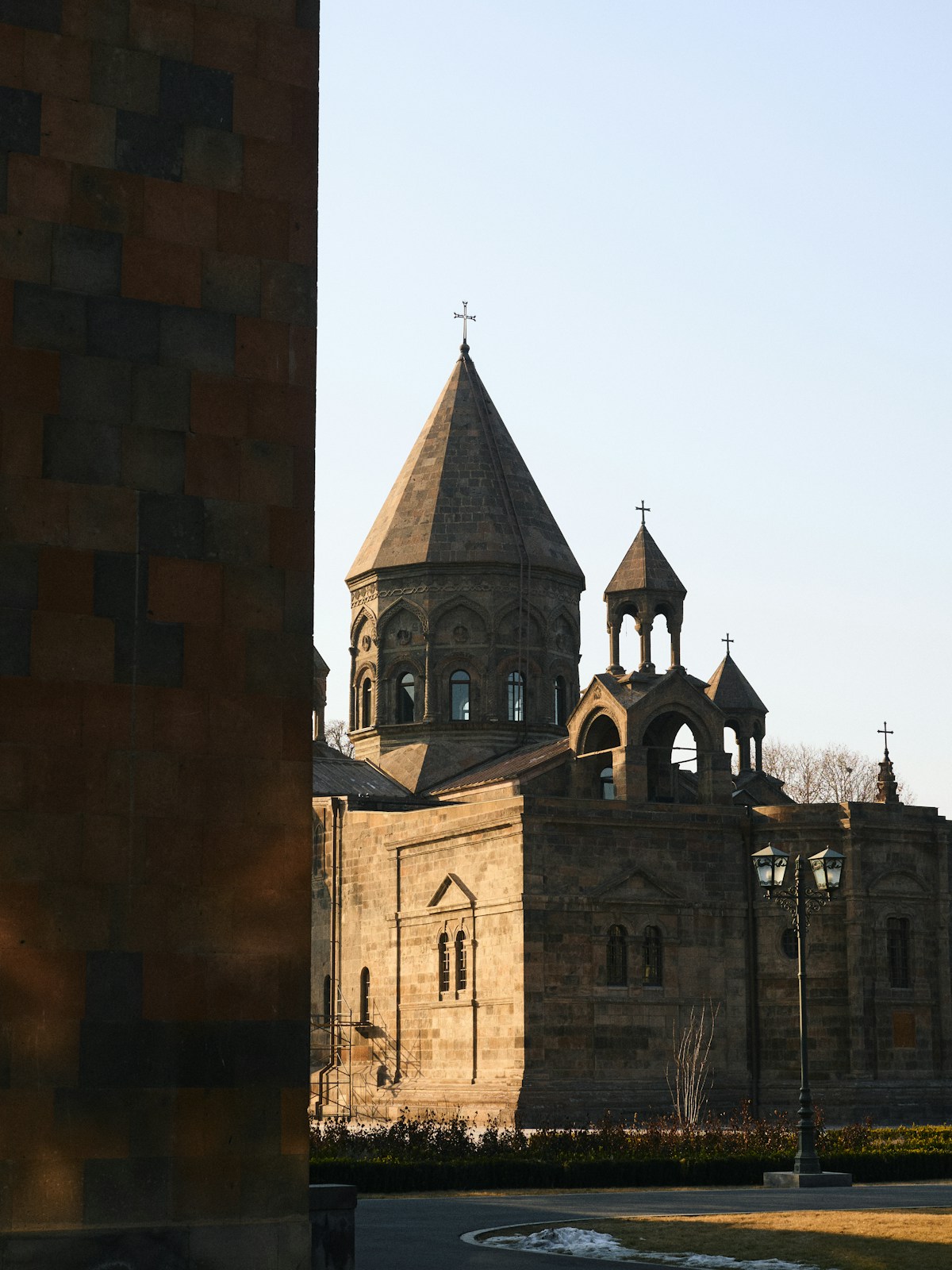
Etchmiadzin - officially Vagharshapat, though known to Armenians by its sacred name meaning “the Only Begotten descended here” - is the spiritual capital of the Armenian Apostolic Church and one of the oldest Christian centres in the world. Located 20km west of Yerevan, the city has been the seat of the Catholicos (patriarch) of the Armenian Church since the 4th century, and the cathedral complex at its heart holds UNESCO World Heritage status alongside the nearby ruins of Zvartnots.
For the combination of religious depth, architectural age, and direct connection to Armenian identity, Etchmiadzin is among the most significant day trips you can make from Yerevan.
Prices and fees in this guide are approximate as of 2026.
Why Etchmiadzin Matters
Armenia became the first nation-state to adopt Christianity as its official religion, in 301 AD under King Tiridates III and the missionary Gregory the Illuminator. According to tradition, Gregory received a vision of the Only Begotten Son descending and striking the ground at the site where the cathedral now stands - which is how the city got its name. The original church was built directly on that spot, making Etchmiadzin not merely old but foundational to the Armenian national and religious identity.
The Armenian Apostolic Church has roughly 9 million adherents worldwide, with large diaspora communities in the United States, Russia, France, and the Middle East. The Catholicos of All Armenians, based at Etchmiadzin, is the supreme head of the global church. Visiting the complex gives a sense of the weight that Armenian Christianity carries - this is not a heritage site at arm’s length from its living religion. Clergy, pilgrims, and seminarians are present throughout.
Mother Cathedral (Mayr Tachar)
The Mother Cathedral is the centrepiece of the complex and claims to be the oldest cathedral in the world built as a national church. The earliest structure dates to 301–303 AD; the current building reflects extensive reconstruction in the 5th century and again in the 17th century, when the present bell tower and exterior were largely established. The interior is dark and heavily gilded, with carved stone columns, ancient khachkars (cross-stones) built into the walls, and a series of frescoes added in the 17th–18th centuries.
The altar is built over the spot where, by tradition, Gregory received his vision. A small well beneath it - closed to casual visitors but visible through a grate - marks the site. The cathedral’s exterior is faced in tuff stone in warm terracotta hues, with four conical dome-towers around the central drum.
Entry to the cathedral is free. Dress modestly; a headscarf is expected for women. Avoid weekday morning services if you want to explore quietly - pilgrimage groups are large and vocal.
St Hripsime Church
A ten-minute walk from the main cathedral, St Hripsime Church (618 AD) is one of the masterpieces of early Armenian architecture and forms part of the UNESCO designation. Built by Catholicos Komitas over the tomb of the Christian martyr Hripsime - one of a group of women who fled Roman persecution to Armenia and were killed on the order of King Tiridates - the church has the taut, geometric quality of the best 7th-century Armenian building. The drum and conical dome, the carved stone blind arches, and the clean proportions make it feel both ancient and precise.
The interior is austere: plain stone walls, carved column capitals, and a single central space. The crypt below holds what are believed to be Hripsime’s relics. Entry is free.
St Gayane Church
St Gayane Church (630 AD) is a few minutes’ walk in the opposite direction from the cathedral. It was built over the tomb of another of the martyred women who came with Hripsime. Smaller and simpler than Hripsime, it is often overlooked - which means it is usually quiet when the main complex is busy. The same clean architectural lines apply, and the carved relief work around the entrance portal is well preserved. Entry is free.
The Etchmiadzin Museum
Adjacent to the main cathedral, the Etchmiadzin Museum holds the most important collection of Armenian Christian relics and sacred objects outside of the major diaspora collections. The centrepiece is the Holy Lance (Geghard) - the spear said to have pierced Christ’s side, brought to Armenia by the Apostle Thaddeus. Whether or not one accepts the attribution, the object and its mounting are extraordinary in their age and craftsmanship.
Other highlights include:
- A fragment of Noah’s Ark (the original, carried down from Ararat - this is a serious claim in Armenian tradition)
- Relics of saints Gregory the Illuminator and John the Baptist
- A large collection of illuminated manuscripts (some originals, many facsimiles - the originals are at the Matenadaran in Yerevan)
- Vestments and liturgical objects dating from the medieval period
- A display on the history of the Armenian Apostolic Church
Museum entry costs approximately 1,500 AMD per adult as of 2026. The museum is typically closed on Mondays. English signage is partial; an audio guide or knowledgeable guide significantly improves the visit.
Zvartnots Cathedral Ruins
Three kilometres east of the Etchmiadzin complex (easily reachable by taxi for approximately 500–700 AMD, or a 35-minute walk), Zvartnots Cathedral is among the most architecturally ambitious buildings ever constructed in Armenia - and one of the most dramatic ruins. Built by Catholicos Nerses III between 643 and 652 AD, the original structure was a circular, three-tiered rotunda with a diameter of roughly 35 metres, rising to perhaps 45 metres at its peak. Nothing like it existed in the region.
It stood for only around 300 years before collapsing - probably in a 10th-century earthquake. The ruins lie scattered across a wide area, but the foundations of the circular plan are clearly visible, and large fragments of carved column capitals, relief eagles, and decorative stonework are preserved in the small on-site museum. UNESCO listed Zvartnots alongside the Etchmiadzin churches as part of the same World Heritage designation in 2000.
Entry to Zvartnots costs approximately 1,500 AMD per adult as of 2026. The site is open daily, roughly 10:00–18:00. The surrounding plateau has excellent views of Mount Ararat on clear days.
Getting There from Yerevan
By marshrutka: Marshrutkas to Vagharshapat depart from Kilikia bus station (near Sasuntsi Davit metro, also known as Kilikia auto station). Services run frequently throughout the day, cost approximately 300 AMD per person, and take around 30 minutes as of 2026. Tell the driver Etchmiadzin or Mayr Tachar (Mother Cathedral). The drop-off is typically near the central church square, a short walk from the complex.
By taxi: A taxi from central Yerevan costs approximately 2,500–4,000 AMD one way as of 2026. GG Taxi and Yandex apps work well for this route. If you plan to visit both Etchmiadzin and Zvartnots, negotiate a return fare with stops - approximately 8,000–12,000 AMD for the full circuit with waiting time.
By tour: Most Yerevan tour operators include Etchmiadzin in their day-trip circuits, often combined with Khor Virap and Zvartnots. Shared tours cost approximately 10,000–18,000 AMD per person as of 2026.
Where to Eat Near the Cathedral
The streets around the complex have a handful of decent options:
- Harsnadzor Restaurant - large, traditional Armenian menu; popular with pilgrimage groups; approximately 3,000–7,000 AMD for a full meal. 10-minute walk from the cathedral entrance.
- Kchuch (various), near the main square - kchuch is a clay-pot stew of lamb, vegetables and herbs, a regional staple; several small restaurants serve it for approximately 1,500–2,500 AMD per pot as of 2026.
- Dolma Café, near the Hripsime Church - a simple local café with stuffed vegetables, lavash, and good Armenian coffee; approximately 1,000–2,000 AMD for a meal.
The complex itself has a small café near the museum entrance selling cold drinks and coffee. Prices are higher than outside the walls - stock up before you enter if visiting in summer heat.
Combining with Khor Virap and Zvartnots
The logical day trip from Yerevan pairs Etchmiadzin with:
- Zvartnots Cathedral ruins (3km away, 20–30 minutes by car/taxi) - covered above; add 1.5–2 hours
- Khor Virap (40km south along the Ararat plain, 45 minutes from Etchmiadzin by car) - the monastery above the pit where Gregory the Illuminator was imprisoned for 13 years before converting King Tiridates; the view of Mount Ararat from its ramparts is one of Armenia’s defining photographs
A car or taxi makes the Etchmiadzin–Zvartnots–Khor Virap circuit easy in one day. Public transport connections between the three sites are poor - the marshrutka from Yerevan only reliably serves Etchmiadzin; Zvartnots and Khor Virap require either a taxi or tour. For a fully planned day with timings and transport logistics mapped out, see our Etchmiadzin day trip itinerary.
Best Time to Visit
April through October is ideal. The complex is pleasant year-round, but summer (June–August) can be crowded on weekends when large pilgrimage groups arrive. Arriving before 10:00 or after 16:00 avoids the worst of the crowds.
Christmas (January 6) is the most significant date in the Armenian Apostolic calendar and is celebrated at the Mother Cathedral with services, choir singing, and large gatherings of clergy and laity. If you are in Yerevan in early January, the atmosphere at Etchmiadzin on the 6th is extraordinary - though the crowds are large.
Easter (Zatik) at Etchmiadzin is similarly atmospheric, with candlelit night services and outdoor processions.
Practical Notes
- Photography is generally permitted in the complex grounds and churches; avoid photographing during active services
- The complex is accessible from the western side via the main ceremonial entrance gate; taxis can drop directly outside
- ATM and exchange points are available in Vagharshapat town centre, 5 minutes’ walk; the complex itself is cash-only for museum entry
- The museum gift shop sells quality reproductions of Armenian illuminated manuscripts, cross-stones, and jewellery - one of the better souvenir collections in the country
- Service times on Sunday mornings mean the cathedral interior is effectively closed to tourists 09:30–12:00; plan around this
Entry to the main cathedral complex is free; guided tours that cover the UNESCO heritage context are available through Yerevan day tours. Etchmiadzin is 20 km from Yerevan - shared transfers are available through private transfers if you prefer not to hire a car.
See Also
- Khor Virap - the Ararat-view monastery 40km south, often combined with Etchmiadzin in a day circuit
- Day Trips from Yerevan - transport and logistics for the Etchmiadzin half-day excursion
- First Time in Armenia - planning context for first visits to the country
- Where to Stay in Etchmiadzin - accommodation options near the cathedral complex