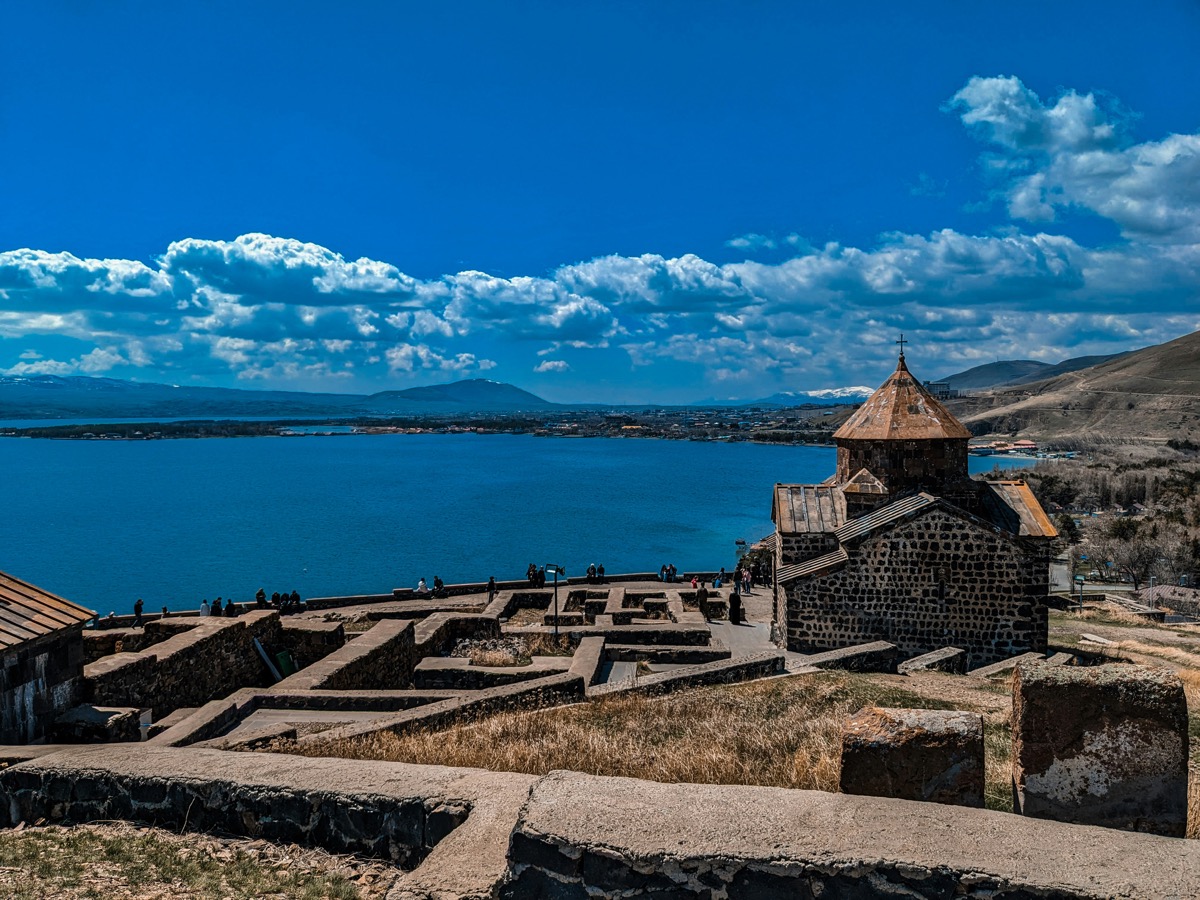
Yerevan has developed a strong restaurant scene in recent years, but Armenia’s most distinctive eating experiences are not in the capital. They’re at a bare table under a vine canopy in Areni, in a roadside grill in Goris where the khorovats was prepared at 7am and will be eaten by noon, in a converted Soviet dining hall in Gyumri where the dolma recipe has not changed since the 1970s. Travel out of Yerevan and Armenian food gets more specific, more regional, and considerably more interesting.
This guide covers the main food and drink regions you’ll encounter on a standard Armenia circuit: the Areni wine corridor, the south (Goris and Tatev), Lake Sevan, and Gyumri. Internal links to accommodation and destination guides are included where relevant.
Areni Wine Region: Where Armenian Wine Begins
Areni village, approximately 120 km south of Yerevan on the M2 highway toward Goris, sits at the centre of Armenia’s oldest wine-producing area. The world’s oldest known winery (approximately 4,100 BCE) was excavated at Areni-1 cave in 2011, which is perhaps why locals treat wine-making as an entirely natural occupation rather than a boutique activity.
The dominant grape is Areni Noir, a dark-skinned variety that produces tannic, acidic wines with dried fruit and sometimes floral notes. At their best they’re genuinely interesting. At their worst - bought from a roadside seller in an unlabelled plastic bottle - they’re rough. The distinction matters.
Hin Areni Winery (Old Areni)
The most visited winery in the village, Hin Areni combines production and tourism in a way that works: a tasting room with views over the gorge, knowledgeable staff who speak English, and wines that are genuinely worth buying. The Hin Areni Reserve (Areni Noir, aged 18 months in oak) sells for approximately AMD 6,500–8,000 a bottle (USD 17–21). Tastings run approximately AMD 3,000–5,000 per person depending on the wines poured.
Areni Cave Restaurant
The roadside restaurants clustered near the Areni-1 cave site serve what you’d call functional travel food - lavash, cheese, basturma, grilled trout from the Arpa River - but the setting is memorable and prices are very reasonable. A full meal with wine for two runs approximately AMD 8,000–12,000 (USD 21–31). Don’t expect table service; point at what you want and take a seat.
Buying from Producers Directly
Walking into Areni village and knocking on the door of a house with wine barrels outside is entirely acceptable and often productive. Most families make wine for their own consumption and sell the excess. Expect to pay AMD 300–600 per litre for house wine in an unlabelled bottle. Bring your own container or buy one from a roadside shop. Quality varies enormously - taste before buying.
For a more structured introduction to Areni wines, guided wine tours from Yerevan typically combine the Areni village producers with a visit to Areni-1 cave and lunch at one of the gorge-side restaurants.
Goris and South Armenia: Mulberry Vodka Country
The Syunik province around Goris has its own distinct food culture, shaped partly by altitude (the town sits at around 1,400 metres) and partly by proximity to Iran. The cooking is heavier than Yerevan, more reliant on preserved meats and dried fruits, and the local spirit is tuti (mulberry vodka) rather than the grape arak more common in the north.
Tuti (Mulberry Vodka): What to Know
Mulberry trees grow wild throughout Syunik, and in late summer the fruit is harvested and distilled by families across the region. The result is a clear, intensely aromatic spirit with a sweetness that makes it dangerously easy to drink at first and dangerously strong (50%+ ABV) by the third glass. It’s served in small ceramic cups, generally at room temperature, often with walnuts and dried apricots.
You can buy bottled tuti from shops in Goris (approximately AMD 3,000–5,000/500ml for a decent version), but the best is always unlabelled and homemade. Guesthouses often produce or source their own. Ask.
Goris Restaurants
Restaurant Lernayin (Mountain Restaurant), on the main road through Goris, is the established local choice for sit-down dining. The menu covers standard Armenian staples - khorovats, tolma, harissa (slow-cooked wheat and chicken), beet salads - plus some Syunik-specific dishes including ghapama (pumpkin stuffed with rice, dried fruit, and nuts) when in season. Mains approximately AMD 2,500–5,000 (USD 6–13). Open daily.
Goris Beer is a small local brewery operating from the town centre, producing unfiltered lager and dark beer in limited quantities. The attached bar-restaurant is basic but good for an evening beer and simple grilled food. A litre of their draught lager runs approximately AMD 2,000 (USD 5).
For grilled meat, the grill stations that set up in the town market area on weekend mornings are as good as anything in a sit-down restaurant. A full portion of khorovats with lavash, vegetables, and sauce runs AMD 3,000–4,500 (USD 8–12).
Lake Sevan: Ishkhan and Sig
Lake Sevan is the obvious lunch stop on most Armenia itineraries - it sits at 1,900 metres above sea level on the way north from Yerevan, surrounded by mountains, and the fish pulled from it have been feeding the region for thousands of years. The two fish you’ll see on every menu here are ishkhan (Sevan trout, also called prince fish) and sig (a white fish similar to whitefish).
Ishkhan is the one worth ordering. It’s a deep-water trout found only in Lake Sevan, mildly flavoured, and best grilled simply with herbs and lemon. Sig is blander and cheaper. You can tell them apart on the plate: ishkhan is darker-fleshed and firmer.
Where to Eat at Lake Sevan
The main cluster of fish restaurants sits along the lakeside road between the town of Sevan and the Sevanavank monastery peninsula. Most are working restaurants that cater to Armenian families and tour groups rather than posing for Instagram.
Artanish Restaurant is one of the more reliable options on the lakeside road, with good grilled ishkhan and a terrace directly over the water. A grilled whole ishkhan (approximately 400–500g) runs AMD 4,500–6,500 (USD 12–17) depending on weight. Ask the price by weight before ordering - menus rarely specify.
Sevan Fish Restaurant (near the Sevanavank turn-off) is a larger establishment popular with bus groups, which means service can be stretched on summer weekends but availability is reliable. Whole grilled sig approximately AMD 2,500–3,500 (USD 6–9).
Local Warning: Ishkhan stocks have been under pressure from overfishing and a long-term decline in lake water levels (the Soviet-era water diversions reduced Sevan’s volume significantly). Some restaurants serve farmed Sevan trout rather than wild. The difference in flavour is noticeable. Wild fish have a firmer texture and less uniform colour. Farmed fish tend to be paler and slightly softer. It’s worth asking.
What Else to Eat at Sevan
Beyond the fish, the standard Armenian meze applies: basturma (air-dried spiced beef), sujuk (spiced dried sausage), lavash, fresh herbs, and pickled vegetables. The lavash here is as good as anywhere in the country - Lake Sevan’s altitude and cool air seem to suit the baking conditions. Most lakeside restaurants offer a meze spread for AMD 3,000–5,000 per person before you get to the main course.
Gyumri: Traditional Restaurant Culture
Gyumri is Armenia’s second city and still the most conservative in character - the 1988 earthquake that killed around 25,000 people left a psychological mark the city hasn’t fully processed even 35 years later. But it also has an older, more complex food culture than Yerevan, rooted in the pre-Soviet merchant class and the Armenian diaspora connections that run particularly deep in this city.
What you find in Gyumri restaurants is heavier and more formal than Yerevan’s increasingly international scene. This is the city where you still order soup as a starter as a matter of course, where the tolma (stuffed grape leaves) are made with a lamb-and-rice mix that hasn’t changed in living memory, and where the bread comes in shapes you won’t see elsewhere.
Papalavash
The most-recommended traditional restaurant in Gyumri, occupying a converted pre-earthquake building in the old merchant quarter (Kumayri). The interior is deliberately old-fashioned - dark wood, Soviet-era tableware, photographs of pre-earthquake Gyumri on the walls. The menu doesn’t extend far beyond Armenian classics, but the execution is careful: the borscht is rich without being over-salted, the tolma come in a proper tarragon-spiked sauce, and the main course portions are by Yerevan standards enormous. Budget approximately AMD 6,000–10,000 (USD 16–26) per person for a full meal with wine or cognac.
Gyumri Craft Beer Bar
The craft beer culture that has developed in Yerevan over the last five years has a small outpost in Gyumri. The bar produces three to four of its own beers (pale ale, dark lager, seasonal wheat beer) and stocks a rotating selection of Armenian microbrews. Simple food - grilled flatbreads, cheese platters, lahmajoun - serves as ballast. Expect to pay AMD 2,500–3,500 (USD 6–9) for a half-litre.
Street Food: Gata and Lahmajoun
Gyumri’s version of gata - the Armenian sweet bread made with clarified butter and filled with sugar-and-flour paste - differs from Yerevan’s. The Gyumri version is denser and less sweet, more pastry-like, and often sold by the piece at market stalls for AMD 300–500 each. The local lahmajoun (thin flatbread with spiced minced meat) is eaten rolled with fresh herbs and a squeeze of lemon - look for street vendors near the main market on Gortsaranayin Street.
Regional Drinking: What to Order and Why
Cognac vs. brandy: Armenian cognac (the EU-compliant term is “Armenian brandy”) is the country’s most famous export and is available everywhere. But outside tourist restaurants, Armenians in the regions drink it less than outsiders expect. In the south it’s tuti; in Gyumri it’s more likely to be vodka; at the lake it’s generally beer. The brandy culture is real but slightly Yerevan-centric.
Wine outside Areni: The Vayots Dzor and Tavush wine regions are smaller but worth trying. Zorah Wines, based in Rind village near Yeghegnadzor, produces some of the most internationally regarded Armenian wines (Karasi Areni Noir, approximately AMD 12,000–18,000/bottle retail). They’re easier to find in Yerevan shops than on-site, but the winery does take visitors by appointment.
Tan: The salty, fizzy yoghurt drink is the universal summer refreshment throughout rural Armenia. It’s made from matsun (Armenian yoghurt) diluted with cold water and sometimes carbonated. Available in every village shop, approximately AMD 150–300 for a 500ml bottle. Excellent with grilled meat; not for everyone at first try.
Getting Around the Food Regions
The Yerevan–Goris corridor on the M2 highway is the easiest to do independently: Areni is about 1.5 hours from Yerevan, Noravank monastery adds another 20 minutes, and Goris is about three hours from the capital. Lake Sevan is about 1.5 hours northeast from Yerevan. Gyumri is 1.5 hours northwest on the M1.
Most regional restaurants don’t have online booking systems and many don’t have websites. Showing up is generally fine outside peak summer weekends. The one exception is Gyumri restaurant bookings on Sundays, when locals fill the better restaurants for family lunch from about noon to 4pm - arrive early or wait.
If you’d rather let someone else handle logistics, our Yerevan food tours guide lists operators running day trips to the Areni wine corridor and other regional highlights with transport included - or browse options directly via GetYourGuide.
Plan Your Trip
Browse Yerevan tours with regional food itineraries - most guided day trips to Areni wine country, Lake Sevan, and Gyumri depart from the capital with transport and a local guide included. Arrange travel insurance before departure - regional Armenia involves mountain roads and limited medical facilities away from Yerevan, making cover worth having. A prepaid eSIM from Airalo keeps you connected in areas where finding a local SIM would mean a detour back to the capital. Browse hotels across Armenia - most food regions are easiest to explore as day trips from Yerevan, though Gyumri and Dilijan both have good overnight options if you want to linger.