Lake Sevan and Jermuk are two of Armenia’s most-visited natural destinations, and they have almost nothing in common. Sevan is a vast high-altitude lake an hour from Yerevan, easy to reach by public bus, and popular with day-trippers who come for the monastery, the beaches, and the freshwater trout. Jermuk is a spa town at 2,080 metres in the southern highlands, 170 km from Yerevan, built around mineral hot springs and a spectacular waterfall gorge. The right choice depends entirely on what you want from the trip.
Lake Sevan: Armenia’s Blue Pearl, Close and Easy
Lake Sevan is the largest lake in the Caucasus and one of the most striking natural landmarks in Armenia. At 1,900 metres above sea level, it covers roughly 1,242 km² and is visible from the M4 highway as a deep blue expanse ringed by mountains. The lake is 60 km northeast of Yerevan - close enough for a half-day trip and rewarding enough for a full day or overnight.
Getting there: The cheapest and most practical option is the marshrutka from Kilikia bus station in Yerevan, which costs approximately AMD 350 (~$0.90) and takes about 1 hour. It is one of the most accessible major sites in Armenia on public transport. By car or taxi, the drive takes the same time but gives flexibility to stop at the Noratus cemetery on the southern shore.
What to see:
- Sevanavank Monastery - a 9th-century monastery complex on a peninsula (once an island) reached by a flight of around 200 stone steps through pine trees; the two churches date to 874 AD and have survived unusually intact; free entry
- Noratus khachkar cemetery - on the southern shore, about 30 km from Sevan town; the largest surviving field of medieval khachkars (carved cross-stones) in Armenia, with over 900 examples dating from the 10th to 17th centuries; requires a car or taxi from Sevan town
- Lake beaches - the north shore around Sevan town has a sandy beach area popular in July and August; the water reaches 18–20°C in peak summer; refreshing rather than warm for most of the year
- Sevan ishkhan trout - the lake’s endemic trout species (now largely farmed since wild stocks declined) is the regional speciality, served at fish restaurants along the lakefront; sig (another local fish) is also widely available
Season: Summer (June–September) is when the lake is at its busiest and the beaches are usable. Spring and autumn offer quieter visits with good weather; winter is cold and quiet.
For accommodation near the lake, see Booking.com Lake Sevan.
Jermuk: Spa Town, Waterfalls, and Southern Highlands
Jermuk is a small spa town at 2,080 metres in the Vayots Dzor region of southern Armenia, approximately 170 km from Yerevan - about 2.5–3 hours by car. During the Soviet period, Jermuk was developed as a sanatorium resort built around its naturally carbonated mineral springs, and the bottled mineral water is still exported under the Jermuk brand name. Today the town has a quieter, more faded character, which is part of its appeal.
Getting there: Jermuk is primarily reached by car. Buses and marshrutkas from Yerevan do run but services are less frequent than on northern routes; check schedules at Kilikia station before relying on them. The drive via Areni and the Selim mountain pass takes 2.5–3 hours and is itself scenic - the road climbs through the wine country of Vayots Dzor before descending into Jermuk’s canyon.
What to see:
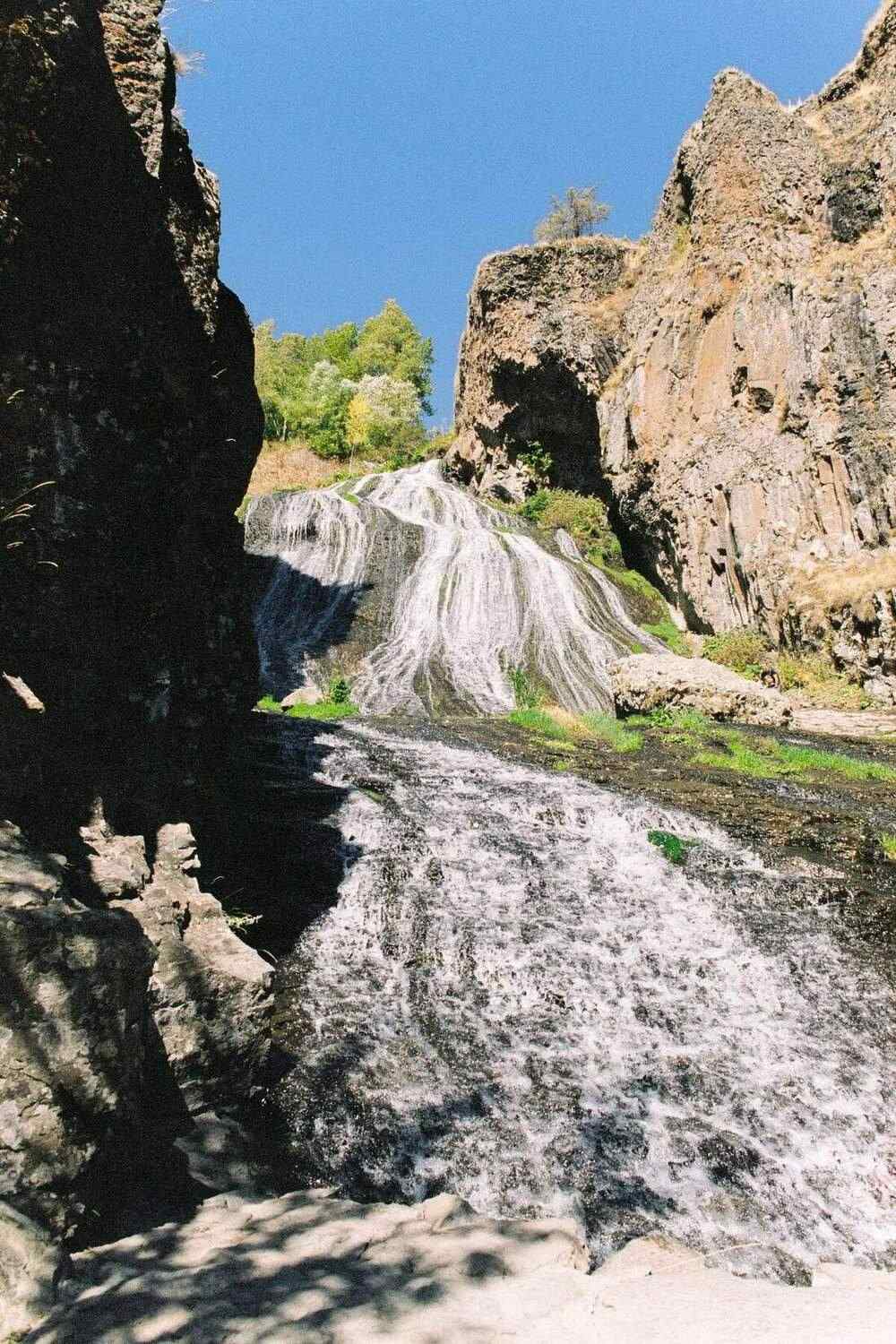
- Jermuk Waterfall - the main sight; the Arpa River drops approximately 72 metres into a basalt gorge at the edge of town, accessible via a 20-minute walk from the town centre through mixed forest; a series of viewpoints along the gorge rim overlook the falls
- Mineral spring gallery (Pitni Shar) - a covered promenade above the gorge where several mineral springs are piped for drinking; locals and visitors fill bottles directly from taps; each spring has a slightly different mineral composition; entry is free
- Spitakavor Monastery - a 13th-century monastery in an elevated canyon approximately 15 km from town, reached by a rough road; quieter than the main monastery circuits but rewarding for the setting
- Spa and treatment centres - several hotels offer mineral-water baths, massage, and Soviet-style sanatorium treatments; rates vary from AMD 5,000–15,000 ($12–37) for a session
Season: Jermuk is accessible year-round but is at its best in late spring and summer (May–September) when the hiking trails and waterfall are most appealing. In winter, roads can be difficult; in summer, the 2,080m altitude keeps temperatures significantly cooler than Yerevan.
For accommodation, see Booking.com Jermuk or our where to stay in Jermuk guide.
Side-by-Side Comparison
| Lake Sevan | Jermuk | |
|---|---|---|
| Distance from Yerevan | ~60 km (1h) | ~170 km (2.5–3h) |
| Altitude | 1,900 m | 2,080 m |
| Accessible by public transport | Yes (marshrutka, AMD 350) | Difficult (infrequent buses) |
| Main draw | Alpine lake, monastery, beaches, trout | Waterfalls, mineral springs, spa hotels |
| Best as | Day trip | Overnight or 2-night stay |
| Best season | June–September | May–September |
| Nearby sites | Noratus cemetery | Noravank, Tatev, Areni |
| Spa facilities | Basic lakeside hotels | Purpose-built mineral-spring hotels |
Verdict
Lake Sevan suits a quick day trip from Yerevan with a famous monastery and a lakeside lunch; Jermuk suits travellers who want a longer, slower stay built around spa treatments and dramatic highland scenery - it earns the drive when combined with Noravank and Tatev on a southern Armenia loop.
For the full southern Armenia route that includes Jermuk, see our 7-day south Armenia itinerary. For transport logistics from Yerevan to either destination, see our getting around Armenia guide.
Plan Your Trip
✈️ Book your flights to Armenia 🛡️ Get travel insurance 📱 Stay connected with an eSIM 🚗 Rent a car