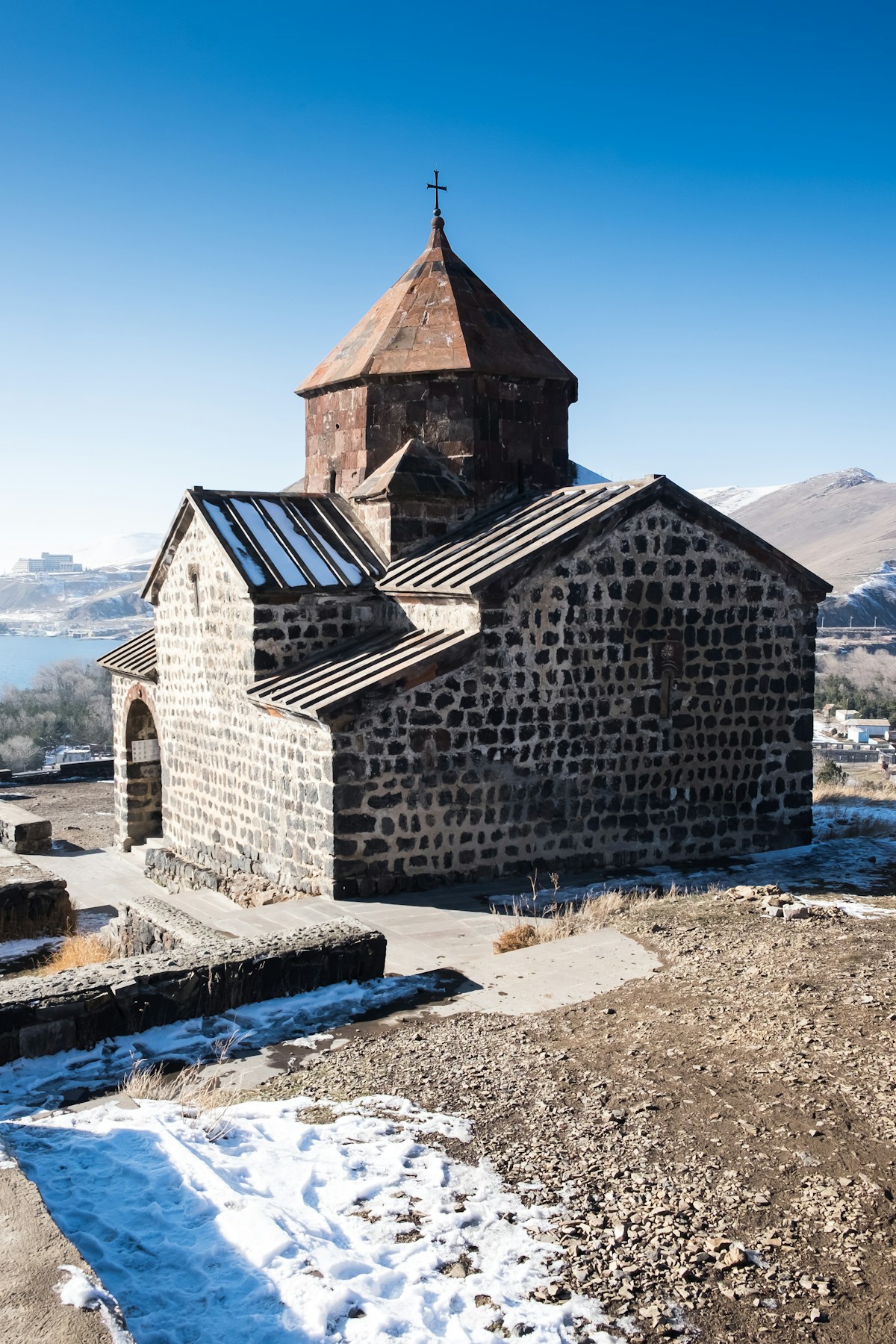
Lake Sevan is the largest lake in the Caucasus and one of the defining natural landmarks of Armenia. Sitting at 1,900 metres above sea level, the lake covers roughly 1,242 square kilometres and is surrounded by mountains, ancient monasteries, and - in summer - lively beach areas. Armenians call it the “Blue Pearl”, and it earns the name: the water shifts from deep turquoise to steel grey as clouds move across the surrounding peaks.
Lake Sevan is an easy day trip from Yerevan but rewarding enough to deserve at least one overnight stay. This guide covers the main sites, seasonal activities, where to stay, and how to get here independently.
Getting to Lake Sevan from Yerevan
The most practical and affordable option for independent travellers is the marshrutka from Kilikia bus station in Yerevan. Minibuses to Sevan town run throughout the day from early morning, cost approximately 350 AMD per person (roughly USD 0.90 as of 2026), and take around 1 hour. Kilikia station is in the south of Yerevan, accessible by metro (Sasuntsi Davit station) or a short taxi ride from the centre.
By taxi from Yerevan, the same journey costs around AMD 5,000–8,000 depending on negotiation; apps like Yandex Go are often cheaper and avoid the need to haggle. The drive along the M4 highway is scenic, with the lake coming into view as you crest the final ridge.
Rental car is ideal if you want to loop the lake, visit Noratus cemetery on the southern shore, or stop at viewpoints on the way back. Car hire from Yerevan Airport or the city centre typically starts from around AMD 15,000–20,000 per day (approximately USD 38–50 as of 2026) for a basic hatchback.
For a combined tour that handles logistics, see our day trips from Yerevan page for operator options.
Sevanavank Monastery
The Sevanavank Monastery complex is the centrepiece of any Lake Sevan visit. It stands on a peninsula - formerly an island, until Soviet water management projects lowered the lake level in the 1930s and joined it to the mainland. A flight of around 200 stone steps leads up through pine trees to the monastery buildings at the top.
The two churches - Surb Arakelots (Church of the Holy Apostles) and Surb Astvatsatsin (Church of the Holy Mother of God) - were founded in 874 AD by Princess Mariam, daughter of King Ashot I of the Bagratid dynasty. The princess reportedly took holy orders and lived on what was then an island, establishing the monastic community. The dark basalt stonework and conical rooftops are typical of the Armenian ecclesiastical style of the period, and both churches have survived remarkably intact given their age.
Entry is free. The site is open daily during daylight hours - roughly 9am to 7pm in summer, 10am to 5pm in winter. Modest dress is expected inside the churches. From the top of the peninsula, the views over Lake Sevan and the surrounding mountains are among the best in Armenia, and the walk up is manageable for most fitness levels in around 10 minutes.
Getting there: Sevanavank sits about 3 km from Sevan town. If you arrive by marshrutka, a taxi from the bus stop to the monastery costs approximately AMD 500–1,000 each way. Most organised day tours stop here as the first or second site.
Noratus Khachkar Cemetery
On the southern shore near the town of Gavar, the Noratus Cemetery (also spelled Noraduz) contains the largest field of medieval khachkars (Armenian cross-stones) in existence. More than 900 carved stone crosses stand in rows across a hillside graveyard, ranging in age from the 9th to the 17th centuries. The variety of carving styles across the centuries is striking - from simple early crosses to densely ornate interlaced knotwork on later stones.
Khachkars are one of the most distinctive art forms in Armenian culture: each one is unique, carved as a memorial and as a prayer in stone. Noratus is significant because so many were destroyed elsewhere (most notably the medieval cemetery at Jugha in Nakhchivan, which was demolished in 2005). What survives at Noratus is therefore not just beautiful - it’s historically irreplaceable.
Entry is free. The cemetery is open at all times. It’s about 40 km from Sevan town along the southern shore road. By car, the drive takes around 40 minutes. If you’re doing a lake loop by car, Noratus fits naturally on the return journey back to Yerevan.
Beach Areas Around the Lake
Lake Sevan’s beach season runs from roughly late June to mid-September. The water reaches 18–20°C at peak summer - cold enough to be bracing, warm enough for sustained swimming. The main beach zones are:
- Sevan town northern shore - The most accessible beach area, with a stretch of sandy and pebbly banks close to the town centre. A number of beach clubs, sun lounger rentals, and lakeside cafés operate here in summer. Busy on weekends in July and August when Yerevan residents arrive in force.
- Tsovagyugh / Lchashen area - A quieter stretch of northern shore about 10 km west of Sevan town, favoured by those who want more space and less noise.
- Artanish peninsula - On the western side of the lake, the Artanish peninsula is less developed and popular with campers and hikers who want an off-grid lakeside experience.
Outside the peak summer months, the beaches are deserted and the lake’s colours are often at their most dramatic - deep blues under autumn light, with snow beginning on the higher peaks by October.
Seasonal Activities
Swimming and Beach Days (July–August)
Peak season for swimming. Water temperatures at their warmest; cafés and beach infrastructure are fully operational. Expect crowds at Sevan town beach on summer weekends.
Hiking (May–October)
The hills above the northern shore offer straightforward hiking with panoramic lake views. No technical trails, but the peninsula above Sevanavank rewards a short scramble beyond the monastery complex. For longer day walks, the terrain south of the lake near Noratus and Gavar is less visited and quieter.
Birdwatching (April–May and August–October)
Lake Sevan is an important wetland and one of the better birdwatching sites in Armenia. The Armenian gull - endemic to the region and classified as a distinct species since 2002 - nests on the lake’s islands and can be seen year-round. Spring migration (April–May) brings waterfowl including great white pelican, little egret, and greater flamingo on passage. The southeastern wetland margins near Karchaghbyur are the most productive spots. Binoculars are worth bringing.
Winter Visits (November–March)
The lake doesn’t freeze, but temperatures drop sharply and most lakeside facilities close. Winter light on the lake can be spectacular, and Sevanavank is virtually crowd-free. Best approached by rental car rather than marshrutka, which reduces in frequency out of season.
Where to Stay at Lake Sevan
Harsnaqar Hotel and Restaurant Complex - Perched on the hillside close to the Sevanavank peninsula, Harsnaqar is one of the most recognisable properties on the lake, with multi-storey views over the water. Rates start from approximately AMD 30,000–50,000 per night (roughly USD 77–130 as of 2026) for a double room. The restaurant is known for fresh ishkhan trout.
Sevan Writers’ House (formerly the Soviet-era Grakaннери Hivanots writers’ retreat) - A Soviet-era creative retreat that once hosted Armenian writers and intellectuals, now operating as a guesthouse. It sits in a pine-forested area on the northern shore, quieter and more atmospheric than the resort hotels. Rates from approximately AMD 15,000–25,000 per night (roughly USD 38–65 as of 2026). Advance booking recommended in summer.
Budget guesthouses in Sevan town - Several family-run guesthouses and small hotels operate in and around Sevan town, typically offering basic double rooms for AMD 10,000–18,000 per night (roughly USD 26–46 as of 2026). Good value for those prioritising cost over views.
All prices as of 2026 and subject to change - confirm rates directly when booking.
Food at Lake Sevan
The lake’s signature dish is ishkhan - Sevan trout, served grilled or baked, often with herbs and lemon. This is a genuinely excellent fish and worth seeking out here rather than in Yerevan, where it tends to be more expensive. Sig, another local whitefish, is a slightly more affordable alternative. Both appear on virtually every lakeside restaurant menu.
Beyond fish, most restaurants serve standard Armenian staples: khorovats (grilled meat), dolma (stuffed vegetables), and lavash bread baked fresh. Local dried fruits and walnuts are sold at roadside stalls approaching the lake on the Yerevan highway - worth stopping for.
Practical Tips
- Altitude: The lake sits at 1,900m. The air is noticeably thinner and the sun stronger than in Yerevan - bring sun protection even on overcast days.
- Weather: Afternoons can be warm in summer but evenings cool down quickly at altitude. Pack a light layer.
- Language: Armenian and Russian are spoken. English is limited outside the main tourist facilities around Sevanavank.
- Tipping: 10–15% in restaurants is standard and appreciated.
- Modest dress: Required inside both churches at Sevanavank. A shawl or scarf is sufficient for women; bare shoulders should be covered.
Planning Your Visit
Lake Sevan works as a half-day or full-day trip from Yerevan, with the marshrutka from Kilikia station making it accessible without a car. A full day allows Sevanavank in the morning, lunch at a lakeside restaurant, and an afternoon at the beach or a drive to Noratus.
For an overnight stay, Harsnaqar is a well-equipped lakeside choice with views and a water park; the Writers’ House suits those who want character over polish. Combining Sevan with Dilijan - 30 minutes north by road - gives a natural two-day north-east Armenia circuit.
Most visitors take a Lake Sevan day trip from Yerevan that combines Sevanavank and a fish lunch in one loop. If you’re driving yourself, car hire from Yerevan gives the flexibility to detour to Noratus cemetery on the return leg.
See Also
- Where to Stay at Lake Sevan - hotels, guesthouses, and resort properties on the lake
- Lake Sevan Tours from Yerevan - guided tour options combining Sevanavank, Noratus, and Dilijan
- Day Trips from Yerevan - logistics for Sevan and other key sites from the capital
- Dilijan Travel Guide - the forested town 30 minutes north, often combined with a Sevan visit
- Cycling in Armenia - the Lake Sevan loop is one of the best multi-day cycling routes in the country
- 5-Day Central Armenia Itinerary - a route that includes Sevan alongside Garni, Geghard, and Khor Virap
- Lake Sevan vs Jermuk - comparing both highland escapes to help choose which fits your trip