Yerevan and Tbilisi are the two capitals of the South Caucasus, roughly 280 km apart and connected by one of the most straightforward overland routes in the region. Both are compact, walkable cities with ancient histories, excellent food, strong cafe cultures, and a growing reputation for short-break travel. They are also genuinely different in atmosphere, scale, and what a few days in each actually feels like.
This comparison is aimed at travellers choosing how to split their time — whether that’s a single city break, a combined trip, or a decision between the two. Prices are approximate as of 2026.
First Impressions
Yerevan is a planned city, rebuilt largely in the 1920s–50s with wide boulevards, pink tuff stone facades, and a coherent architectural character. Republic Square is the centrepiece: a fountain-ringed oval of government buildings and the History Museum of Armenia, with the Cascade steps rising to the north. The city is low-rise, uncluttered, and easy to read from the first morning. On a clear day, Mount Ararat dominates the southern skyline even though it sits inside Turkey — a fact that shapes Armenian national identity in ways that become apparent quickly.
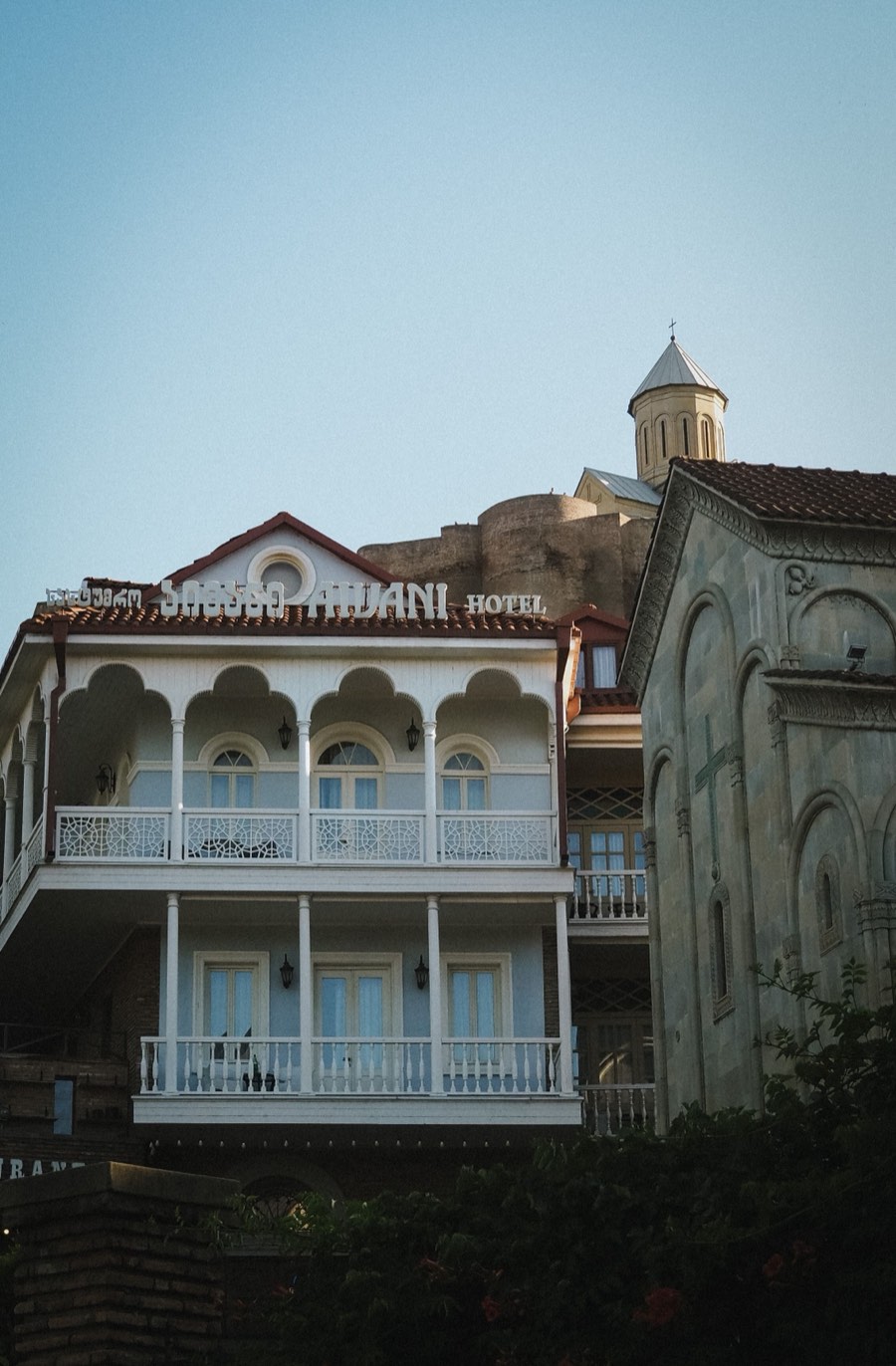
Tbilisi is older and less uniform — in the best possible way. The Old Town (Abanotubani and Metekhi districts) is a tangle of carved wooden balconies, Orthodox churches, and sulphur bath houses built into the cliff face. Rustaveli Avenue provides the wide formal spine, but the personality of Tbilisi lives in the narrower streets around Fabrika, Vera Park, and the Chardin Street restaurant strip. The city climbs steeply in places, with Narikala Fortress visible from most of the Old Town.
Both cities are eminently walkable in their central areas. Yerevan is arguably easier to navigate for a first visit; Tbilisi rewards more purposeful wandering.
Sightseeing Density
Yerevan’s anchor sights are concentrated and can be covered well in two days:
- Republic Square and Northern Avenue — the city’s formal heart, with the National Gallery and History Museum of Armenia on the square
- The Cascade — a monumental staircase connecting downtown to the Cascade Complex contemporary art museum at the top; the terrace garden below has rotating outdoor sculpture
- Armenian Genocide Memorial (Tsitsernakaberd) — essential context for understanding Armenia; the memorial flame and museum are approximately 20 minutes from the centre
- Vernissage market — weekend outdoor market for carpets, silver jewellery, khachkar carvings, and Soviet memorabilia; held Saturday and Sunday near Republic Square
Beyond the city itself, Yerevan is an outstanding day-trip base. Geghard Monastery, Garni Temple, Khor Virap, and Noravank are all within 1.5 hours and can each fill a half day. This day-trip potential is Yerevan’s single biggest advantage over Tbilisi for travellers who want site-heavy itineraries.
Tbilisi’s sights require slightly more time to appreciate properly:
- Narikala Fortress and the old sulphur baths — the fortress walls above the Old Town and the 17th-century dome-roofed Abanotubani bath houses below them; the baths are still operating (private rooms from around 50 GEL/hour)
- Metekhi Church — a 5th-century church on a cliff above the Kura river, walkable from the Old Town via a pedestrian bridge
- National Museum of Georgia — strong collection covering Georgia’s pre-Christian history; the gold and silver treasury section requires an extra fee but is worth it
- Wine tasting in Kakheti — Tbilisi’s best day trip leads east into the wine country around Telavi and Signagi, 1.5–2 hours away; qvevri-method amber wines and winery visits form a distinct category of experience unavailable in Armenia
Tbilisi has more neighbourhood texture — the area around Fabrika (a converted Soviet sewing factory now housing bars, restaurants, and a hostel courtyard) gives the city a creative energy that Yerevan’s more formal layout lacks.
Food and Drink
Armenian food is excellent: khorovats (charcoal-grilled lamb and pork), lavash baked on the tonir wall, dolma, herb-heavy salads, and fresh-caught trout. Yerevan’s restaurant scene has matured significantly in recent years, and the areas around Abovyan Street and the Cascade have good mid-range options. Budget meals from bakeries (gata, nazuk) and street-food stalls keep costs low.
Georgian food is arguably more diverse. Khachapuri, khinkali, pkhali, and satsivi all vary by region, and the Tbilisi restaurant scene is broader, more internationally aware, and has more price variety. The Chardin Street area and Fabrika courtyard in Tbilisi have the highest concentration of good mid-range restaurants and bars. Tbilisi also has significantly better nightlife — a well-documented electronic music and bar scene centred on the Vera and Vake districts.
Armenian brandy is a genuine draw. Yerevan distilleries including Ararat (the largest) and Noy offer tours and tastings; Armenian cognac has a documented history that includes Churchill’s personal preference for Ararat brandy. Wine-wise, Armenia produces good reds from the Ararat Valley, but Georgia’s wine culture is deeper, older, and more varied.
Costs
Both cities are affordable by Western European standards. As of 2026:
| Yerevan | Tbilisi | |
|---|---|---|
| Budget hotel / hostel | from €15–25 | from €18–30 |
| Mid-range hotel | €40–80 | €45–90 |
| Restaurant meal (mid) | AMD 3,000–6,000 (~€7–14) | 30–60 GEL (~€10–20) |
| Coffee | AMD 700–1,200 (~€1.60–2.80) | 5–10 GEL (~€1.70–3.40) |
| Metro / city transport | AMD 100 (~€0.23) | 1 GEL (~€0.34) |
Yerevan edges slightly cheaper on accommodation and food; the gap is not dramatic. Both cities have experienced cost increases since 2022, partly due to relocation of Russian nationals. Budget a full day’s spend of €30–50 per person at mid-range.
For Yerevan accommodation options and area guidance, see our where to stay in Yerevan guide. You can search current availability at Booking.com Yerevan. For Tbilisi, search at Booking.com Tbilisi.
Transport Between the Two Cities
No direct train or flight connects Yerevan and Tbilisi. The standard overland route runs via the Lars border crossing (Russian border; sometimes closed) or more commonly via the Bagratashen/Sadakhlo crossing between Armenia and Georgia. Most travellers use:
- Shared marshrutka from Yerevan’s Kilikia station — approximately AMD 5,000–8,000 (~$12–20), takes 5–6 hours depending on border queues
- Private taxi or transfer — more expensive (from approximately $50–70) but faster and more flexible for luggage
- Rental car — possible if you have confirmed the car hire company permits cross-border driving; not all do
For a full breakdown of transport options, timings, and what to expect at the border, see our Yerevan to Tbilisi guide.
Verdict
Yerevan wins for compact monastery-circuit day trips and brandy culture; Tbilisi wins for food variety, nightlife, and wine tourism — combined, they form one of the best two-week trips available in the Caucasus. For a single city break, choose Yerevan if you want something quieter and site-focused; choose Tbilisi if you want the more developed urban food and nightlife scene.
For broader comparisons of both countries, see our Armenia vs Georgia guide.