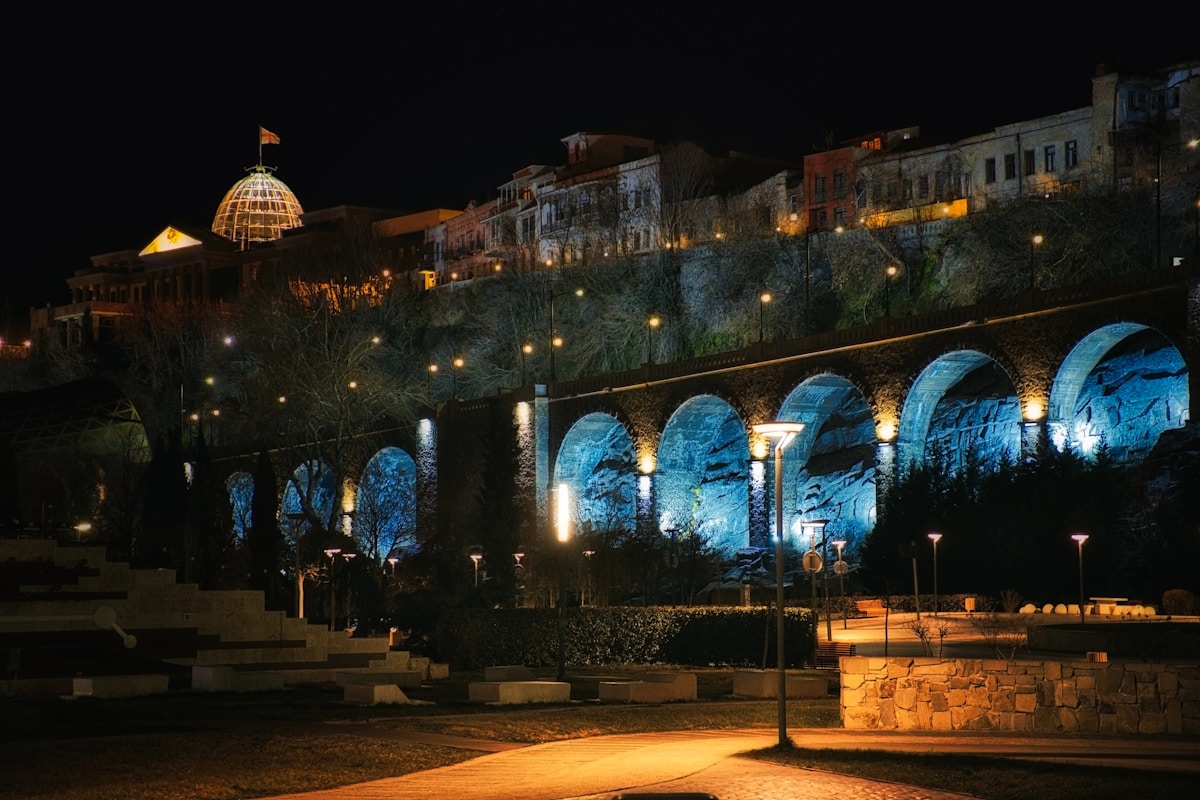
Armenia and Georgia share a border, similar mountains, ancient Christian heritages, and a mutual conviction that their cuisine is the best in the Caucasus. Beyond that, they are genuinely different countries - in atmosphere, infrastructure, food culture, nightlife, cost, and what a week spent in each actually feels like. This comparison is designed for travellers deciding how to split their time between the two, or choosing one if they can only manage one. It’s fair to both.
Prices are approximate as of 2026. Exchange rates fluctuate - verify current rates before travel.
Landscape and Geography
Both countries are mountainous. Armenia sits on a high volcanic plateau averaging around 1,800 metres above sea level; Georgia descends from the Greater Caucasus in the north to subtropical coastline on the Black Sea in the west.
Armenia’s landscape is defined by its high, treeless plateau, ancient volcanic peaks (Mount Aragats, 4,090m), deep river gorges (Azat, Debed, Vorotan), and Lake Sevan - one of the world’s largest high-altitude lakes at 1,900 metres. The visual palette is more austere: ochre, granite, and the deep blues of mountain sky and water. The scenery is dramatic without being lush.
Georgia’s landscape is more varied. The Caucasus range in the north (Svaneti, Kazbegi) provides some of the most striking mountain scenery in Europe - jagged peaks, medieval watchtower villages, glaciers. In the south-east, Kakheti’s wine country is rolling and gentle. The Colchic rainforest in western Georgia is subtropical and genuinely green in a way Armenia never is.
Verdict: If mountains and stark highland drama are the draw, Armenia delivers it consistently across the whole country. If you want variety - mountains, wine country, Black Sea coast, subtropical valleys - Georgia wins on range.
Historical Sites
Both countries have exceptional monasteries and early Christian architecture.
Armenia is the world’s first Christian nation (301 AD), and its medieval churches - built in distinctive tufa stone, often perched on gorge rims or cliff faces - are among the most evocative in the world. Geghard Monastery is carved into the living rock of a gorge wall. Noravank sits in a narrow red canyon. Khor Virap has Mount Ararat - when conditions allow - as a backdrop. The Debed Canyon in northern Armenia contains a string of 10th–13th century monasteries (Haghpat, Sanahin, both UNESCO sites) within a few kilometres of each other. Armenian khachkars (carved cross-stones) appear throughout the countryside, each a unique piece of medieval stone carving.
Georgia has Mtskheta - the ancient capital, 20 minutes from Tbilisi - with Svetitskhoveli Cathedral and Jvari Monastery (both UNESCO). The cave city of Uplistsikhe, carved from rock 3,000 years ago, predates both countries’ Christian histories. Vardzia, a 12th-century rock-cut monastery complex in the south, rivals Geghard for scale and ambition. The medieval tower villages of Svaneti in the north are among the most visually distinctive human settlements in the Caucasus.
Verdict: Both are extraordinary. Armenia’s advantage is density - major sites are often 30–60 minutes apart, making day trips easy. Georgia’s advantage is variety, ranging from pre-Christian cave cities to medieval highland towers.
Food
This is where the two countries genuinely compete.
Armenian food is built around khorovats (barbecue - lamb, pork, or chicken grilled over charcoal), dolma (stuffed vine leaves or peppers with herb-heavy minced meat), lavash (the UNESCO-listed thin flatbread baked on the inner wall of a tonir clay oven), and tolma variations across every region. Fresh herbs are abundant: tarragon, parsley, dill, and basil appear in everything. The food is hearty, meat-heavy, and good with cold Armenian beer or homemade fruit vodka (oghi). In Yerevan, a new generation of restaurants has elevated traditional dishes without abandoning them.
Georgian food is one of the world’s great regional cuisines, with significantly more global awareness (largely thanks to Georgian diaspora communities in Russia and Europe). Khachapuri - cheese-filled bread in several regional forms, most famously the boat-shaped Adjarian version with an egg - is a genuine staple, not a tourist dish. Khinkali (dumplings filled with spiced meat broth, eaten by hand from the knot) are another standby. Georgian dishes like chicken satsivi (in walnut sauce), pkhali (vegetable rolls with walnut paste), and chakapuli (lamb stew with tarragon) use spices and nuts in ways Armenian food typically doesn’t. The food scene in Tbilisi is more developed and internationally diverse than Yerevan’s.
Verdict: Both cuisines are excellent and worth eating deeply. Georgia’s food culture is broader and the Tbilisi restaurant scene is more varied. But Armenian khorovats and lavash eaten at a family guesthouse is one of the better meals in the Caucasus region - and the Armenian Genocide Memorial canteen’s homemade food is an unlikely culinary highlight of Yerevan.
Wine
Georgia wins here and it isn’t close. Georgia is one of the world’s oldest wine regions - archaeological evidence puts viticulture there at around 6,000 BC - and it is the home of the qvevri (clay amphora) method of making amber wine, now a UNESCO Intangible Cultural Heritage. Georgian natural and traditional wines, particularly those from the Kakheti region (Telavi, Signagi, Tsinandali), have attracted serious international attention. Wine tourism in Kakheti - cellar visits, harvest participation, family winery stays - is a well-developed industry. You can taste extraordinary wines in Tbilisi wine bars or drive an hour east to the source.
Armenia has a wine tradition too - Mount Ararat is one of the world’s oldest viticulture sites by archaeological record - and the domestic wine industry is growing, with producers in the Ararat Valley and Vayots Dzor. Armenian brandy (cognac-style, most famously ARARAT) is the better-known product and genuinely worth trying. But Georgia’s wine culture is deeper, more varied, and more accessible to visitors.
Verdict: If wine is a significant part of why you travel, Georgia is the stronger choice. Armenia is for brandy and an emerging wine scene worth watching.
Nightlife and Urban Energy
Tbilisi has a nightlife culture that has attracted international attention - Electronic music venues including Bassiani (inside a Soviet-era swimming pool) and Khidi have put the city on the global club scene map. Bar districts like Fabrika (a converted Soviet sewing factory) and the bars along Abo Tbileli Street are lively and stay open late. The city’s creative and arts scene is active and young.
Yerevan has a lively bar and café culture centred on the northern part of Abovyan Street, Saryan Street, and the areas around the Cascade. The city is active from late evening into the early morning in summer, with outdoor seating extending the street-life late into the night. But Yerevan’s nightlife is more low-key and neighbourhood-focused than Tbilisi’s. It suits long dinners, Armenian cognac, and conversation better than it suits dancing until dawn.
Verdict: Tbilisi is one of the better nightlife cities in Europe for electronic music and bar culture. If this matters to you, Tbilisi delivers it at a level Yerevan doesn’t match.
Cost of Travel
Both countries are affordable by Western European standards. The comparison between them is closer than it used to be.
Armenia is slightly cheaper than Georgia across most categories - accommodation, local food, and public transport in particular. A budget traveller spending approximately USD 35–60/day can travel comfortably in Armenia. See our full Armenia budget travel guide for a detailed breakdown.
Georgia is similarly affordable but marginally more expensive in Tbilisi - a city that has seen significant tourism growth and corresponding price increases in popular neighbourhoods. Budget travellers should expect approximately USD 40–70/day in Georgia. Outside Tbilisi, particularly in Kakheti or Svaneti, costs are lower.
Visa and entry: Both countries offer visa-free entry to citizens of EU/EEA countries, USA, Canada, UK, Australia, and many others. Check current requirements on your national foreign travel advice page before departure. Armenian entry formalities are straightforward.
Verdict: Armenia has a slight cost advantage, but both are affordable. Neither is significantly cheaper than the other for most travellers.
Safety
Both Georgia and Armenia rank as low-risk destinations for most travellers. Crime targeting tourists is uncommon. Solo travellers - including solo women - visit both countries routinely without incident.
Armenia’s border with Azerbaijan remains closed, and the political situation in the Syunik region near the Azerbaijani border merits checking before any visit to the far south-east. The border with Turkey is also closed. Neither affects the main tourist circuit (Yerevan, central Armenia, northern provinces) in any practical sense.
Georgia’s border with Russia is open but the situation in South Ossetia and Abkhazia means those regions should be avoided. The rest of Georgia, including areas near Tbilisi and the main tourist routes, is safe.
Verdict: Both are safe for standard tourist travel. Check current FCO/State Department travel advisories for specific border areas before finalising routes in either country.
Transport Infrastructure
Georgia has better developed infrastructure for overland travel, particularly for crossing regional boundaries. Tbilisi is a larger hub with more connections. Intercity transport within Georgia - to Kutaisi, Batumi, Sighnaghi, Kazbegi - is well organised and there are reliable minibus and bus services. The Kazbegi road from Tbilisi is legendary and there are regular marshrutkas.
Armenia’s intercity public transport network is functional for getting between major towns, but reaching rural monasteries and gorges typically requires a hire car or private taxi. The country is small enough that self-driving makes more sense here than in Georgia - you can cover Yerevan, Lake Sevan, Dilijan, Khor Virap, Noravank, and Tatev in a 7-day self-drive loop with minimal difficulty. See our getting around Armenia guide for details.
Verdict: Georgia’s public transport is more extensive. Armenia rewards a hire car more than Georgia does.
Best Time to Visit
Both countries are best visited in spring (April–June) and autumn (September–October).
Armenia’s summers (July–August) are hot on the plains (Yerevan reaches 35°C+) but cooler in the highlands. Spring wildflowers and autumn colours in Dilijan and the gorges are worth timing a visit around.
Georgia’s summers are pleasant at altitude (Svaneti, Kazbegi) but Tbilisi can be oppressively humid in July–August. Kakheti’s harvest season (September–October) is the best time to visit wine country.
Both countries get snow in winter; mountain roads can close but major sites remain accessible.
Combining Armenia and Georgia: The Case for Both
Two weeks in the Caucasus - combining Armenia and Georgia - is an itinerary worth considering seriously. The two countries complement each other rather than overlapping.
A suggested 14-day split:
Days 1–6 - Armenia:
- Yerevan (2 nights): Republic Square, Cascade, Matenadaran, Tsitsernakaberd memorial
- Khor Virap and Ararat Valley (day trip from Yerevan)
- Garni Temple, Geghard Monastery, Symphony of Stones (day trip)
- Lake Sevan and Sevanavank (day trip or overnight)
- Dilijan and Haghpat/Sanahin (overnight in Dilijan or Alaverdi)
Days 7–14 - Georgia:
- Cross the border: Yerevan to Tbilisi by shared taxi (approximately 5–6 hours) or bus
- Tbilisi (3 nights): old city, Narikala fortress, wine bars, Fabrika
- Mtskheta (day trip)
- Kakheti wine region (2 nights: Sighnaghi or Telavi)
- Kazbegi (2 nights: Gergeti Trinity Church, mountain hiking)
The land border crossing between Armenia and Georgia is straightforward - the main crossing is at Sadakhlo/Bagratashen and takes approximately 1–2 hours. Shared taxis between Yerevan and Tbilisi depart regularly from Yerevan’s Kilikia station. For fares, journey times, and the private transfer option, see our Yerevan to Tbilisi transport guide.
Which One?
If you only have one week and must choose: Armenia rewards a focused week slightly more than Georgia does at the same duration, because the key sites are geographically compact and easily linked. You can see most of what Armenia has to offer in 6–7 days. Considering other Caucasus options? See our Armenia vs Azerbaijan comparison for a breakdown of the two neighbouring countries.
Georgia needs 10–12 days to do justice to the range - Tbilisi and surrounds, Kakheti, and at least one mountain region. A rushed week in Georgia misses too much.
If you have two weeks: do both.
Browse Armenia activity tours and compare with Georgia options - many travellers do a combined trip via the Bagratashen border crossing. Compare flights to Armenia via Aviasales alongside Tbilisi fares - flying into one and out of the other is a common routing. A hire car in Armenia can be driven across to Georgia; confirm cross-border permissions with the operator before booking.
Frequently Asked Questions
Is it easy to travel between Armenia and Georgia?
Yes. Shared taxis run between Yerevan and Tbilisi daily, taking approximately 5–6 hours including the border crossing. Buses are slower but cheaper. The border at Sadakhlo/Bagratashen is a standard land crossing - expect 1–2 hours including passport control and vehicle checks. Most Western passport holders need no visa for either country. For a full breakdown of options including private transfers, see our Yerevan to Tbilisi transport guide.
Which has better hiking?
Georgia has the edge for high-altitude alpine hiking - the Greater Caucasus (Svaneti, Kazbegi) offers dramatic glacier and high-peak routes. Armenia has good hiking in Dilijan National Park and the Zangezur Range in the south, but the landscape is lower and the trail infrastructure less developed than Georgia’s northern mountain routes.
Can I use the same SIM card in both countries?
No. Armenia and Georgia use separate networks. If you need data in both countries, purchase local SIMs separately - both are available from airport kiosks and mobile carrier shops in each capital. Alternatively, an eSIM covering both countries may be available from international providers. See our Armenia SIM card guide for details on Armenian options.
Which country has better food for vegetarians?
Georgia has a slight advantage - dishes like pkhali, badrijani nigvzit (aubergine rolls with walnut paste), lobiani (bean-filled bread), and the range of vegetable dishes in Georgian cuisine offer more non-meat options by default. Armenia’s food culture is strongly meat-oriented, though fresh salads, lavash, dairy, and legume dishes are available everywhere.
Plan Your Trip
🏨 Search hotels in Yerevan — Search hotels in Tbilisi ✈️ Book your flights to Armenia 🛡️ Get travel insurance 📱 Stay connected with an eSIM 🚗 Rent a car
Comparing just the two capitals? See our Yerevan vs Tbilisi city break guide for a focused breakdown of sights, costs, food, and what each city delivers over 3 nights.