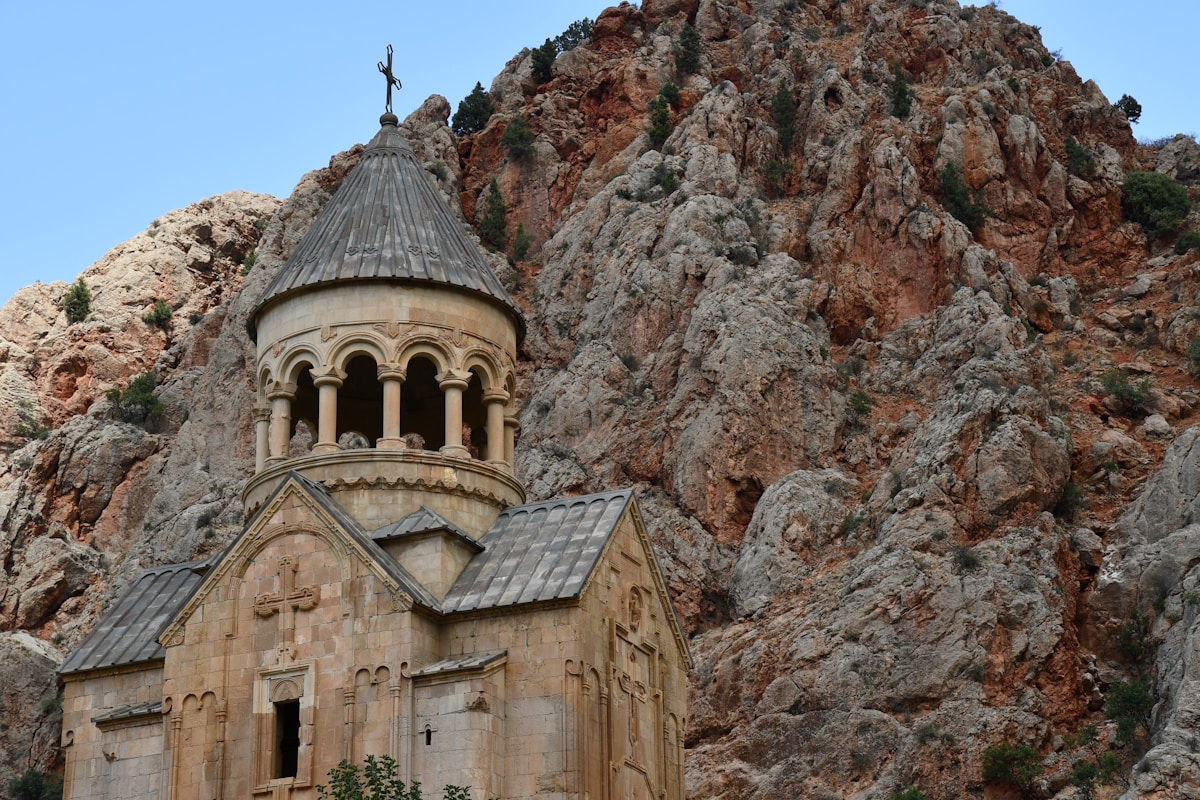
Noravank Monastery is one of the most photographed sites in Armenia - a 13th-century monastic complex built directly into the walls of a narrow red sandstone canyon in the Vayots Dzor region. The approach road cuts through tight ravine walls of oxidised limestone, framing the monastery dramatically before you even arrive. For architecture, geology, and atmosphere combined, this is one of the defining stops on any Armenia itinerary.
Overview and History
Noravank means “New Monastery” in Armenian. The complex was founded in the 12th century and developed substantially in the 13th–14th century under the patronage of the Orbelian princes of Syunik. It sits at around 1,085 metres above sea level in the Amaghu River canyon, approximately 122km south of Yerevan.
The monastery was also an important intellectual centre - the bishop and scholar Esayi Nchetsi ran a scriptorium here, and the master sculptor Momik spent much of his later career at Noravank, producing the intricate stone carvings that make the site exceptional.
The Two Main Churches
Surb Karapet (St John the Baptist)
The older of the two principal churches, Surb Karapet was built in the 13th century and is the liturgical heart of the complex. It includes a spacious gavit (antechamber) and houses remnants of medieval frescoes, though most have deteriorated over the centuries. The church remains active - services are held here on feast days and the building is still used by local clergy.
Surb Astvatsatsin (Holy Mother of God)
This double-storey church, completed in 1339, is the structure most visitors associate with Noravank. Momik designed it as a mausoleum for the Orbelian princes, with the upper chapel serving as a burial space. What distinguishes it from almost every other Armenian church is the entrance to the upper level: a near-vertical external staircase carved into the façade, with no handrail, that requires using both hands on the final steps.
The doorway at the top of the staircase is framed by exceptional relief carvings - a seated Christ flanked by angels, with the Virgin and Child on the tympanum below. The exterior walls throughout the complex are covered in intricate geometric knotwork and animal reliefs typical of the Gladzor and Syunik artistic tradition. Even if you skip the climb, the exterior of Surb Astvatsatsin is worth extended attention.
Entry and Opening Hours
Entry to Noravank is free. There is no ticket booth or formal closing time - the site is accessible whenever the canyon road is open. That said, visiting during daylight hours (approximately 08:00–19:00 in summer, shorter in winter) is both practical and respectful of the working monastery. A donation box near the main entrance supports site maintenance.
The canyon access road is a narrow single-lane track. It is paved but tight, with passing places. In December–February, ice is a real hazard - check conditions before driving if visiting out of season.
Getting There from Yerevan
Noravank is approximately 130km south of Yerevan. The standard route follows the M2 highway through the Ararat Valley toward Yeraskh, then turns south-east through the Vayots Dzor region. Allow around 2 hours each way.
By Car or Hire Car
The most flexible option, and the standard choice for travellers who want to combine Noravank with Khor Virap Monastery and the Areni wine region in a single day. Hire cars are available from Yerevan city centre and Zvartnots Airport. You can compare rates at GetRentacar.
By Marshrutka and Taxi
There is no direct marshrutka to Noravank. The nearest hub is Yeghegnadzor (the regional capital of Vayots Dzor), served by shared taxis from Yerevan’s Kilikia bus station (Sasuntsi Davit metro area). The fare is approximately 900–1,500 AMD per seat as of 2026, with journeys taking 1.5–2 hours. From Yeghegnadzor, a local taxi to Noravank and back with waiting time costs approximately 4,000–7,000 AMD (as of 2026) - agree the full round-trip fare before departing.
By Guided Day Tour
The most straightforward option for travellers without a car. Most Yerevan operators combine Noravank with Khor Virap Monastery and a stop in Areni, covering around 300km in a day. You can compare options and book a Noravank day tour from Yerevan on GetYourGuide. Established operators also include:
- Hyur Service - shared day tours from approximately 20,000–25,000 AMD per person (as of 2026), hotel pickup included
- Envoy Hostel Tours - budget-friendly shared tours from around 15,000–18,000 AMD per person (as of 2026)
- OREX Travel - private and small-group options; price on request
Book at least a day in advance in peak season (May–October).
Combining with the Areni Wine Region and Bird Cave
Areni village sits just 5km from Noravank on the road back toward Yerevan. Armenia’s most celebrated indigenous grape variety - the Areni noir - is grown in the vineyards of this valley, producing wines that range from light and fresh to structured and tannic. Several small family wineries along the main road offer informal tastings and direct sales; bottles typically cost 1,500–4,000 AMD (as of 2026).
The Areni-1 Cave (often called Bird Cave after the large raptor population roosting in the entrance) is a further 20-minute drive from the village. Archaeologists here in 2007 discovered a complete winemaking installation - fermentation vats, storage jars, and grape seeds - carbon-dated to approximately 4,100 BCE. Entry is approximately 1,500 AMD (as of 2026). Active excavations continue, and a site guide is helpful for context; the cave is genuinely interesting even without specialist knowledge.
Combined, Noravank, the cave, and a winery stop fit comfortably into a full day from Yerevan.
Photography Tips
- Arrive early or late: the canyon walls absorb and reflect red-orange light best when the sun is at an angle. The sweet spots are roughly 09:00–11:00 and 16:30–18:30 in summer.
- The opposite bank viewpoint: a small paved area across the ravine from Surb Astvatsatsin gives the classic wide composition showing the church against the full height of the canyon wall. This is where the most recognisable images of Noravank are taken.
- Wide-angle or ultra-wide: the canyon is narrow and the buildings tall, making standard focal lengths awkward for full-building shots. A wide-angle lens or your phone’s ultra-wide mode handles this better.
- Avoiding crowds: Noravank is busiest between 10:00 and 15:00 in summer. Arriving before 09:30 or after 17:00 gives a significantly quieter experience.
What to Wear
The site involves uneven stone surfaces throughout, and if you want to climb the Surb Astvatsatsin staircase, the ascent requires shoes with grip. Sandals and flip-flops are not suitable for the staircase. As an active religious site, shoulders and knees should be covered - a scarf or light jacket is enough. In July and August the canyon retains heat substantially: carry water and sun protection. In spring and autumn, temperatures can drop sharply by late afternoon; a mid-layer is worth packing.
Practical Tips
- Noravank can be busy with coach tour groups between 10:00 and 14:00. Arriving outside this window makes a real difference.
- There are no ATMs at or near the monastery. Bring cash (AMD) for any taxi, winery purchase, or cave entry.
- A small café near the car park serves Armenian coffee, cold drinks, and light food - convenient for a break before the drive back.
- Mobile signal in the canyon is limited on some networks. Download offline maps before you leave Yerevan.
Rock Climbing at Noravank
The canyon walls around Noravank - compressed limestone with varied pocket and crimp holds - are one of the best sport climbing venues in Armenia. Routes range from beginner-friendly slabs to sustained sport lines at harder grades. For route descriptions, access details, gear rental options, and local operator contacts, see our rock climbing in Armenia guide.
Planning Your Visit
Noravank pairs naturally with Khor Virap Monastery (the dramatic monastery on the Turkish border with a view of Mount Ararat, 70km from Yerevan) for a full southern loop. Add an Areni wine stop and the cave and you have a well-structured 8–9 hour day trip. For full options, prices, and what to combine Noravank with, see our Noravank tours guide. If you prefer to book directly, Noravank and Khor Virap tours from Yerevan cover both sites in a single day with pickup included. For a broader route through the south, see our 7-day southern Armenia itinerary. For accommodation options near Noravank in the Areni wine region, see our where to stay in Areni guide.