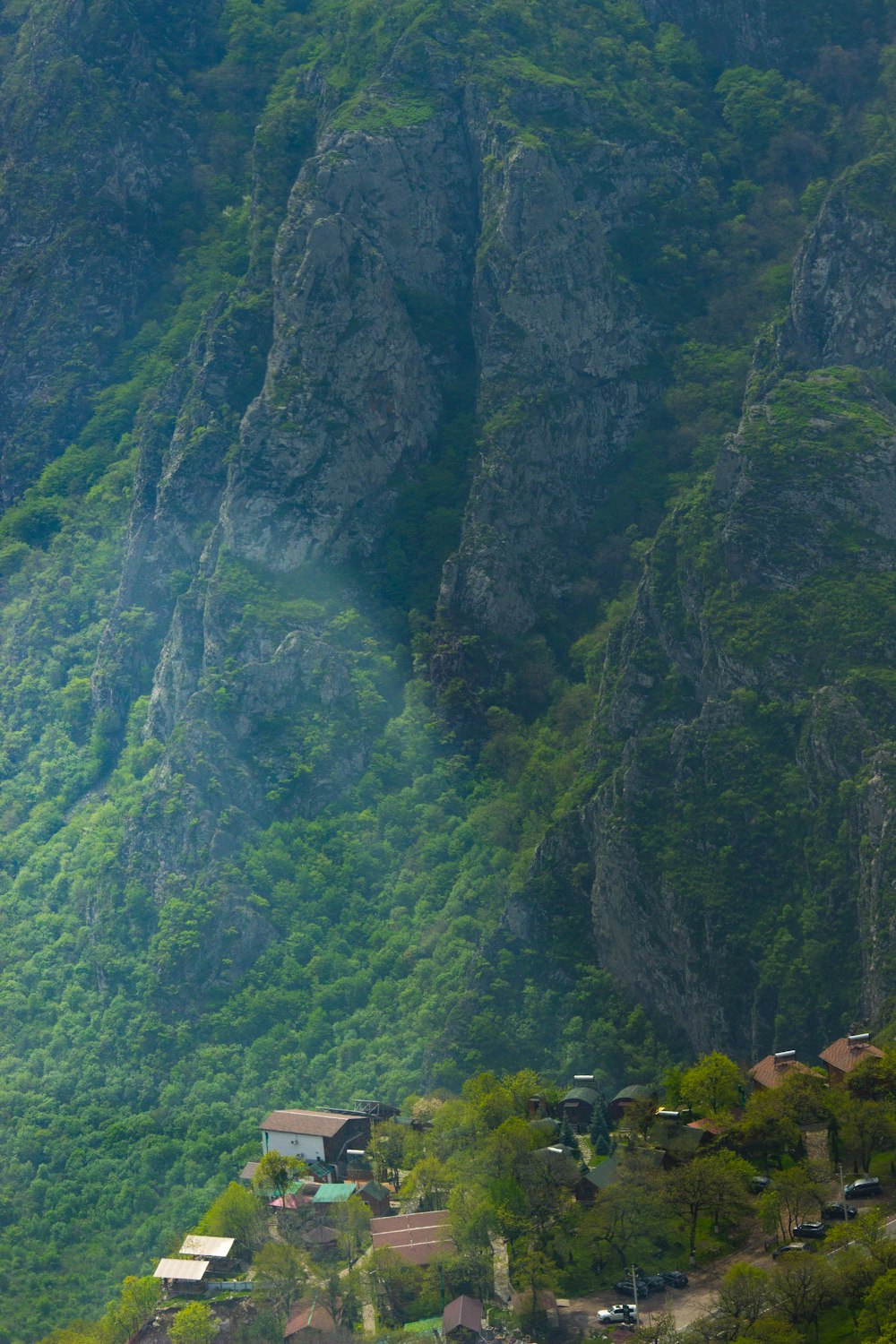
Few places in Armenia stop you in your tracks the way Old Khndzoresk does. Carved directly into a sheer sandstone canyon, this abandoned cave village was home to more than 3,000 people until the mid-20th century - a self-contained community of dwellings, churches, a school, and a mill, all hollowed out of the living rock. Walking through it now, with the wind off the Syunik plateau and the silence broken only by birds, feels genuinely unlike anywhere else in the country.
It takes roughly an hour from Goris to see the essentials. Allow two or three if you want to explore properly - the canyon is deeper than it first looks, the trails branch in unexpected directions, and it’s the kind of place that rewards slow exploration.
A Brief History of the Cave Village
Khndzoresk’s cave dwellings date back at least to the 13th century, though the gorge was likely inhabited long before written records survive. At its medieval peak, it functioned as a fortress town: the sheer canyon walls made attack from outside nearly impossible, and the natural architecture of the caves provided insulation against the harsh Syunik winters.
By the 17th and 18th centuries, Khndzoresk had grown into one of the largest settlements in the region. Residents expanded and refined the original cave openings - carving rooms, storage niches, and even fireplaces into the rock. A church dedicated to St. Hripsime was built into the cliff face, along with a school that reportedly continued operating into the Soviet period.
The beginning of the end came with a series of earthquakes in the early 20th century and, more decisively, with Soviet resettlement policy in the 1950s. Officials deemed cave living incompatible with the modernising project and relocated the population to a new town - today’s Khndzoresk - on the plateau above. The caves were abandoned almost overnight. What you see today is the result of seven decades of gradual return to nature: ceilings that have partially collapsed, floors thick with debris, walls where the plaster that once covered carved stone rooms is slowly flaking away.
The site is not a museum and it is not managed in any formal sense. That is part of what makes it so striking.
The Swinging Bridge
The most photographed feature of Old Khndzoresk is the suspension footbridge - a narrow, slightly unnerving structure that spans the canyon gorge and sways noticeably as you cross. It was constructed to connect the two sides of the site that are otherwise separated by a sheer drop, and it has become the de facto symbol of the village.
The bridge is open to visitors and appears to be well-maintained, though it is clearly not engineered for large groups crossing simultaneously. Cross in small numbers and don’t bounce it deliberately if you value your dignity.
Entry to the bridge area costs approximately AMD 1,000 per person (around USD 2.50 as of 2026). This is collected at a small booth near the main parking area. There is no turnstile; the fee is on trust but the booth is usually staffed in season.
What to See in the Cave Village
The cave dwellings themselves are the main draw. Dozens of carved openings are visible from the canyon rim and trail - some are waist-height, others are full rooms you can step into. The majority are unsafe for entry without local knowledge of which floors and ceilings are stable, so stay on the established trails and look rather than climb into unfamiliar chambers.
The church of St. Hripsime is one of the few structures with standing walls. It’s a small, dark room cut into the canyon wall with a carved apse still partially visible. Candles are sometimes left inside by local visitors. It feels appropriately ancient.
The school ruins are marked on some trail maps but harder to locate without a guide. They sit in the lower section of the canyon and the steps down to them are uneven. Ask at the entrance booth if you specifically want to find them.
The view from the canyon rim - before you descend - is arguably the most dramatic perspective. The full scale of the settlement only becomes clear from above: row after row of cave openings stacked up the cliff face, windows into a way of life that ended within living memory.
Hiking Trails
There is no formally managed trail network, but well-worn paths link the main areas of the site. The main loop from the parking area down into the canyon, across the swinging bridge, and back up the far side takes approximately 1.5 to 2 hours at a moderate pace. The total elevation change is around 120 metres, with some steep stone steps that can be slippery in wet conditions.
Sturdy footwear is essential. The paths are loose in places, particularly after rain in spring. Trekking poles are useful if you have them.
A longer route extends south along the canyon floor for another 3 to 4 km, eventually connecting with the plateau above via a shepherds’ track. This section is unmarked and should only be attempted with local knowledge or a guide - but it gives a much quieter experience than the main loop and the canyon floor vegetation in spring is remarkable.
There is no shade on the upper portions of the trail. In July and August, start early or arrive in late afternoon.
Getting There from Goris
Old Khndzoresk is approximately 6 km from Goris centre via a paved minor road that branches off the main M2 highway heading north. The junction is signed in Armenian and occasionally in English; it is easy to miss if you are moving quickly.
By private car or taxi: This is the most practical option. A return taxi from Goris to Old Khndzoresk costs approximately AMD 5,000–7,000 (around USD 13–18 as of 2026). Most drivers will wait while you explore, though you should confirm this before they drop you and leave. The drive takes around 15 minutes.
By foot from Goris: Technically possible - the road is 6 km - but the route is along a highway shoulder and not pleasant. The 120-metre descent into the canyon after parking adds to the physical effort. We recommend against walking from town unless you have time and enjoy road walking.
With a full-day driver: The most efficient approach is to hire a driver in Goris for a full day covering Old Khndzoresk, Tatev Monastery, and Karahunj. This typically costs AMD 20,000–30,000 for the day (approximately USD 50–75 as of 2026) and your accommodation in Goris can usually arrange it. If you’d prefer to self-drive from Yerevan, compare hire rates at GetRentacar - having your own vehicle gives you full flexibility to linger at the canyon rim viewpoints.
Getting There from Yerevan
Old Khndzoresk is 246 km from Yerevan via the M2 highway south - approximately 3.5 to 4 hours by car in good conditions.
The most practical approach for visitors based in Yerevan is to make Goris an overnight base. Take the marshrutka from Kilikia bus station (approximately AMD 3,000–3,500, around 5–6 hours), stay one or two nights in Goris, and visit Khndzoresk as a half-day excursion. This also lets you combine it with Tatev and Karahunj.
If you want to visit Khndzoresk as a day trip from Yerevan, a private hired car with driver is the only realistic option - public transport does not serve the cave village. Expect to pay approximately AMD 50,000–70,000 (around USD 130–180) for a full-day Yerevan round trip that includes Goris, Old Khndzoresk, and ideally Tatev. Pre-booking a transfer via Kiwitaxi gives a fixed price and avoids roadside negotiation. Organised tours from Yerevan covering the Syunik region are also available and handle the logistics end to end.
Entry Fees and Opening Hours
Old Khndzoresk does not have formal opening hours - the site is an open canyon accessible at any time. The entrance booth collecting the bridge fee (approximately AMD 1,000 as of 2026) operates roughly 9am–7pm in season (May–October) and may be unstaffed entirely in winter. If unstaffed, cross freely.
There is a small café at the upper parking area selling coffee, soft drinks, and packaged snacks. It is not always open out of peak season.
Best Time to Visit
May to June is the most beautiful window: the canyon vegetation is intensely green, wildflowers cover the plateau approach, and temperatures are comfortable for the descent and return climb. The light is good until 8pm in June.
September to October brings cooler air and autumnal colour on the canyon walls. The lower visitor numbers in September make it ideal if you want the site largely to yourself.
July and August are warm and the site is at its busiest - still far quieter than Tatev, but you may find the parking area full on weekends. The canyon creates its own wind and shade in the afternoon, which helps.
November to April - the site is accessible but the descent path can be icy or muddy. The bridge is more exposed to weather and conditions can shift quickly on the Syunik plateau. Bring layers regardless of the season.
Where to Stay Nearby
The best base for Old Khndzoresk is Goris, 6 km away. Options include:
Mirhav Hotel - the most established mid-range choice, with en-suite rooms at approximately AMD 18,000–25,000 per night (around USD 45–65 as of 2026). The staff can arrange transport to the cave village.
Hotel Goris - a renovated Soviet-era building on the main street. Doubles at approximately AMD 14,000–20,000 (around USD 36–52 as of 2026).
Family guesthouses - the best value option at AMD 8,000–12,000 including breakfast (approximately USD 20–30). Several families in Goris rent rooms; your accommodation host will typically know the cave village well and can advise on conditions and transport.
There is no accommodation at Old Khndzoresk itself and no formal camping area, though camping is technically possible on the plateau above the gorge in summer.
For a full overview of accommodation options in Goris and Tatev, see our where to stay near Tatev and Goris guide.
Practical Notes
Mobile signal in the canyon is weak to non-existent - download an offline map before you arrive. There are no toilet facilities beyond basic outhouse provision near the parking area. Bring water, especially in summer.
Photography is permitted and the site is extraordinary for it: the cave openings, the texture of carved sandstone, and the swinging bridge against the canyon walls all photograph well in morning or late afternoon light.
Old Khndzoresk is not a polished attraction. It has no audio guide, no numbered trail markers, and no souvenir shop. It is simply one of the most authentically strange and moving places in Armenia - a vertical ghost town where the walls still bear the marks of the people who lived in them. For context on how the cave village fits into the wider Syunik region, see our Armenia tours guide.