Armenia has a stronger vegetarian tradition than most visitors realise. The Armenian Apostolic Church maintains one of the most demanding fasting calendars in Christendom - upwards of 180 days per year when meat, dairy, and eggs are excluded - which means Armenian cuisine has centuries of practice in plant-based cooking. This creates a genuine infrastructure for vegetarians that runs underneath the dominant khorovats (barbecue) culture.
This guide covers specific restaurants, traditional dishes, and practical ordering strategies for vegetarians visiting Armenia - people who eat dairy and eggs as well as those who don’t. For a broader overview of Armenian food culture, see our Armenian food guide. If you eat strictly vegan (no animal products at all), our companion guide - Vegan Travel in Armenia - covers seasonal planning, guesthouses, supermarket shopping, and regional strategy that goes beyond restaurant recommendations.
The Pasi Tradition: Your Secret Menu
The word pasi (Պաս) means “fasting” in Armenian. During major fasting periods - Great Lent (seven weeks before Easter), Advent, the Dormition Fast, and several shorter periods throughout the year - traditional Armenian households and many restaurants prepare entirely plant-based food.
Most traditional Armenian restaurants maintain a pasi menu alongside their regular menu, but may not display it prominently to tourists. Asking for it directly unlocks a range of dishes that don’t appear on the standard English menu: braised lentils, mushroom stews, herb-stuffed flatbreads, bean soups, and roasted vegetable spreads.
The pasi tradition means that being vegetarian or vegan in Armenia is fundamentally different from navigating a cuisine that simply never developed plant-based cooking. Armenian cooks know exactly how to prepare these dishes - they’ve been doing it for generations. The challenge is communicating your needs, not the food’s absence.
What to Eat: Naturally Vegetarian and Vegan Armenian Dishes
Lobio - Red Bean Stew
Lobio is one of the great dishes of the Caucasus - a thick stew of red kidney beans cooked with onions, walnuts, garlic, fresh coriander, and aromatic spices. It’s substantial, warming, and deeply savoury. Different regions prepare it differently: some versions include dried plum or pomegranate molasses for acidity; some are served with pickled vegetables on the side. In its basic form, lobio is always vegan. Order it with lavash and a plate of fresh herbs for a complete meal.
Jingalov Hats - Herb Flatbread
Jingalov hats is one of the best vegetarian dishes anywhere in the South Caucasus. It’s a soft flatbread folded around a stuffing of finely chopped fresh and dried herbs - up to 20 different varieties, including spinach, sorrel, nettles, dill, coriander, chervil, and various wild greens - then cooked on a hot griddle. Originally from the Artsakh (Nagorno-Karabakh) tradition, it has spread throughout Armenia and is now widely available in Yerevan. Find the best versions at stalls near the Vernissage market in central Yerevan and at a cluster of dedicated stalls on Abovyan Street. One large jingalov hats is a generous meal. Entirely vegan.
Dolma - The Vegetarian Version
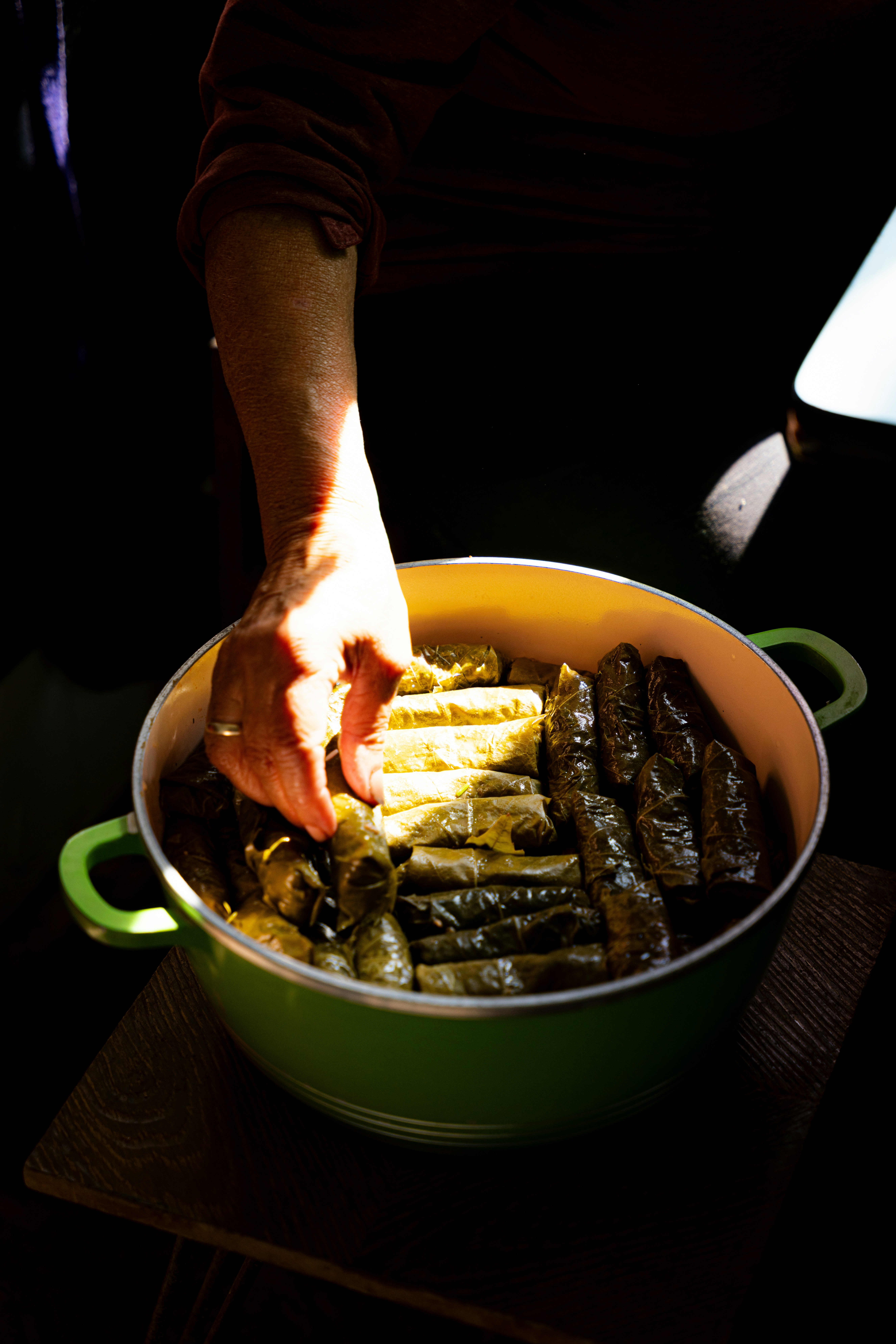
Dolma typically contains minced lamb or beef, but vegetarian versions - filled with rice, herbs, and spices, wrapped in grape leaves or stuffed into peppers and courgettes - are traditional in their own right, particularly during fasting periods. Ask specifically for kanachapti dolma (grape leaf dolma) or ask if they have a pasi version. At Dolmama in Yerevan, the kitchen is well-practised in vegetarian dolma. The version stuffed into small aubergines with pomegranate seeds is particularly good when available.
Herb Salads and Meze
Armenian restaurant meals typically begin with a spread of small dishes that can constitute an excellent vegetarian meal in themselves. Look for:
- Banir ev kanchakner - cheese and herbs (fresh dill, parsley, basil, tarragon, served in generous bunches)
- Mutabal - roasted aubergine blended with tahini, lemon, and garlic (similar to baba ghanoush, but Armenian versions often add walnuts)
- Walnut dip (unkuynov chaman) - ground walnuts with garlic, vinegar, and dried chilli
- Roasted pepper spread - charred sweet peppers blended with herbs and a little vinegar
- Pickled vegetables (marinabad) - cauliflower, cabbage, green tomatoes, and garlic pickled in brine
- Lavash - always vegan, served warm and fresh at good restaurants
Order a selection of these as a table spread with extra lavash and you have a substantial, genuinely delicious plant-based meal at any price point.
Ghapama - Stuffed Pumpkin
Ghapama is a festive autumn dish: a whole pumpkin stuffed with rice, dried apricots, raisins, prunes, walnuts, and spices, then slow-baked until the pumpkin flesh melts into the filling. It’s prepared for celebrations and special occasions, and won’t appear on everyday menus. When it does appear (in October and November particularly), it’s worth ordering immediately. The basic preparation is vegan; some versions add butter, so confirm when ordering.
Mujaddara and Lentil Dishes
Lentil and rice preparations - variations of the mujaddara known across the Middle East - appear on pasi menus and in cafés oriented toward health-conscious customers. Usually finished with caramelised onions and cumin. Simple, filling, vegan.
Fresh and Dried Fruit
Armenia’s dried fruit culture is exceptional. The country is one of the oldest apricot-growing regions in the world (the species name Prunus armeniaca acknowledges this), and dried apricots, prunes, figs, and mulberries are everywhere. The GUM Market in Yerevan has the best selection - snacking your way through it is one of the simple pleasures of being in Armenia.
Navigating the Khorovats Culture
Armenian barbecue culture is the main challenge for vegetarians. Khorovats (barbecue) is the defining ritual of Armenian social eating - family gatherings, festivals, celebrations, and rural lunches all revolve around grilling meat over wood fire. Refusing khorovats can feel culturally significant in a way that refusing a side dish would not.
A few practical strategies:
Accept the gesture, eat around it. If you’re a guest at a family gathering or rural restaurant where khorovats is the centrepiece, it’s worth being gracious rather than making your dietary choice the focus. Order heavily from the meze and salad section, accept a token piece if offered and leave it on the plate, and appreciate the hospitality in other ways.
In tourist restaurants, be specific. Most Yerevan restaurants have enough experience with international visitors to understand “no meat, no chicken, no fish” without cultural friction. Use the phrases below.
Order vegetable khorovats (kanacheghen khorovats). Many restaurants grill vegetables - whole peppers, aubergines, courgettes, onions, potatoes - on the same fire as the meat. A platter of grilled vegetables with lavash and a herb dip is excellent and usually available even at the most carnivore-focused restaurants.
Yerevan Restaurant Guide for Vegetarians and Vegans
The Green Bean
The Green Bean on Terian Street is the closest thing Yerevan has to a dedicated vegan café. The menu is almost entirely plant-based with occasional dairy options, and the kitchen thinks in terms of full plant-based nutrition rather than “everything except meat.” Expect grain bowls, lentil soups, seasonal salads with serious herb presence, and good coffee. Popular with younger Yerevani and expats. Prices are moderate at around AMD 2,500–4,500 per person. A reliable fallback if you need certainty about what you’re eating.
Cafe Central - Vegan Options
Cafe Central on Abovyan Street is a longstanding Yerevan café with a good range of vegetarian and some vegan options alongside its standard menu. The kitchen does a strong herb salad, a decent mujaddara, and roasted vegetable preparations that shift seasonally. It’s not a vegetarian restaurant, but the staff understand the request clearly and can point you to what works. AMD 3,000–5,000 per person.
Anteb
Anteb (on Tpagrichneri Street) serves the cuisine of Armenian communities from southeastern Turkey - dishes rooted in Gaziantep-style cooking. Several dishes are naturally vegetarian: muhammara (roasted red pepper and walnut spread) is excellent here, içli köfte can be ordered without meat filling, and the bulgur preparations are usually available in a vegetarian version. Worth visiting specifically for the muhammara and the distinctive flavour profile that differs from mainstream Yerevan cooking. AMD 3,500–6,000 per person. See our best restaurants in Yerevan guide for full context on Anteb and similar restaurants.
Dolmama
Dolmama on Pushkin Street is Yerevan’s most celebrated restaurant and handles vegetarian requests with confidence. The kitchen’s knowledge of Armenian ingredients means the vegetarian options are genuinely thoughtful rather than afterthoughts: herb-heavy salads, walnut-dressed cold dishes, vegetarian grape-leaf dolma when in season. For a special meal, this is where to go. AMD 15,000–25,000 per person including wine. Book ahead for weekend evenings.
Sherep Wine Bar
Sherep on Amiryan Street is the best wine bar in the city and a strong choice for vegetarians: the food format (small plates, shared dishes) naturally produces a table full of plant-based options - fire-baked vegetables, aged cheeses, walnut spreads, grilled bread. The wine list is exceptional. Not cheap (AMD 12,000–20,000 per person), but worth it for an evening. Full details in our best restaurants in Yerevan guide.
If you want a guided introduction to Yerevan’s food scene - including market visits and traditional restaurant stops - browse Yerevan food and cultural tours. Several operators run dedicated food-focused itineraries with stops at the GUM Market, Vernissage, and traditional Armenian restaurants.
GUM Market
The GUM Market off Mashtots Avenue has some of the best cheap vegetarian eating in the city. The dairy counters sell fresh matsun, string cheese, and labne-style preparations; the produce section has extraordinary seasonal vegetables and herbs; around the edges, small stalls sell soup and grain dishes. A vegetarian lunch here - fresh lavash, a bowl of bean soup, some matsun, and a handful of dried apricots from the dried-fruit vendors - costs under AMD 2,000 and is genuinely satisfying.
Dilijan: Forest-Foraged Vegetarian Eating
Dilijan in the Tavush region is Armenia’s answer to a mountain spa town - pine-forested, cool, and with a food culture that draws heavily on foraged ingredients. Vegetarian eating here is excellent:
- Haghartsin monastery restaurant area has several small cafés serving herb soups, mushroom stews, and forest-ingredient spreads
- The town’s small restaurants along Sharambeyan Street tend toward home-cooking style and manage vegetarian requests comfortably
- Wild mushrooms, nettles, sorrel, and blackberries all appear in local cooking in season - ask what’s currently foraged
Dilijan is also an easy day trip from Yerevan. The combination of forest walking and good vegetarian food makes it particularly appealing if Yerevan’s restaurant scene feels too urban.
Gyumri: Traditional Plant-Based Cooking
Gyumri, Armenia’s second city, has a more conservative food culture than Yerevan - but the conservatism cuts both ways. The city maintains a stronger connection to traditional Armenian cooking, which means the lenten menu tradition is more embedded here than in the capital’s more internationally influenced scene.
In Gyumri, ask any traditional restaurant for the pasi meny (lenten menu) - you’re likely to get a more authentic and extensive response than in some Yerevan spots that have simplified their pasi offering for tourists. The city has a handful of restaurants around Vardanantz Square where traditional preparations - herb stews, bean dishes, lavash with herb spreads - are still the everyday default.
The city’s Kumayri Historic District has a cluster of restaurants in renovated 19th-century buildings where the menus lean toward traditional Armenian cooking with good vegetarian depth.
Take a Guided Food Tour as a Vegetarian or Vegan
A guided food tour of Yerevan removes the uncertainty that comes with navigating a meat-dominant culture: a local guide handles the pasi menu conversation, knows which stalls at the GUM Market are worth stopping at, and can identify herb-flatbread spots and lentil soups that don’t appear on tourist-facing menus. Several Yerevan food tour operators run itineraries that include the Vernissage market, a lavash bakery demonstration, and stops at Saryan Street wine bars - most can be tailored for vegetarian and vegan requirements on request, and the format naturally suits plant-based eaters since Armenian meze culture produces a table of small shared dishes rather than a single centrepiece. For operator reviews, prices, and what each itinerary covers, see our Yerevan food tours guide. Browse Yerevan food and cultural tours for small-group and private options running most days in high season.
Key Armenian Phrases for Ordering
Armenian can be challenging to pronounce, but making the effort to use even basic phrases significantly changes the response you get in traditional restaurants and local markets.
| Situation | Armenian | Transliteration |
|---|---|---|
| I am vegetarian | Ես բուսակեր եմ | Yes busakehr yem |
| I don’t eat meat | Ես միս չեմ ուտում | Yes mis chem ootoom |
| I don’t eat chicken | Ես հավ չեմ ուտում | Yes hav chem ootoom |
| I don’t eat fish | Ես ձուկ չեմ ուտում | Yes dzook chem ootoom |
| I am vegan (no animal products) | Ես կենդանական արտադրանք չեմ ուտում | Yes kendanakan artadrank chem ootoom |
| Do you have a lenten menu? | Ունե՞ք պաս մենյու | Ooneck pasi menyu? |
| Without meat please | Առանց մսի, խնդրեմ | Arants msi, khntrem |
| With vegetables only | Միայն բանջարեղեն | Miayn banjareghen |
| What is in this dish? | Ի՞նչ կա այս ուտեստի մեջ | Inch ka ays ootesti mezh? |
A printed copy of these phrases, or showing them on your phone, works well in any restaurant. Most waitstaff in Yerevan understand English, but in Dilijan, Gyumri, and rural settings, these phrases will be genuinely useful.
Seasonal Vegetarian Highlights
Armenia’s vegetarian food is strongly seasonal. Spring (April–May) is peak season for fresh herb-stuffed dolma using young vine leaves, nettles in soups, and foraged greens from mountain markets. Summer brings fresh pomegranates, tomatoes stuffed with herb rice, and cold aubergine spreads. Autumn (September–October) is ghapama season - stuffed pumpkin with dried fruits - and the wine harvest in the Areni valley accompanies an abundance of fresh grape leaves. Winter sees the most robust lentil and bean cooking, heavier herb stews, and the full depth of the pasi tradition.
For full seasonal breakdowns by region - including which months are best for vegan travellers and what to expect from guesthouses outside Yerevan - see our Vegan Travel in Armenia guide.
Practical Notes
Dairy is not always flagged. Armenian cooking uses matsun (yoghurt) extensively as a condiment - it often arrives automatically with dolma, manti, and some soups without being listed in the dish description. If you’re vegan, say specifically “without yoghurt” (arants matsun).
Hidden meat stock. Some bean and lentil soups in traditional restaurants are made with meat stock even when no meat appears in the finished dish. In a pasi restaurant during fasting periods this won’t be the case, but outside those contexts it’s worth asking.
Bread and lavash are always vegan. Safe at any table.
Supermarkets for self-catering. Yerevan has several Yerevan City supermarkets with good produce sections and a growing range of plant-based products. SAS Supermarket is reliable and well-stocked for nuts, dried fruits, pulses, and fresh vegetables.
For restaurant details and neighbourhood context covering all budget levels, see our eating out in Yerevan guide. For the broader picture on Armenian food culture and what to eat regardless of diet, see our Armenian food guide.
Plan Your Trip
Browse Armenia food tours and cooking classes - several Yerevan operators offer vegetarian-friendly sessions focused on traditional Armenian plant-based cooking. For a half-day city itinerary tailored to the capital’s best spots, browse Yerevan city food tours - some operators can tailor the route for vegetarian and vegan requirements on request. Arrange travel insurance before departure and pick up a prepaid eSIM from Airalo so you have data to navigate restaurant apps and translation tools from the moment you arrive. Browse hotels in Yerevan - the capital has the widest range of plant-based-friendly restaurants, and most are concentrated in the central neighbourhoods within walking distance of each other.