EU Commission Finds Armenia Making Good Progress on Visa Liberalization
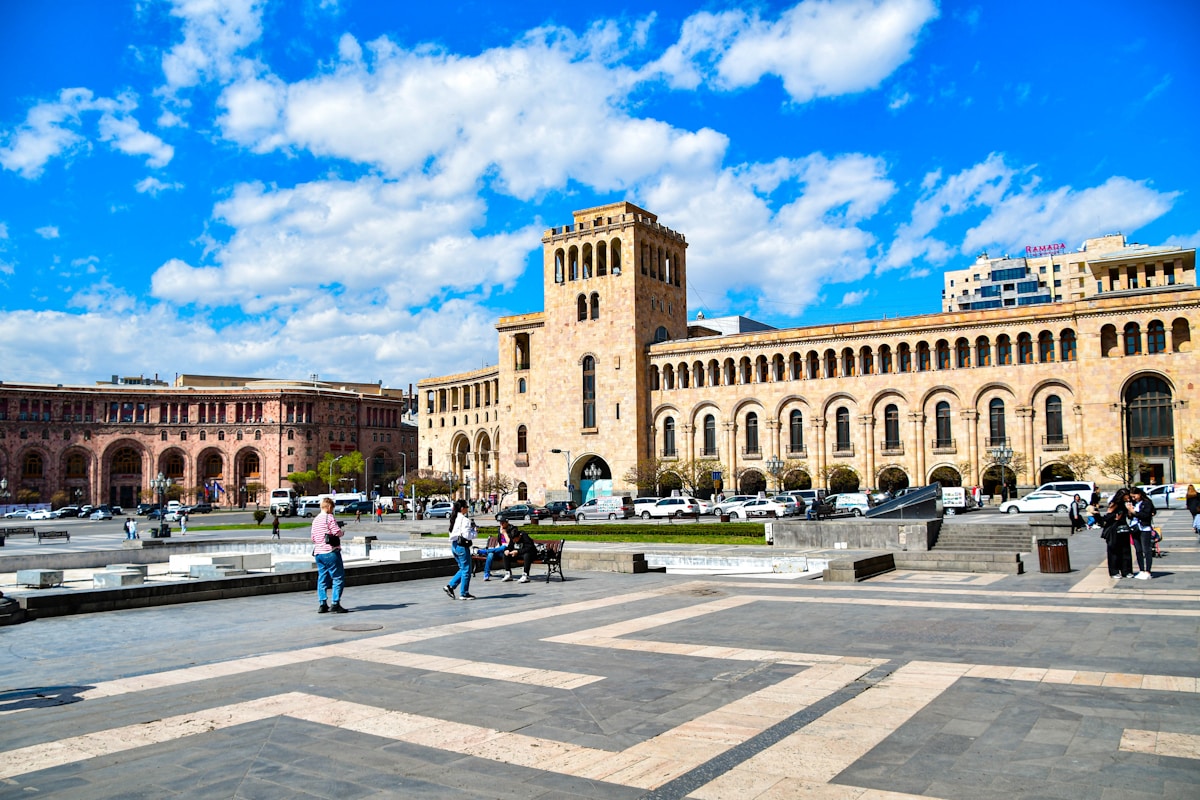
The European Commission officially published its first progress report on Armenia’s Visa Liberalization Action Plan (VLAP) on 13 May 2026, marking a formal milestone in what has been a rapidly moving reform process. The report — delivered personally to Armenia’s Minister of Internal Affairs at the inaugural Armenia-EU Summit in Yerevan on 5 May, in the presence of Prime Minister Nikol Pashinyan, European Council President António Costa, and European Commission President Ursula von der Leyen — records that Armenia has made “good progress” across all four pillars of the plan.
What the report covers
Armenia’s VLAP contains 74 benchmarks grouped into four reform areas:
- Document security: Armenia adopted a new State Population Register law in July 2025 and signed a public-private partnership to modernize its national biometric identification system. Parliament’s vote on 12 May to mandate ICAO-standard biometric passports and ID cards directly addresses this pillar.
- Border, migration, and asylum management: An Integrated Border Management Strategy for 2026–2029 is being developed. Since January 2026, an electronic system for managing citizenship cases has been live, and digitalization of residence permit procedures for foreign nationals is under way.
- Public order and security: Armenia’s anti-corruption legal framework has been substantially rebuilt since 2018. A new Crime Prevention Strategy for 2026–2033 was launched this year, reinforcing evidence-based, institutionally coordinated approaches to public safety.
- Fundamental rights: A draft anti-discrimination law aligned with EU standards is in preparation; 2025 also saw new legislation on children’s rights.
The Commission will continue monitoring progress with support from EU member-state experts. Additional assessment missions to Armenia are expected in the coming months, and the dialogue will continue until all 74 benchmarks are fully implemented.
Why this matters for travellers
Visa liberalization would allow Armenian-passport holders to enter the Schengen Area without a visa. Beyond its direct benefit to Armenian citizens and the diaspora, that shift typically accelerates a country’s profile as a destination: Schengen access stimulates outbound diaspora travel and raises international awareness of the destination in both directions.
Armenia’s reform trajectory — now formally acknowledged by the European Commission — adds credibility to the country’s positioning as a politically stable, Western-oriented travel destination. It also underscores why visitor numbers have grown so sharply: 172,705 tourists arrived in April 2026 alone, up 39.6% year on year.
Entry requirements for foreign nationals visiting Armenia are unchanged for now. The temporary visa-free programme for holders of valid US, EU/Schengen, or GCC residency permits runs until 1 July 2026 and covers citizens of 113 nationalities for stays of up to 180 days per calendar year.
For full current entry details, see our Armenia visa requirements page. Planning your first visit? Our two-week Armenia itinerary offers a practical route through the country’s highlights, while the best time to visit Armenia page breaks down the calendar month by month. Yerevan, as the capital and principal entry point, is covered in full in our Yerevan destination guide.