August is not Armenia’s busiest month for international arrivals - statistics released this week show July numbers dipped slightly compared to June - but culturally it may be the richest of the year. Two ancient traditions fall within days of each other this month, giving visitors a window into Armenian heritage that most guided tours never stop to explain.
Navasard: the ancient Armenian New Year - 11 August
Navasard marks the start of the pre-Christian Armenian calendar. The name combines nav (new) and sard (year), and the day commemorates the legendary victory of Hayk, patriarch of the Armenian nation, over the Babylonian king Bel. According to ancient reckoning, that battle took place in 2492 BC - placing Navasard among the oldest calendrical celebrations still observed anywhere.
In 2026, Navasard falls on Tuesday 11 August. It is not a public holiday, but cultural organisations and heritage groups hold observances in Yerevan and beyond, ranging from poetry readings and traditional music performances to gatherings at historic monuments. The mood is reflective and celebratory together, with an emphasis on Armenian identity and the pre-Christian roots of the nation’s culture.
Blessing of Grapes - 14 August
Three days later, on 14 August, the Armenian Apostolic Church marks the Feast of the Assumption of the Holy Mother of God. Immediately after the Divine Liturgy, trays piled with freshly harvested grapes are brought to the altar and blessed - the only fruit given this honour in the Armenian liturgical year. Wine represents the blood of Christ in Armenian tradition, and by long custom no one from the new grape harvest until the blessing has taken place.
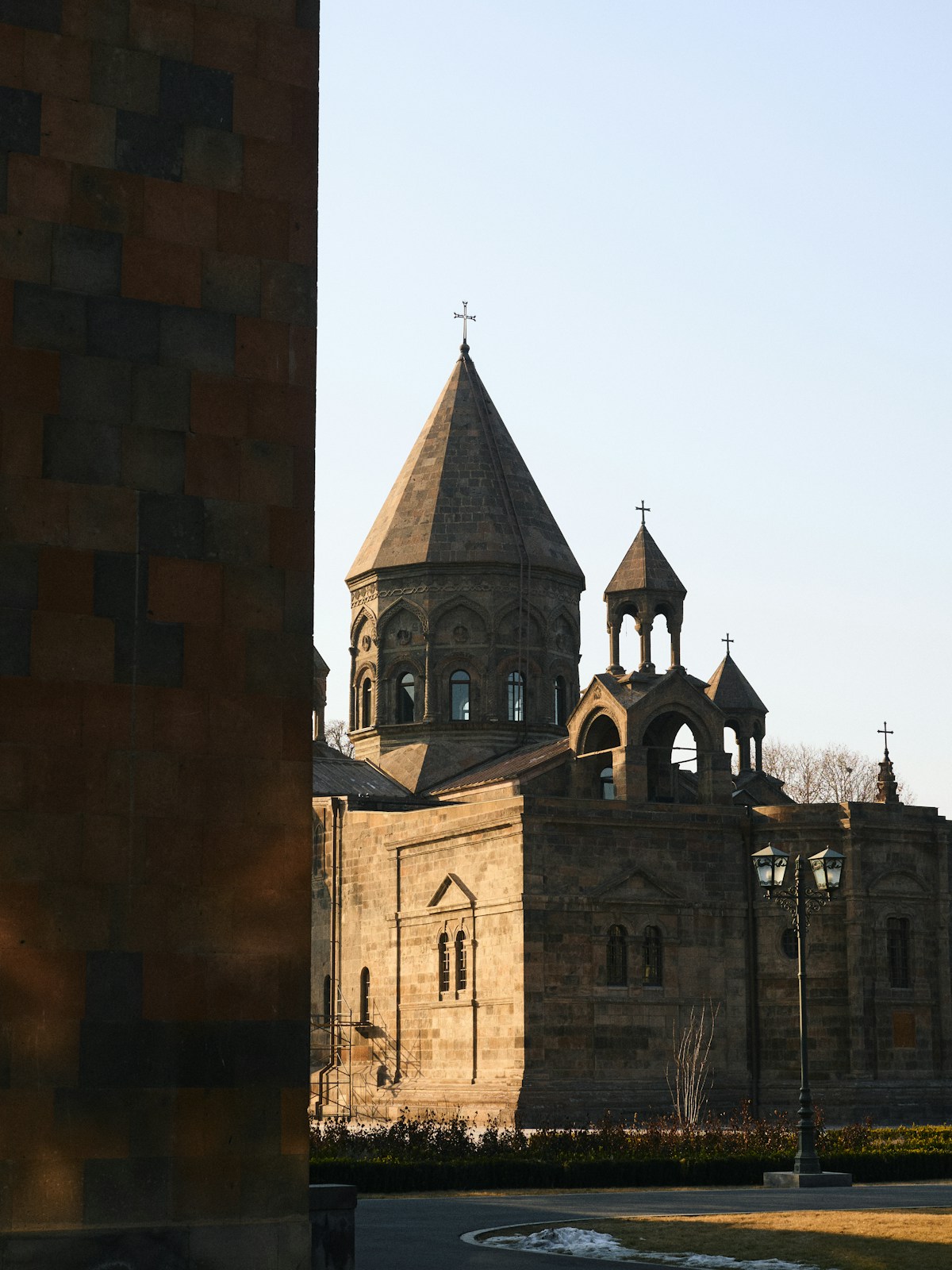
The main ceremony unfolds at the Mother See of Holy Etchmiadzin, 20 km west of central Yerevan - the oldest cathedral in the world still in use and the centre of Armenian Apostolic Christianity. The liturgy begins mid-morning; visitors are welcome but should dress modestly (covered shoulders and knees). Smaller blessings take place simultaneously at churches throughout the country, including Geghard Monastery and Khor Virap.
Following the ceremony the atmosphere turns festive. Families share the newly blessed grapes, Yerevan’s restaurants and wine bars fill for the evening, and local markets overflow with the first produce of the grape season.
Extending the experience
The week of the Blessing of Grapes is an ideal time to explore Armenia’s wine tasting scene, which reaches a particular energy when the harvest is imminent and winemakers are drawing down their last reserves of the previous year. The Ararat Valley and the Vayots Dzor region - home to the Areni grape variety - both offer cellar visits and tastings.
For practical planning, our Armenia in August guide covers weather, crowds, and what else is on across the month. To combine Etchmiadzin, the Blessing of Grapes, and the wine region in one day, guided tours from Yerevan run year-round and cover both sites. Despite the slight July dip, Armenia’s tourism trajectory for 2026 remains on target: the country recorded 1,041,598 international arrivals in the first half of the year, up 14.8% on 2025, with the government’s full-year target of 2.2 million still well within reach.