Things to Do in Yerevan: The Essential Guide to Armenia's Capital
Book an experience
Book this activity
Lock in your preferred date. Prices shown are per person — free cancellation on most bookings.
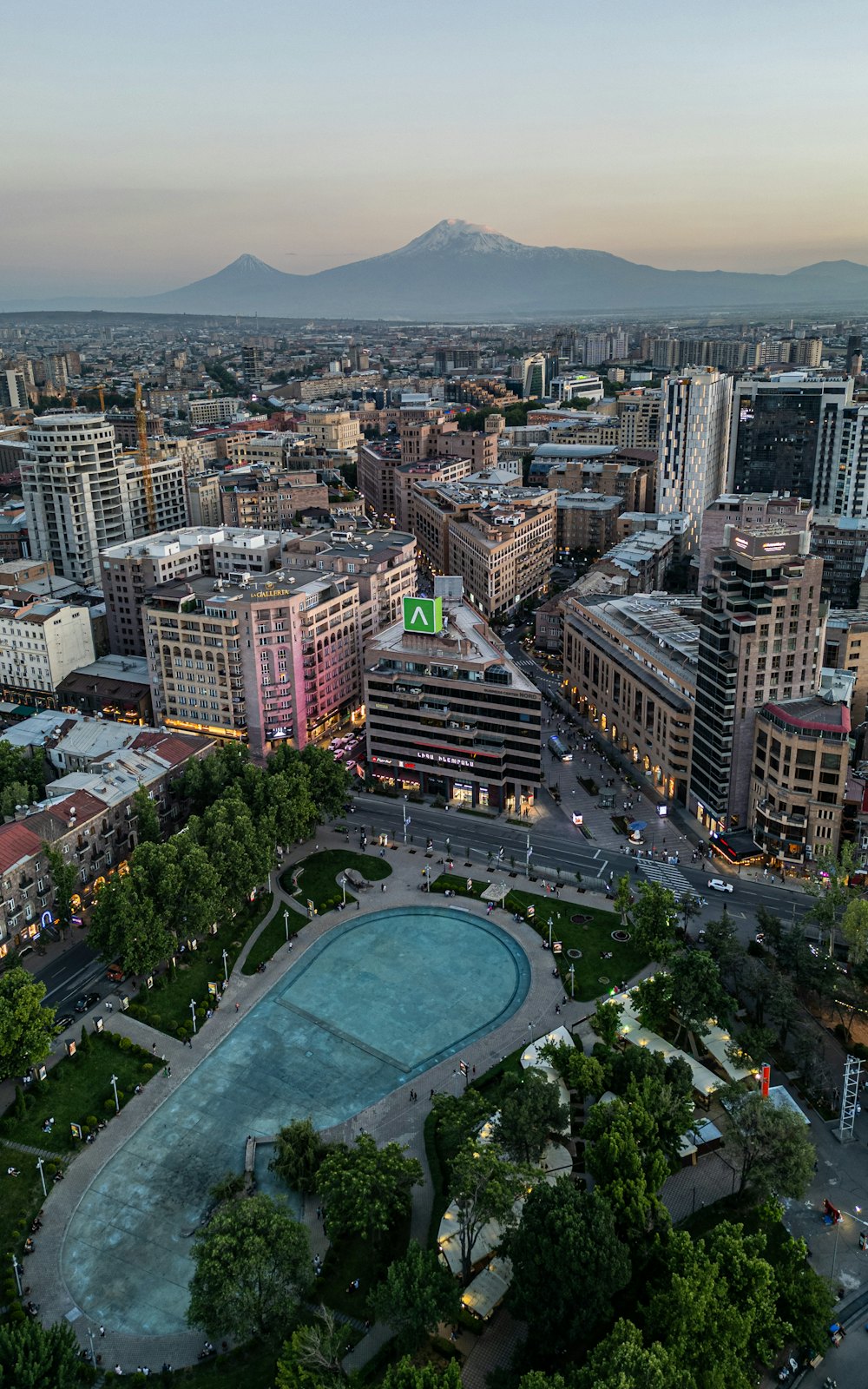
Yerevan is compact enough to explore on foot and varied enough to fill several days without any sense of repetition. The centre is built from the characteristic pink-cream volcanic tufa stone that gives the city its “Pink City” nickname, and the skyline — on a clear morning — is framed by Mount Ararat across the border in Turkey. What follows is a practical breakdown of the main things to do, with opening hours, entry costs as of 2026, and honest notes on what each sight actually involves.
The Cascade
The Cascade is Yerevan’s signature landmark and the most photogenic spot in the city. It is a monumental staircase cut into a hillside on the northern edge of the centre — 572 steps rising from the city streets to a hilltop terrace with panoramic views over Yerevan and, on clear days, Mount Ararat.
The staircase is free to use at any time. Each level of the outdoor complex features fountains, gardens, and large-scale sculptures — including works by Fernando Botero — donated to the city by the philanthropist Gerard Cafesjian, after whom the adjacent Cafesjian Museum of Art is named. The museum itself (partially set into the hillside) charges an entry fee of approximately AMD 3,000 as of 2026, though the outdoor areas and viewpoints are always open and free.
The interior of the Cascade also houses escalators, so you can ride up and walk down, or walk up at your own pace. Best time to visit: mornings before 10am or evenings after 6pm in summer, when it is cooler and the light is better for photographs. The fountains typically run in the afternoon and evening during warm months.
Republic Square and the Musical Fountains
Republic Square is the ceremonial heart of Yerevan — a large oval plaza ringed by Soviet-era government buildings in Armenian pink and buff tufa stone, all designed by architect Alexander Tamanian. The National Gallery and National History Museum flank one side; the Government House and Foreign Ministry occupy the others.
During the day the square is pleasant for a walk but relatively quiet. Evenings are when it comes alive: from approximately 9pm in summer (late May through September), the central fountains run a choreographed display synchronised to classical music and Armenian folk songs, with coloured lighting and crowds gathering on the surrounding plaza. The show is free and worth staying for at least one evening.
The Armenian History Museum is directly on Republic Square. Entry costs approximately AMD 1,500 as of 2026. It covers Armenian prehistory, the Bronze Age Urartu kingdom, medieval manuscripts, and ethnographic material — a solid 1.5 to 2 hour visit. Closed Mondays.
Vernissage Weekend Market
Vernissage is an open-air market that runs every Saturday and Sunday along a pedestrian stretch near Hanrapetutyan Street, a short walk from Republic Square. It is one of the best craft markets in the South Caucasus.
The stalls are stacked with Armenian crafts — hand-painted ceramics, traditional carpets, copperwork, jewellery, and intricate woodwork. The market is also the best place to find Soviet-era memorabilia: pins, medals, watches, military insignia, and propaganda posters at prices that reward browsing and mild negotiation. Chess sets — Armenia has a deep chess culture — are sold in every material and style, from carved stone to inlaid wood.
Entry is free. Vendors generally open from around 9am. Best time to visit: Saturday morning for the largest selection. Arrive early if you are after specific items, as quality pieces sell quickly.
Matenadaran — Institute of Ancient Manuscripts
The Matenadaran is one of the world’s most important repositories of medieval manuscripts and sits on a hill at the top of Mashtots Avenue, a 20-minute walk from Republic Square.
The collection holds over 23,000 manuscripts and historical documents — Armenian, Greek, Arabic, Persian, Hebrew, Latin — many of them illustrated and some more than 1,000 years old. The building itself, designed in the 1950s, has a imposing Neo-Armenian facade with statues of Armenian scholars on the exterior.
Entry costs approximately AMD 3,000 as of 2026, with an additional charge for photography permits. Guided tours in English are available and recommended, as the context transforms what might otherwise seem like a room of very old paper into something genuinely remarkable. Closed Sundays and Mondays. Allow 1.5 to 2 hours.
Mother Armenia Statue and Military Museum, Victory Park
Victory Park sits on a plateau above the Hrazdan Gorge on the western side of the city centre. The park is centred on the Mother Armenia statue — a 22-metre female figure holding a sword aloft, installed in 1967 on the same plinth that once held a Stalin statue. The view from the platform looks directly south over central Yerevan.
Directly beneath the statue is the Military Museum, housing exhibits on the 1915 Armenian Genocide, the Soviet period, and the Nagorno-Karabakh conflict. Entry is free; the museum’s tone is sombre and the content serious. The park itself is free and open all hours. To reach it from the centre, take the metro to Yeritasardakan station and walk uphill, or take a short taxi.
Ararat Brandy Factory Tour
The Ararat Brandy Factory — officially the Yerevan Brandy Company, producing the Ararat label — has been operating since 1887 and is the most famous spirits brand in Armenia. The factory is in central Yerevan and runs guided tours that include the ageing cellars, a small museum of the brand’s history, and a tasting of two or three brandies.
Tour prices range from approximately AMD 5,000 to AMD 8,000 as of 2026, depending on the tasting package. Book in advance — tours run on fixed schedules (typically morning and afternoon slots) and fill up, particularly in summer. Booking via the official Ararat website or through a local tour operator is straightforward. The tour itself takes around 1.5 hours and is engaging even for visitors with limited interest in spirits.
Kond Neighbourhood
Kond is the oldest surviving district of Yerevan — a hillside neighbourhood of narrow alleys, low stone houses, and staircase lanes that cascades down the slopes above the Hrazdan Gorge. While most of central Yerevan was rebuilt in the Soviet era, Kond preserves fragments of the older city fabric.
It is a working neighbourhood, not a tourist zone — no cafés, no signage, no gift shops. Walking through Kond takes 30 to 45 minutes and is completely free. The experience is simply the contrast: a few minutes from Republic Square, you are on a dirt lane between century-old stone walls. Best approached from the eastern end, entering from the streets above the Hrazdan Gorge. A short taxi or 25-minute walk from the centre.
Blue Mosque
The Blue Mosque (Göy Məsjid in Azerbaijani; known locally as Mshetsi Mayramasan) is an 18th-century mosque on Mashtots Avenue, roughly 10 minutes on foot from Republic Square. It is the only mosque still functioning in Yerevan and is currently managed by the Iranian embassy, which restored it in the 1990s.
The courtyard is tiled and planted with trees, providing welcome shade in summer. The blue-tiled interior is quietly beautiful. Entry is free and open to non-Muslim visitors during daylight hours outside of prayer times. Dress modestly — shoulders and knees covered. Photography is generally permitted in the courtyard.
Practical Notes
All central Yerevan sights — the Cascade, Republic Square, Vernissage, Blue Mosque, and Kond — are within comfortable walking distance of each other. The Matenadaran is a 20-minute walk from the square along Mashtots Avenue. Victory Park is best reached by metro (Yeritasardakan) or a short taxi of approximately AMD 800–1,200.
Most paid attractions are closed on Mondays and/or Sundays. Check ahead if you are visiting on a specific day. Prices listed here are approximate as of 2026 — entry fees at state museums are reviewed periodically, so confirm on arrival.
For guided tours that cover multiple sights in one half-day, the GYG widget above shows current availability and pricing from Yerevan-based operators. Book a Yerevan city walking tour to cover the Cascade, Republic Square, and Vernissage in one morning with a local guide, or browse all Yerevan tours and activities for day trips to Garni, Geghard, and Lake Sevan.
Frequently Asked Questions
- How many days do you need to see Yerevan's main attractions?
- Two full days covers the core sights comfortably: the Cascade, Republic Square, Vernissage market, Matenadaran, and an evening at the singing fountains. A third day lets you add the Ararat Brandy Factory, Kond neighbourhood, and the Blue Mosque at a more relaxed pace.
- Are most Yerevan attractions walkable from the city centre?
- Yes. The Cascade, Republic Square, Vernissage market, Blue Mosque, and Kond neighbourhood are all within 20–30 minutes on foot from each other. Matenadaran and Victory Park (Mother Armenia) are slightly further but reachable by metro or short taxi.
- What is the best time of day to visit Republic Square?
- Evenings from around 9pm in summer, when the musical fountains are illuminated and running. The square is busy and atmospheric from late afternoon through to midnight in warm months.
- Do I need to book the Ararat Brandy Factory tour in advance?
- Yes. Tours run on a fixed schedule and fill quickly, especially in summer. Book directly through the Ararat brand website or via a local tour operator at least a day or two ahead.
Ready to explore?
Browse hundreds of tours and activities. Book securely with free cancellation on most options.
Browse on GetYourGuide →Best price guaranteed — same price as booking direct. We earn a small commission at no extra cost to you.