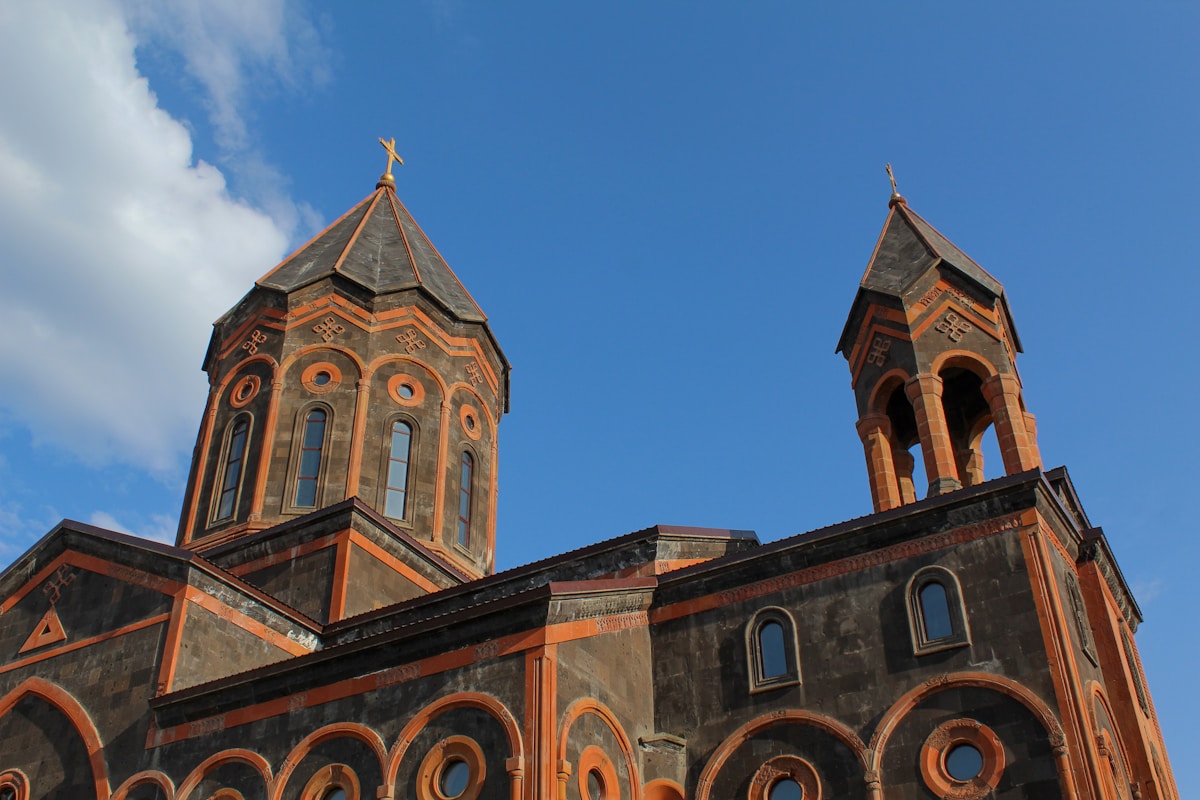
Gyumri is Armenia’s second city and one of the most historically layered destinations in the Caucasus. Where Yerevan is all pink tuff and Soviet modernism, Gyumri is black and grey volcanic stone — a city of 19th-century mansions, earthquake-scarred rebuilding, and a stubborn cultural identity that residents wear with considerable pride.
A Gyumri day tour from Yerevan covers around 250 km round trip but is entirely achievable in a single day: you are rolling by 08:30 and back by 19:00. For those who want more depth — and Gyumri rewards it — overnight options exist and are worth considering if your itinerary allows. For accommodation options, see our where to stay in Gyumri guide.
Prices in this guide are approximate as of 2026 (AMD at approximately 400 AMD per USD).
What Makes Gyumri Worth the Trip
Gyumri was the second most important city in Soviet Armenia and one of the country’s industrial and cultural centres. The 7 December 1988 earthquake, measuring 6.8 on the Richter scale, killed over 25,000 people and left much of the city in ruins. Recovery has been slow, and Gyumri today still shows the scars — cracked buildings, temporary housing that became permanent, and a population that is roughly half what it was before 1988.
Yet the Kumayri historical quarter — a 20-hectare zone of pre-earthquake 19th-century architecture — was largely preserved and has been steadily restored. Walking through it, between tall tuff-stone mansions with ornate wrought-iron balconies and carved wooden doors, is unlike anywhere else in Armenia. The scale and ambition of what was built here in the 1870s to 1910s comes as a genuine surprise.
Gyumri is also one of Armenia’s craft centres. The city has a tradition of carpet-weaving, ceramics, and metalwork that predates the Soviet period. Workshops in and around the Kumayri quarter are active and accessible.
What to See in Gyumri
Kumayri Historical Quarter
The main draw. The quarter covers the area around Gai Boulevard and Abovyan Street, bounded roughly by the 19th-century grid streets northwest of Vardanants Square. Allow at least 2–3 hours to walk it properly.
Key sights within the quarter:
- Dzitoghtsyan House-Museum — preserved merchant house from the 1880s showing life in pre-earthquake Gyumri; one of the best small museums in Armenia
- Aslamazyan Sisters Museum of Fine Arts — private gallery housing the collection of artists Mariam and Yeranuhi Aslamazyan, including work by Armenian and Russian modernists
- Craft workshops — several working ceramic and metalwork studios welcome visitors; no need to book
- City Museum of Gyumri — covers the earthquake and recovery in some detail; some exhibits are in Russian or Armenian only
Surb Amenaprkitch Church (Holy Saviour)
The Russian Orthodox church on Gorki Street is one of Gyumri’s most distinctive buildings — a mid-19th century structure in the Russian ecclesiastical style, unusual in an overwhelmingly Armenian Apostolic city. The interior is intact and worth a brief visit. Entry is free.
Surb Sarkis Cathedral
The main Armenian Apostolic cathedral on Gai Boulevard, built in the late 1880s and restored after 1988 damage. The large modern church adjacent to it is a post-earthquake addition. Sunday morning services (09:00–10:30) are atmospheric.
Vardanants Square and the Motherhood Monument
The city’s central square, dominated by a Soviet-era statue and surrounded by the restored town hall and civic buildings. The Motherhood monument (locally called “Mayr Hayastan” or the Weeping Mother) at the city’s edge, overlooking a valley, is a 20th-century stone sculpture of considerable power — less visited than the sights in the centre but worth the short detour.
Central Market (Gumi Shuka)
The main covered market, active every day, is a good place to end a morning in the Kumayri quarter. Dried fruits, local honey, churchkhela (walnut-stuffed grape-juice strings), and spices are all of high quality. Gyumri is a reasonable place to buy Armenian ceramics at lower prices than Yerevan.
Tour Options from Yerevan
Organised Group Day Tours
Group day tours to Gyumri from Yerevan typically depart at 09:00–10:00 and return by 18:00–19:00. Most cover the Kumayri quarter, the Aslamazyan Gallery, and one or two churches, with a lunch stop included or optional.
Typical group tour inclusions:
- Minibus or coach from central Yerevan
- English-speaking guide
- Kumayri quarter walking tour
- Aslamazyan Gallery visit (entry approximately 1,500 AMD — confirm if included)
- One church visit
What is usually excluded: Museum entry fees, meals, personal purchases at the market.
Approximate group tour prices as of 2026:
- Standard Gyumri day tour: USD 35–50 per person (~14,000–20,000 AMD)
- Gyumri + Haghpat/Sanahin combo tour (north circuit, full day): USD 50–70 per person (~20,000–28,000 AMD)
Book a Gyumri Tour Online
Tours to Gyumri are available through GetYourGuide with free cancellation. Typical options include full-day group tours with English-speaking guides, private Gyumri day tours with a driver-guide, and combo routes combining Gyumri with the Haghpat and Sanahin UNESCO monastery complex in the Lori region.
Browse Gyumri tours and check live availability →
Private Tours and Private Drivers
A private vehicle is the most flexible option for Gyumri. The drive up is straightforward on the M1 motorway and allows stops en route (the Akhuryan reservoir viewpoint is a common photo stop). A private guide-driver can also take you to smaller sites outside the Kumayri quarter that group tours skip.
Approximate private tour costs as of 2026:
- Private vehicle (driver only, up to 4 passengers): USD 100–140 (~40,000–56,000 AMD)
- Private guide-driver: USD 130–180 (~52,000–72,000 AMD)
Guesthouses in Yerevan (Envoy Hostel, Paros Hostel) sometimes organise shared private vehicles for Gyumri at lower cost — ask the evening before.
Getting to Gyumri Independently
Gyumri is one of the most straightforward independent trips from Yerevan:
By marshrutka: Minibuses depart from Yerevan’s Kilikia bus station (main intercity terminal) and from the Sosebi bus station in the north of the city. Journey time is approximately 1 hour 50 minutes. Fares are approximately 1,500–2,500 AMD. Departures are frequent during morning hours (07:00–10:00) and taper off in the afternoon.
By train: A daily service departs from Yerevan railway station (Yerkeratghayin Kayaran, near the city centre) to Gyumri. Journey time approximately 2.5 hours. Tickets cost 1,500–2,000 AMD. The train is relaxed and the scenery through the Kasagh valley is pleasant. Check current timetables locally — the schedule changes seasonally.
By rental car: The M1 motorway north from Yerevan to Gyumri is well-maintained and a pleasant drive. A car hire booked through GetRentacar covers agencies at Zvartnots airport and in central Yerevan.
Gyumri Combos: What to Add to the Route
Gyumri + Haghpat and Sanahin Monasteries (North Circuit)
Haghpat and Sanahin are two UNESCO World Heritage monasteries in the Lori region, approximately 50–60 km northeast of Gyumri via Alaverdi. Combining them with a Gyumri stop on the same day creates the classic north Armenia circuit. This is a long day (10–11 hours from Yerevan) and requires an early start (07:30 departure) to make it comfortable. Many operators run this as a single tour. See our Haghpat and Sanahin Monasteries guide for what to expect.
Gyumri Overnight
If a single day feels rushed — and for those who want to attend an evening concert or explore at a slower pace — Gyumri has a reasonable selection of small hotels and guesthouses. See our where to stay in Gyumri guide for current options and price ranges. Staying overnight also allows an early morning in the Kumayri quarter before tourist groups arrive from Yerevan.
What It’s Like Arriving in Gyumri
The city does not immediately present itself well — the approach via the northern highway passes through earthquake-era housing blocks and industrial zones. Give it 20 minutes and walk into the Kumayri quarter. The contrast between the ruined periphery and the restored historic core is stark and part of what makes Gyumri compelling rather than simply pretty.
The Kumayri district in late morning (10:00–12:00) is quiet and unhurried. Workshop owners and gallery staff are almost universally welcoming to visitors; several speak basic English. The craft workshops along Abovyan Street, in particular, are worth browsing even if you are not buying.
Practical notes for Gyumri:
- Carry AMD cash — card acceptance is limited outside the main hotels
- The Aslamazyan Gallery closes on Mondays; confirm opening hours before visiting
- Gyumri is 1,500 metres above sea level — temperatures are noticeably cooler than Yerevan, especially in spring and autumn; bring a layer
- ATMs are available near Vardanants Square
When to Go
Gyumri can be visited year-round, though the May to October window is the most comfortable. Summer in Gyumri is cooler than Yerevan (the altitude helps), making it a welcome relief from the capital’s July heat.
September and October are excellent months — the air is clear, the light is good for the black tuff architecture, and the city is at its most relaxed after the summer tourist season.
Winter visits are possible. Gyumri receives more snow than Yerevan (it is higher and further north) and the Kumayri quarter in snow is atmospheric. Driving conditions on the M1 can be challenging in January and February — check weather before departing.
For the broader seasonal picture, see our guides to visiting Armenia in September and best time to visit Armenia.
Plan Your Trip
✈️ Book your flights to Armenia 🛡️ Get travel insurance 🏨 Find hotels in Gyumri 🚗 Rent a car in Armenia