Armenian cuisine rarely gets the attention it deserves on the international food circuit. That’s the case for food tour operators too: Yerevan’s scene is genuinely good - built on centuries of fresh herb culture, UNESCO-listed lavash baking, and a barbecue tradition that every Armenian will tell you their family does best. A food tour is the fastest way to understand the city, and the best ones cover far more than restaurants.
What Makes a Yerevan Food Tour Worth Booking
The city is compact - most of the key food stops sit within a 2km radius of Republic Square - which makes walking tours practical and efficient. The GUM Market (Yerevan’s covered central market) alone justifies the trip: stalls piled with dried herbs, walnuts, pomegranate molasses, aged cheeses, and cuts of basturma that have been curing for weeks. Most operators build the tour around the market before moving to neighbourhood restaurants and backstreet vendors.
The other reason to join a tour rather than eating solo: context. Armenian food is inseparable from social ritual. Knowing that khorovats is never rushed, that lavash is so culturally significant it was added to UNESCO’s Intangible Cultural Heritage list in 2014, or that ghapama is a harvest celebration dish - these stories make the eating better.
Key Armenian Dishes You’ll Encounter
Khorovats is the centrepiece of Armenian food culture. Pork, lamb, and vegetables are grilled over an open wood or charcoal fire - the technique varies by region and by family. In Yerevan, you’ll find it in restaurants along Abovyan Street and in casual grills around the Vernissage area. Tours that visit family homes often feature khorovats at lunch.
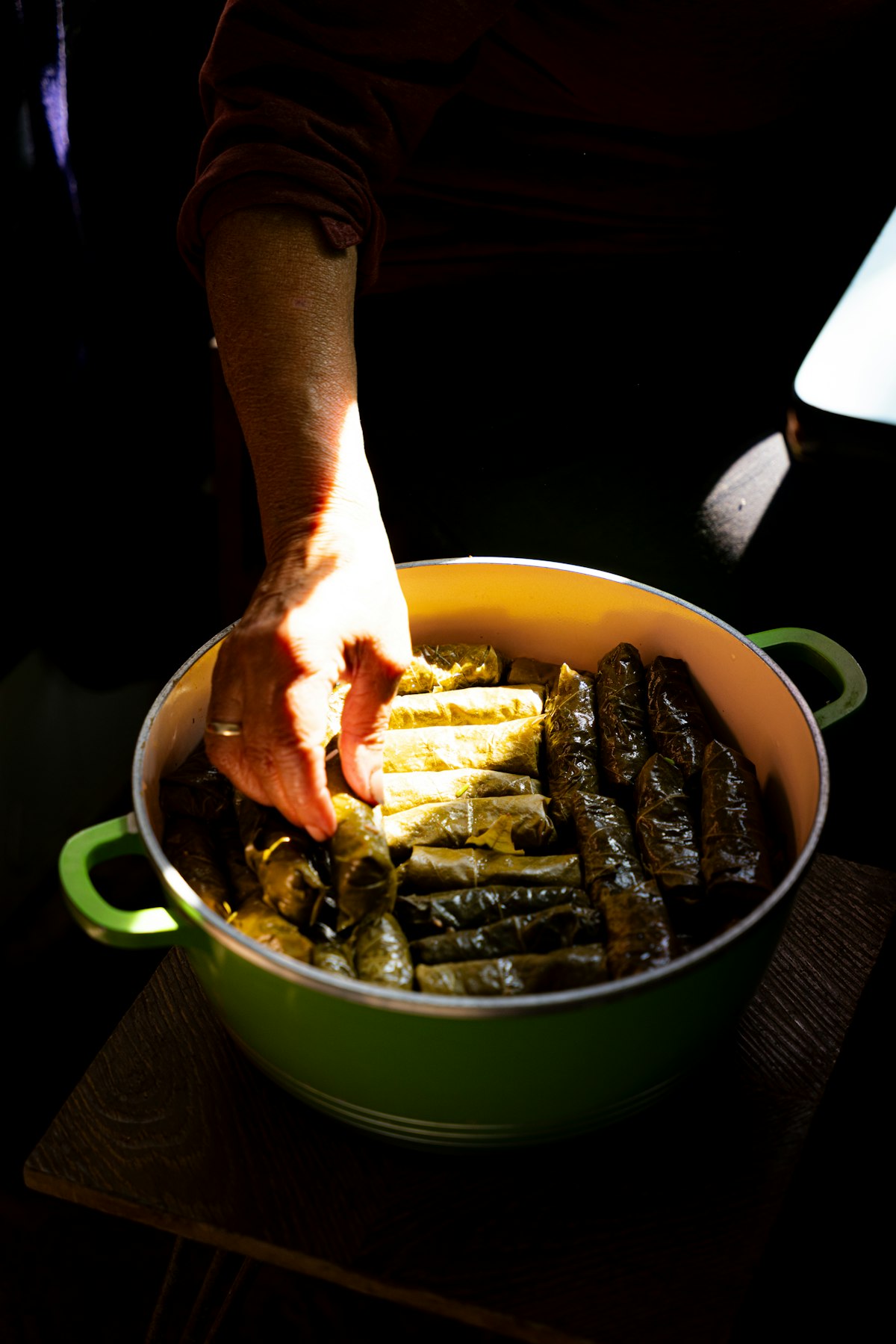
Dolma comes in several forms: grape leaves stuffed with spiced minced meat and rice (tolma yev gaghamp), or cabbage rolls with a similar filling. A purely vegetarian version stuffed with herbs and bulgur is made during fasting periods. Either way, they arrive with a side of matsun (Armenian yogurt), which provides an essential counterpoint to the richness.
Lavash is best eaten fresh from a tonir (clay oven) - watching bakers stretch it paper-thin against the oven wall is a highlight of any market visit. Day-old lavash is wrapped around greens, herbs, and cheese for a common street snack called jingalov hatz in Karabakh tradition, adapted here as a wrap with fresh greens.
Ghapama is a festive stuffed pumpkin - the hollowed-out shell filled with rice, dried fruits (apricots, raisins, dates), butter, and honey, then baked whole. It’s primarily made in autumn and for celebrations; some cooking-class operators prepare it when pumpkins are in season.
Basturma and sujuk are both cured meats with heavy spice coatings - basturma is pressed dried beef rubbed with a fenugreek paste called chaiman; sujuk is a dried sausage with the same spice profile. You’ll find both at the GUM Market, where vendors will slice samples.
Brandy and wine: Armenia’s brandy tradition (the Churchill connection to Ararat brandy is real and well-documented) is inseparable from hospitality. Most tours include at least a tasting of Armenian brandy or local wine from the Areni-Noir grape - a variety that has been grown in the Vayots Dzor region for over 6,000 years.
Tour Operators in Yerevan
Yerevan Food Tours (operating as a boutique local operator) offers a 3-hour walking tour of the GUM Market and surrounding streets, with approximately 8–10 tastings. Prices start from around USD 45 per person for small groups. The tour covers the market, stops at a lavash bakery, and ends with brandy at a local bar. Book through GetYourGuide or directly via their website.
Gastro Tours Armenia runs half-day and full-day formats. The half-day (from approximately USD 55 per person) focuses on the city centre - market, restaurants, a wine shop. The full-day version (from USD 95 per person) extends to a home cooking experience in a Yerevan apartment, where you help prepare dolma and one or two seasonal dishes before sitting down to eat together. Maximum group size is 8 people.
Local cooking classes are also widely available, usually run by individual hosts through GetYourGuide. A 3-hour session where you learn to make lavash, dolma, and one main course typically costs USD 70–100 per person including all ingredients and a shared meal. These are particularly popular for solo travellers who want a more personal experience than a group walking tour.
Private food walks can be arranged through most operators for couples or small groups who want a fully tailored itinerary - useful if you have specific dietary restrictions or a particular interest (wine, brandy, or bread culture, for example). Expect to pay USD 120–180 for a private 3-hour experience.
Book a Yerevan Food or Brandy Tour Online: Options and Prices
The tours below are bookable through GetYourGuide with free cancellation. Prices are per person and approximate as of 2026 (AMD converted at approximately 390 AMD per USD).
| Tour | Duration | Price (USD) | Price (AMD) | What’s Included |
|---|---|---|---|---|
| Yerevan Walking City Tour with Brandy & 5 Wines | 3 hrs | from $21 pp | ~8,200 AMD | Local guide, Armenian brandy, wine tastings, Republic Square, Cascade |
| Yerevan Food & Market Walking Tour | 3 hrs | from $45 pp | ~17,500 AMD | GUM Market, lavash bakery, neighbourhood restaurant stops, 8–10 tastings |
| Yerevan Brandy Tasting Experience with Local Delicacies | 2 hrs | from $55 pp | ~21,500 AMD | Guided tasting at Ararat factory, Armenian cheeses and dried fruit pairings |
| Armenian Cooking Class with Local Delicacies | 3 hrs | from $70 pp | ~27,300 AMD | Hands-on dolma and lavash preparation, shared meal, all ingredients |
Food and drink quantities on walking tours vary by operator; confirm what is included before booking. Most tours depart from Republic Square or a nearby meeting point in the city centre.
Browse Yerevan food and drink experiences →
GUM Market Price Guide (AMD)
The GUM Market (Pak Shuka) on Mashtots Avenue is worth visiting before or after any guided tour. Here’s what you’ll typically pay at stalls in 2026 - useful for self-guided shopping or comparing what tour operators include.
| Item | Typical Price (AMD) |
|---|---|
| Lavash flatbread (fresh, one sheet) | 300–500 AMD |
| Basturma (per 100g) | 1,800–2,800 AMD |
| Sujuk dried sausage (per 100g) | 1,200–2,000 AMD |
| Aged sheep’s cheese (per 100g) | 600–1,000 AMD |
| Dried apricots - sour variety (per 100g) | 400–700 AMD |
| Walnuts, shelled (per 100g) | 500–900 AMD |
| Pomegranate molasses (250ml jar) | 1,000–1,800 AMD |
| Churchkhela (walnut-grape candy, one strand) | 300–600 AMD |
| Gata pastry (one piece) | 300–500 AMD |
| Fresh herb bundle (tarragon, coriander, basil) | 100–200 AMD |
Vendors at the back of the basement level - near the meat counters - will slice samples of basturma and sujuk without pressure. The cheese sellers near the central aisle tend to have the widest variety. For pomegranate products (molasses, juice concentrate, seeds), the stalls in the ground-floor southeast corner stock more small-producer options than the main entrance displays.
Self-Guided Food Walk: Key Stops and What to Pay
If you prefer to eat independently before or after a guided tour, this walk covers the main food stops in the city centre. Budget approximately 10,000–15,000 AMD (~$25–40) for a full morning of eating.
1. Lavash bakery near the GUM Market - Fresh lavash from a tonir oven is sold by weight or per sheet. A freshly baked sheet costs 300–500 AMD. Eat it immediately with local white cheese (available from adjacent stalls for around 800 AMD per portion) and fresh herbs.
2. Dolmama restaurant, Pushkin Street 10 - One of Yerevan’s best-known traditional restaurants. A plate of baked dolma (stuffed grape leaves) with matsun runs approximately 2,500–3,500 AMD. The lamb khorovats plate is 4,000–6,000 AMD depending on portion. Best for a sit-down lunch mid-tour.
3. Café Central area on Abovyan Street - The stretch between Moskovyan and Sayat-Nova has several casual lunch spots where a bowl of harissa (slow-cooked wheat and chicken porridge) costs 1,200–2,000 AMD and manti (small baked dumplings with yogurt and sour cherry sauce) runs 1,500–2,500 AMD. These are everyday Yerevan lunch dishes, not tourist-facing menus.
4. Ararat Brandy Factory visitor tasting, Admiral Isakov Avenue 2 - A self-guided tasting of three Ararat brandies with a guide explanation of the ageing process costs approximately 6,000–8,000 AMD per person as of 2026. Advance booking recommended in summer. This is the single most impressive brandy stop in the city and worth combining with any wine or spirits tour.
5. Vernissage wine bar cluster - The blocks immediately west of the Cascade have a concentration of natural wine shops and wine bars stocking small-producer Areni-Noir and Voskehat whites. A glass typically costs 1,500–3,000 AMD; bottles from small wineries in Vayots Dzor start around 4,000–8,000 AMD to take home.
Neighbourhood Breakdown
Abovyan Street and the Centre
The stretch of Abovyan Street between Republic Square and the French Square is the heart of Yerevan’s cafe and restaurant scene. Mid-market Armenian restaurants sit alongside contemporary wine bars and casual lunch spots. Most walking tours pass through this area at least once.
Tavern Yerevan on Pushkin Street is a landmark traditional restaurant - khorovats plates run 4,500–7,000 AMD, harissa approximately 1,800 AMD, and a spread of meze-style starters (with pickles, herbs, cheese, and lavash) for a table of two costs 4,000–6,000 AMD. It’s busy at lunchtime but rarely fully booked mid-week.
Sherep restaurant on Mashtots Avenue handles the upscale end - a four-course menu of contemporary Armenian cuisine runs approximately 12,000–18,000 AMD per person without drinks. Several food tours use this as a final dinner stop for groups wanting a sit-down meal rather than standing tastings.
The GUM Market (Pak Shuka)
Yerevan’s indoor market on Mashtots Avenue is the single most rewarding food stop in the city. The ground floor is produce - the displays alone are worth seeing, especially in summer when the stalls overflow with fresh herbs, pomegranates, and piles of dried fruit. The basement level has meat stalls, cheese sellers, and spice vendors. Basturma and dried sujuk hang from hooks at the back. Budget 45–60 minutes here on any self-guided walk.
The market is most useful in the morning (09:00–12:00) when produce is fresh and vendors are more likely to offer samples. A typical sampling route: start at the dried fruit stalls (sour apricots ~400 AMD/100g), move to the cheese counter for a slice of aged sheep’s cheese (~700 AMD/100g), then finish at the basturma vendors in the basement (~2,000 AMD/100g). A basket of the best items - pomegranate molasses, churchkhela strands, and a bag of walnuts - costs approximately 5,000–8,000 AMD total.
Vernissage and the Cascade
The open-air Vernissage market (weekends) and the area around the Cascade complex have a cluster of restaurants that cater to a mix of tourists and Yerevan residents. Some of the better wine bars in the city are within walking distance of the Cascade’s terraced gardens, including shops selling Areni-Noir wines from small producers in Vayots Dzor.
Nalbandyan Street and Beyond
Slightly away from the main tourist drag, Nalbandyan Street and the surrounding residential blocks have some of the more honest neighbourhood restaurants in Yerevan - no menus translated for tourists, longer lunches, better prices. If a tour takes you off the standard circuit, this is where you’ll likely end up.
How to Plan Your Food Tour Visit
Timing: Lunch hours (12:30–15:00) are the right time for a food tour - markets are busy, restaurants are at their best. Evening tours that take in bars and wine tasting work well too.
Best season: May to October. Winter is quieter and some tours operate less frequently, though the GUM Market runs year-round.
Combining with sightseeing: A morning at the Matenadaran manuscript museum followed by a lunchtime food tour works well - both sit in the same northern end of the city centre. Alternatively, pair a food tour with a day trip to Garni and Geghard if you’re staying more than two nights.
Going deeper on Armenian food: Our eating out in Yerevan guide covers the best restaurants by area and price point. For the full picture on what you’ll be eating, the Armenian food guide explains each dish’s cultural context in more detail.
Food tours book out faster than most activities in Yerevan during peak season. If you’re visiting between June and September, browse and book Yerevan food tours on GetYourGuide as soon as you have your travel dates confirmed.