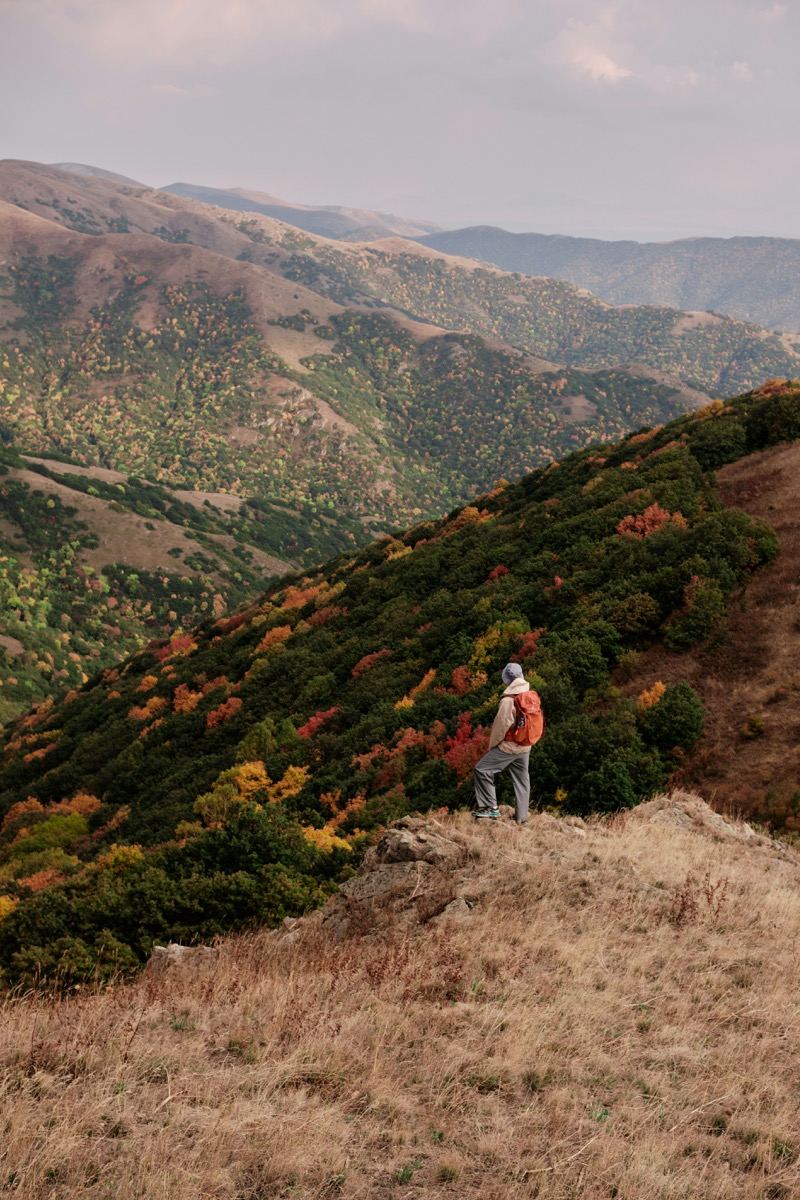
Ten days gives you time to see Armenia properly: the ancient monasteries ringing the capital, the deep gorges and basalt plateaux of the south, the beech forests of Dilijan, the vast blue expanse of Lake Sevan, and the black-tuff architecture of Gyumri. This is a complete circuit - designed for independent travellers who want to cover the country’s highlights without needing to rush any of them.
The best months to run this trip are May–June or September–October. Heat peaks in the Ararat Valley in July and August, and winter closes some of the southern mountain roads.
A hire car from Day 5 onward is strongly recommended. We suggest comparing rates through GetRentacar - local agencies at Zvartnots Airport are typically 20–30% cheaper than the international chains, and summer availability tightens quickly. If you’re still at the trip-planning stage, see our plan your trip to Armenia guide for a pre-departure checklist covering visas, flights, insurance, and accommodation.
Days 1–2: Yerevan
Yerevan is an easy city to land in. Zvartnots Airport is 12 km west of the centre - a GG app (Armenia’s ride-hailing service) transfer costs around 3,000–4,000 AMD (roughly $8–10), or take a fixed-rate taxi for ~5,000 AMD.
Day 1 - Arrival and Orientation
Walk the city from the centre outward. Start at Republic Square - the main civic hub ringed by buff-and-rose tuff stone buildings - then follow Northern Avenue north toward the Opera House. End the afternoon on the upper terraces of the Cascade, the giant stairway-monument above the city: the views over Yerevan toward Ararat (assuming a clear day) reward the 572 steps.
The area around Abovyan Street and the bottom of the Cascade concentrates the city’s better restaurants. Lavash (Tumanyan St 21) is a reliable opening-night dinner - traditional Armenian cooking in a refined setting, mains approximately 5,000–9,000 AMD. Sherep (a few blocks away) skews more contemporary, similar price range.
Day 2 - Culture and Markets
Morning at the Matenadaran (Mesrop Mashtots Ave 53) - the Institute of Ancient Manuscripts, which holds around 23,000 medieval Armenian texts. Entry approximately 3,500 AMD; guided tours are available and add significant context. Open Tuesday–Saturday 10:00–16:00.
Afternoon: the Vernissage Market (weekends) has khachkar carvings, handmade jewellery, Soviet memorabilia, and locally produced cognac. On weekdays, walk the GUM Market on Mashtots Avenue instead - a covered market with fresh produce, dried fruit, spice stalls, and churchkhela (walnut-and-grape candy).
Evening: consider the Ararat Brandy Factory tour if timing works, or save it for Day 3 morning. The factory sits above the Hrazdan Gorge; tours end with a tasting and run at set times (approximately 10:00 and 14:00 on weekdays), costing 6,000–10,000 AMD per person.
Where to stay in Yerevan:
| Tier | Property | Approx. price per night |
|---|---|---|
| Budget | Envoy Hostel (Pushkin St) - central, dorms with lockers | ~5,000–8,000 AMD / $13–20 (dorm) |
| Mid-range | Ani Plaza Hotel (Saiat-Nova Ave) - solid 4-star, walking distance from Republic Square | ~50,000–70,000 AMD / $125–175 |
| Upscale | The Alexander (Abovyan St) - Marriott Luxury Collection, rooftop bar with Ararat view | ~130,000–180,000 AMD / $325–450 |
Prices approximate as of 2026; book in advance for peak summer dates.
Day 3: Garni Temple and Geghard Monastery
A half-day round trip from Yerevan, approximately 28 km east.
Garni Temple is the only surviving Hellenistic structure in Armenia - a 1st-century AD basalt temple built for a pagan sun deity and rebuilt in the 1970s after an earthquake destroyed the original. Entry approximately 1,500 AMD. Open daily 11:00–18:00. The gorge below (the “Symphony of Stones” basalt columns) is accessible via a 20-minute walk down from the temple car park.
Geghard Monastery (14 km further east) is a UNESCO World Heritage Site - part of the church complex is carved directly into the cliff face. The acoustics inside the main cave church are extraordinary. Entry is free; guides are not required but are available. No strict opening hours - aim to arrive before noon to beat group tour coaches.
Transport: Day trip marshrutkas run from Gai bus station in Yerevan on weekends (approximately 500–700 AMD each way). On weekdays, a shared taxi or private driver is more practical: budget around 8,000–12,000 AMD for a return trip covering both sites. See our Garni and Geghard guide for full logistics.
Lunch: small restaurants near Garni serve the standard Armenian spread - khorovats, lavash, fresh herbs. Budget approximately 3,000–5,000 AMD per person.
Day 4: Khor Virap and Areni Wine Village
Another day trip from Yerevan base, heading south along the M2.
Khor Virap Monastery (35 km south, ~45 minutes) sits on the flat Ararat plain - the single most-photographed site in Armenia when Ararat is clear. Arrive early morning for the best light and fewest people. The underground pit (khor virap = “deep dungeon”) where St. Gregory the Illuminator was imprisoned for 13 years is accessible via a narrow iron ladder. Entry free; open daily. See our Khor Virap guide for seasonal tips.
Areni wine village (further south, approximately 75 km from Yerevan) is the centre of Armenian wine production. The Areni-1 cave nearby is one of the oldest known winemaking sites in the world (~6,000 years old). Several small family wineries around the village offer tastings; Old Bridge Winery and Areni Bird Winery are two reliable stops. Tastings typically 1,500–3,000 AMD.
Transport: A private driver for the full Khor Virap–Areni day costs approximately 18,000–25,000 AMD return. Marshrutkas run to Khor Virap from Yerevan’s Sasuntsi Davit station, but Areni requires a separate onward connection or taxi from the main road.
Day 5: Yerevan → Noravank → Goris
This is a driving day - pick up your hire car this morning.
Distance Yerevan → Goris via Noravank: ~230 km | Driving time: ~3.5–4 hours with stops
Leave Yerevan by 8:00. Continue south past Areni village and turn off toward the Noravank Monastery canyon. The monastery (13th century, UNESCO-listed) sits at the end of a 2 km access road through a narrow gorge of red limestone. The two-storey Church of St. Astvatsatsin - with its steep external staircase to the upper chapel - is the standout building. Entry free; open daily. Allow 1.5 hours. See our Noravank guide for opening hours and photography tips.
Continue south through the Vayots Dzor highlands, crossing the Vorotan Pass (~2,000 m), and descend into Goris by early evening. Goris is a pleasant small town with a good mix of guesthouses and a café scene that exceeds expectations.
Where to stay in Goris:
| Tier | Property | Approx. price per night |
|---|---|---|
| Budget | Mirhav Hotel (local guesthouse with shared areas) | ~12,000–18,000 AMD / $30–45 |
| Mid-range | Hotel Goris (en-suite rooms, central location) | ~25,000–35,000 AMD / $63–88 |
| Upscale | Kirch Hotel & Restaurant (mountain views, garden terrace) | ~30,000–45,000 AMD / $75–110 |
See our Goris & Tatev accommodation guide for a full comparison across budgets.
Day 6: Tatev and the Wings of Tatev
Drive 30 km from Goris to the Wings of Tatev cable car station at Halidzor village.
The cable car - 5.7 km long, opened 2010, formerly the world’s longest reversible aerial tramway - descends 320 metres into the Vorotan Gorge over 12 minutes. The gorge views on the descent are exceptional. Cable car: approximately 6,000 AMD return per person (as of 2026). Runs approximately every 15 minutes; first departure ~09:00, last descent ~18:00 (check current schedule seasonally).
Tatev Monastery (9th–13th century) sits on a basalt plateau at the far end of the cable car. The main church, gavit (narthex), and the oscillating Gavazan Column - engineered to sway in response to seismic activity - are all worth examining carefully. Allow 2 hours minimum. A small café operates near the monastery.
Return to Goris by cable car in the afternoon, then drive north toward Dilijan. Depending on pace, you can push toward Yeghegnadzor (~2 hours from Goris) for an overnight stop, or make the full 3.5-hour drive to Dilijan. See our Tatev Monastery guide for full details.
Days 7–8: Dilijan
Dilijan is Armenia’s primary resort town - a forested highland settlement at around 1,400 metres, with a cooler climate and a beech-forest landscape that is genuinely distinctive by South Caucasus standards.
Day 7 - Old Town and Haghartsin Monastery
Distance from Goris (or Yeghegnadzor) to Dilijan: ~220 km (or ~140 km from Yeghegnadzor) | Approx. 3.5 hours
Arrive mid-morning if you overnighted in Yeghegnadzor. Walk the old town quarter on Sharambeyan Street first - the cluster of restored 19th-century stone workshops is the best-preserved historic streetscape outside Yerevan. Several craft studios operate here.
Afternoon: drive 18 km east to Haghartsin Monastery - a 10th–13th century complex set deep in a forested gorge. Three churches and a refectory, all well-preserved, all free to enter. The forest setting makes it feel remote even though it is on a sealed road. Allow 1.5 hours.
Day 8 - Hiking in Dilijan National Park
Dilijan National Park covers 25,000 hectares of mixed broadleaf forest. The most rewarding trail is the Gosh to Haghartsin walk (~10 km, 3–4 hours), connecting Gosh village - which also has a small 12th-century monastery - to Haghartsin through old-growth forest. The Gosh trailhead is 5 km from Dilijan town; local taxis charge approximately 1,500–2,500 AMD.
Lunch at the Old Dilijan Complex - the restored craft quarter has a small restaurant with views over the forested valley.
Where to stay in Dilijan:
| Tier | Property | Approx. price per night |
|---|---|---|
| Budget | Local guesthouses near old town | ~10,000–18,000 AMD / $25–45 |
| Mid-range | RestArt Boutique Hotel (forest views, curated art, 5 min from Haghartsin) | ~35,000–55,000 AMD / $88–138 |
| Upscale | Tufenkian Old Dilijan Complex (boutique heritage property, Sharambeyan St) | ~40,000–65,000 AMD / $100–163 |
See our Dilijan accommodation guide for a full comparison, or search hotels in Dilijan on Booking.com.
Day 9: Lake Sevan
Distance from Dilijan: ~60 km | Approx. 45 minutes by car or marshrutka
Marshrutkas run the Dilijan–Sevan–Yerevan route throughout the day (approximately 500–900 AMD from Dilijan to Sevan town).
Sevanavank Monastery is the essential stop - two 9th-century churches on a peninsula (once an island before Soviet water management lowered the lake level), with panoramic views of the lake in three directions. The 10-minute walk up from the car park involves 200 stone steps. Free entry; open daily. Allow 1 hour.
Drive or take a taxi along the northern shore road to Charents Arch - a basalt arch on the hillside above the lake that frames Ararat on clear days. Worth the short stop.
Noratus Cemetery (15 km south of Sevan town, near Noratus village) is one of the largest surviving khachkar fields in Armenia: several hundred medieval carved cross-stones in various states of preservation, spread across an open field. Sobering and impressive; free to enter. Allow 45 minutes.
Lunch on the lake shore: fresh ishkhan (Armenian trout, endemic to Sevan) is the right thing to eat here. Restaurants along the northern shore road serve it grilled - budget approximately 4,000–7,000 AMD per person for a full meal.
In summer (July–August) the lake reaches 20–22°C and is suitable for swimming. See our Lake Sevan guide for shore access and accommodation.
Stay: Hotel Akhtamar on the northern shore or guesthouses in Sevan town offer mid-range options (~25,000–45,000 AMD / $63–113 per night). Search hotels near Lake Sevan on Booking.com
Day 10: Gyumri, then Return to Yerevan
Distance from Sevan to Gyumri: ~165 km | Approx. 2.5 hours (via Yerevan outer ring road)
Gyumri is Armenia’s second city and carries the full weight of the 1988 earthquake - which killed an estimated 25,000 people in the region - alongside a deep arts and craft tradition that pre-dates Soviet rule. It is a more complex and, in some ways, more affecting city than Yerevan.
Morning in Gyumri:
Walk the Kumayri historic district - the pre-earthquake quarter of 19th-century black tuff buildings. Many are being restored; others remain intact or ruined. The contrast between the older black-stone district and the Soviet prefab blocks that replaced most of the city is stark and worth understanding.
Key sites:
- Yot Verk Church (Seven Wounds) - one of the city’s finest 19th-century black tuff churches, open to visitors
- Aslamazyan Sisters Gallery - a private collection of early 20th-century Armenian avant-garde art in a restored mansion; entry approximately 1,000 AMD
- Dzitoghtsyan Museum of National Architecture - permanent exhibits on local history, the 1988 earthquake, and traditional Gyumri crafts; entry approximately 500 AMD
Lunch in Gyumri: the café and restaurant scene around the main square and Kumayri district is less expensive than Yerevan - a full meal typically runs 2,500–5,000 AMD per person. Calypso and Carpe Diem café on Vardanants Square are reliable.
Return to Yerevan:
Distance from Gyumri to Yerevan: ~125 km | Approx. 1.5–2 hours
Return via the M1 highway south across the Shirak plateau and down into the Ararat Valley. Most international flights from Zvartnots depart in the late afternoon or overnight, so a mid-afternoon return to the capital works well.
If time allows, the detour to Amberd Fortress on the southern slopes of Mount Aragats (approximately 70 km from Gyumri, 2,300 m altitude) adds 1–1.5 hours: a 7th–10th century fortress and 11th-century chapel with wide views over the Ararat plain.
Alternatively, travel Yerevan–Gyumri without a car: marshrutkas run from Yerevan’s Kilikia bus station (~1.5 hours, ~1,200 AMD); the train covers the same route in 2.5 hours for approximately 1,200 AMD - slower but more comfortable.
Transport Summary
| Leg | Best option | Approx. time | Approx. cost |
|---|---|---|---|
| Yerevan → Garni + Geghard | Shared taxi / private driver | 4–5 hrs | 10,000–15,000 AMD |
| Yerevan → Khor Virap | Marshrutka + taxi | 1–2 hrs | 2,500–5,000 AMD |
| Yerevan → Goris | Hire car (Day 5 onward) | 3.5–4 hrs | - |
| Goris → Tatev cable car station | Hire car | 45 min | - |
| Goris → Dilijan | Hire car | ~3 hrs | - |
| Dilijan → Sevan | Marshrutka or hire car | 45 min | ~900 AMD |
| Sevan → Gyumri | Hire car (via Yerevan bypass) | 2.5 hrs | - |
| Gyumri → Yerevan | Hire car or marshrutka | 1.5–2 hrs | ~1,200 AMD |
Car hire runs approximately 18,000–30,000 AMD per day from a local Zvartnots agency ($45–75); book in advance in summer. See our getting around Armenia guide for full details on marshrutkas, shared taxis, and hiring a car.
Budget Summary
All prices approximate as of 2026. Per-person daily costs:
| Tier | Accommodation | Food + transport | Estimated daily total |
|---|---|---|---|
| Budget | Guesthouse / hostel dorm | Self-catering + marshrutkas | ~18,000–25,000 AMD ($45–63) |
| Mid-range | 3-star hotel, private room | Restaurant meals + hire car shared between 2 | ~50,000–75,000 AMD ($125–188) |
| Upscale | Boutique / 4-5 star | Restaurant meals + private driver | ~130,000–200,000 AMD ($325–500) |
The main splurges worth paying for regardless of budget tier: a good wine tasting in Areni (~3,000 AMD), the Wings of Tatev cable car (~6,000 AMD return), and fresh ishkhan on the Sevan shore.
Carry local currency outside Yerevan - rural cafés, monastery gift stalls, and marshrutka drivers rarely accept cards. See our currency guide for ATM coverage by region.
Travelling soon? Check our Armenia last-minute tours for confirmed availability and instant booking.
Book Your Trip
Flights - search and compare on Aviasales · flights guide eSIM - stay connected with Airalo · eSIM guide Travel insurance - get covered with EKTA · insurance guide Airport transfers - book with Kiwitaxi or GetTransfer · airport guide Car rental - compare with GetRentaCar · car hire guide Hotels - compare and book accommodation on Booking.com Tours and activities - browse GetYourGuide
Related Guides
- 5-day central Armenia itinerary
- 7-day south Armenia itinerary
- Two-week Armenia itinerary
- Tours in Armenia - for organised alternatives to self-driving
- Getting around Armenia