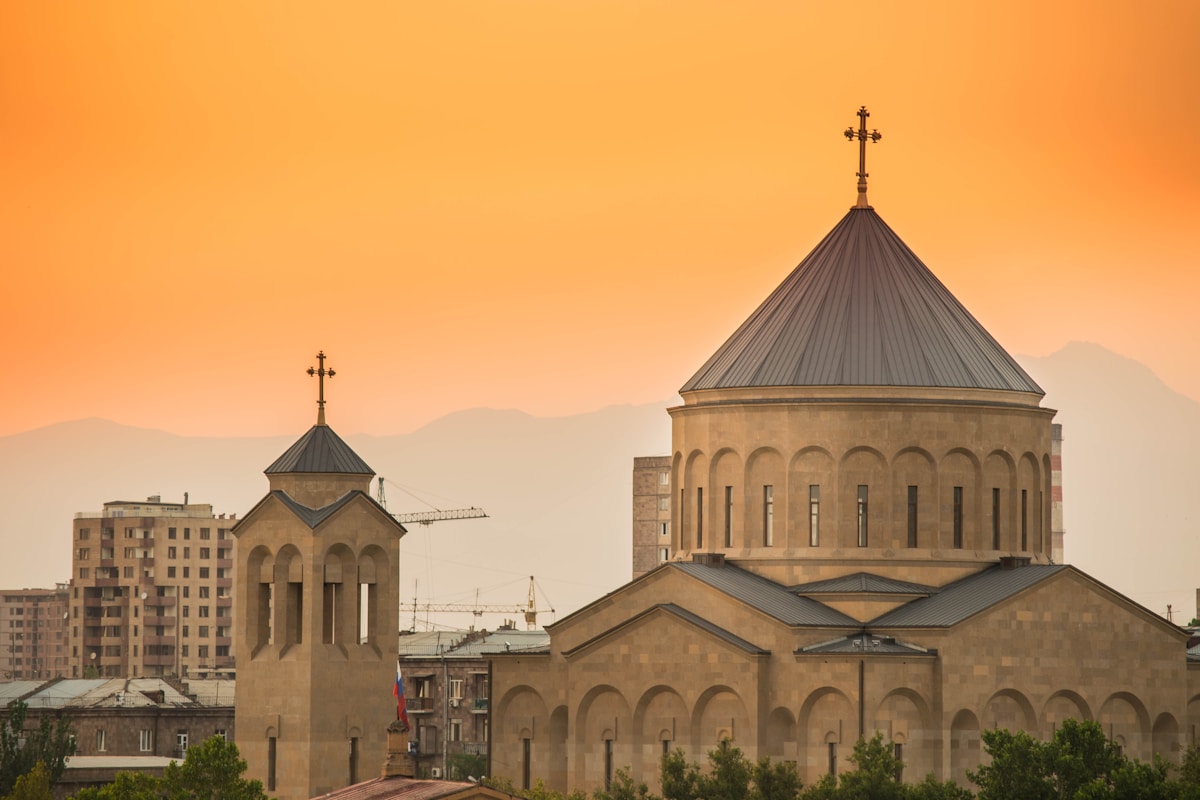
November is the transition month between Armenia’s golden autumn and its deep winter. Early November can still feel like late autumn - cool, clear days with the last of the foliage clinging to the trees. By month’s end, winter has arrived: first snow in the highlands, cold rain in Yerevan, and a noticeable shift to indoor life. Tourism drops to near-winter levels, bringing low prices and a genuinely local atmosphere. See our best time to visit Armenia guide for a full seasonal overview.
Autumn Ends: First Snow on Higher Peaks, Yerevan Cool and Growing Quiet
Yerevan ranges from 5-12°C in early November to 2-7°C by month’s end. Rain becomes more frequent, and grey overcast days replace the clear autumn skies. The first frost is possible by mid-November at city level. Late November can bring the first wet snow to Yerevan, though significant accumulation is uncommon before December.
The highlands shift to winter more decisively. Dilijan’s forests are bare by mid-November, and the town cools to around 0-6°C. Lake Sevan is cold, windy, and inhospitable. The first snow falls on the mountain passes, and roads to higher-elevation sites become uncertain. Southern Armenia around Tatev and Goris sees early snow on the passes above Sisian, though the lower valleys remain accessible.
November Weather by Location
| Location | Altitude | Early Nov Avg | Late Nov Avg | Typical Conditions |
|---|---|---|---|---|
| Yerevan | 900 m | 7–13°C | 1–7°C | Overcast, light rain; first frost possible late month |
| Gyumri | 1,550 m | 3–9°C | −2–4°C | Cold, windy; early snow likely from mid-month |
| Dilijan | 1,200 m | 2–8°C | −3–4°C | Misty and damp; forest canopy bare by mid-month |
| Lake Sevan | 1,900 m | −1–6°C | −5–2°C | Cold and windy; night frost most evenings |
| Tatev / Goris valley | 1,250 m | 3–9°C | −1–5°C | Cool; higher passes above Sisian may have snow |
| Jermuk | 2,080 m | −2–5°C | −8–0°C | Snow expected; ski season can begin late month |
Figures are approximate averages - mountain weather in Armenia is variable. Check conditions locally before travelling to highland sites.
Empty Monasteries, Museum Season in Yerevan, and Early Ski Preparation at Tsaghkadzor
Early November monastery visits: The first two weeks of November still offer reasonable conditions for site visits. Khor Virap, Geghard, Noravank, and Garni are accessible year-round, and early November can bring clear, dramatic skies - autumn storm light on the Ararat plain is striking. The northern monasteries (Haghpat, Sanahin) remain reachable in early November but the window narrows as snow arrives on the Debed Canyon approaches.
Gyumri: Armenia’s second city, rebuilt after the devastating 1988 earthquake, has an architectural character distinct from Yerevan. The old town features black tuff stone buildings, an emerging cafe and gallery scene, and a slower pace. November is quiet but the indoor cultural life - the Aslamazyan Sisters Gallery, local restaurants serving traditional dishes, the old Kumayri quarter - is unaffected by season. The drive from Yerevan takes about two hours on a good highway.
Yerevan’s indoor culture: The capital’s museums are excellent and largely empty in November. The Matenadaran manuscript collection is world-class. The Armenian Genocide Museum on Tsitsernakaberd hill is powerful and well-presented. The National Gallery houses an extensive collection spanning centuries of Armenian art. The Cafesjian Center for the Arts, inside the Cascade complex, rotates contemporary exhibitions.
Yerevan restaurant and wine bar scene: November is when Yerevan’s indoor hospitality reaches peak form. The city has an impressive density of restaurants, wine bars, and craft beer houses, particularly around Saryan Street (the “wine street”), Abovyan Street, and the Cascade area. Saryan Street itself is the hub: Vino Underground (No. 12) focuses on natural and amphora-aged Armenian wines from Vayots Dzor and the Ararat valley, with pours from approximately 1,500 AMD; Wine Republic (Tumanyan Street 3, a short walk from Saryan) carries one of Yerevan’s broadest selections - over 150 Armenian labels - with pours from approximately 2,000 AMD and a full food menu. For a sit-down dinner, Sherep (Mashtots Avenue 1) runs a modern Armenian menu with seasonal produce; mains cost approximately 4,500-8,000 AMD. Tun Tavern (several central locations) is the reliable choice for traditional winter dishes - tolma, khashlama, and spas soup - at approximately 3,000-5,500 AMD per main. Armenian wine has improved dramatically in recent years, and November is a rewarding time to explore it over long dinners. See our Yerevan eating out guide for the full picture.
Early ski season: Tsaghkadzor sometimes opens for skiing in late November, depending on snowfall. Conditions are unreliable this early, but if snow arrives, the resort offers an alternative to city-focused activities. See our Tsakhkadzor ski resort guide for lift pass prices and what to expect.
Last Clear-Road Month Before Winter: Northern Routes Accessible Until Mid-November
Main-route monasteries remain accessible throughout November. Geghard, Khor Virap, Noravank, and Garni are reached by paved, maintained roads that stay clear even in wet weather. The road through Noravank’s gorge can be slippery in rain but remains passable.
Remote and highland monasteries become progressively difficult as November advances. The roads to Haghartsin and Goshavank above Dilijan may be muddy or icy by mid-month. The Debed Canyon road to Haghpat and Sanahin is paved but the final approach roads can be treacherous in early snow. Tatev’s cable car operates year-round (weather permitting), but the road to the cable car station from Halidzor becomes uncertain as snow arrives on the higher passes.
We recommend completing any ambitious monastery itinerary by early November and shifting to the reliably accessible sites from mid-month onwards. Geghard and Khor Virap are open year-round on maintained roads. Our 5-day central Armenia itinerary focuses on exactly these year-round sites and works well as a November framework.
Preserved Harvest: Pickles, Dried Fruit, and Root Vegetable Stews Dominate Tables
November marks the full transition to winter cooking. Preserved foods from the autumn harvest - pickled vegetables (turshi), jams, dried fruits, walnut preserves - feature on every table. Hearty soups return to restaurant menus: spas (yoghurt and wheat), lentil soup, and khashlama (a slow-cooked meat and vegetable stew). Fresh produce narrows to root vegetables, winter squash, and pomegranates, which remain in season through November.
Armenians begin preparations for the New Year period in late November, which is the country’s most elaborate food celebration. Bakeries increase production, and markets stock up on nuts, dried fruits, and ingredients for holiday dishes.
What to Pack: Warm Coat for Yerevan, Mountain Gear for Any Highland Day Trip
November requires layering rather than a single heavy coat, at least in the first half of the month. By late November - particularly outside Yerevan - proper winter clothing is necessary.
Clothing:
- Thermal base layers: useful from mid-November, essential in Gyumri and highland areas
- Mid-layer fleece or wool: temperature swings of 8–10°C within a single day are common in the highlands
- Waterproof outer jacket: Armenian November rain is persistent in the valleys; a light shell is not enough
- Warm hat, gloves, and scarf: necessary at any site above 1,200 m and in Gyumri throughout November
- Warm socks: monastery courtyards and mountain paths are cold underfoot
Footwear: Waterproof hiking boots or trail shoes are strongly recommended. The approach paths to many monasteries - Geghard, Noravank, Haghpat - are cobbled, stepped, or gravelled and become slippery in rain or the first frost. Smooth-soled trainers are a liability.
Practical items:
- Download offline maps (Maps.me or Google Maps offline packs) before leaving Yerevan - mobile signal weakens at several key sites
- A power bank is useful: cold temperatures reduce smartphone battery life noticeably
- An eSIM from Airalo is the easiest way to arrive connected without airport queues; install before boarding
- Armenia uses European sockets (Type C / Type F, 220V)
November specifically: If you’re visiting Tsaghkadzor with any hope of early skiing, pack ski base layers - and expect conditions to be unpredictable. The resort sometimes opens in late November but does not operate on a fixed schedule.
For a full packing breakdown by season, see our Armenia packing list.
Whatever month you visit, browse Armenia tours and activities - operators adjust itineraries seasonally. Arrange travel insurance before departure; Armenia’s mountain terrain and remoteness make medical cover worth having year-round. A prepaid eSIM from Airalo is the easiest way to get data on arrival without searching for a local SIM card.
Low Season Flexibility: Day Tours and Drivers Available Without Advance Booking
Several Yerevan operators maintain departures through November, though the schedule thins compared to summer. Wine-and-monastery day trips - typically combining Noravank Monastery with an Areni winery tasting - run on Saturdays through mid-November and cost approximately 12,000-18,000 AMD per person in a shared group. Private tours to Garni and Geghard can be arranged throughout November for approximately 30,000-40,000 AMD including a driver-guide. For a full guide to this half-day trip, see our Garni and Geghard day tour guide. Browse Armenia tours with November availability to check current departures; book a few days in advance as group tours may not run without minimum numbers. For independent travel, renting a car from Zvartnots Airport gives full flexibility in low season, when marshrutka frequency to some sites drops or stops entirely.
Low Season Savings: 30–50% Off Summer Rates, Sites Virtually Empty
November is firmly low season. Hotel rates in Yerevan drop significantly from the summer peak - expect 30-50% savings compared to July. Flights are less frequent as winter schedules take effect, but prices are low. Major sites are nearly empty of other tourists. The only cost consideration is heating - budget guesthouses outside Yerevan may have inconsistent heating in November, so check reviews if staying outside the capital. For hotel options in the capital, see our where to stay in Yerevan guide. See our Armenia budget travel guide for making the most of low-season pricing.
Book for November: Browse Armenia tours - operators run smaller-group autumn departures through November at low-season rates. Tsakhkadzor’s ski season typically opens in late November; book Tsakhkadzor accommodation early if you plan to combine culture with skiing.
Plan Your Trip
Think of November as two halves. Early November (weeks 1–2) still offers monastery visits - Geghard, Khor Virap, and Noravank on clear days - with almost no other tourists. From mid-month, the focus shifts to Yerevan: Saryan Street wine bars (Vino Underground at No. 12, Wine Republic on Tumanyan), the Matenadaran manuscript collection, and the warming city restaurant scene. A day trip to Gyumri is worth including - two hours from Yerevan, the black-tuff old town is atmospheric and uncrowded in low season. Book flights for good low-season fares. Travel insurance is particularly relevant in November - mountain roads can close without warning. Car hire and a data eSIM are both useful for early-month monastery day trips from the capital.