Armenia surprises most plant-based travellers. Walk into the country expecting a struggle and you will find something more interesting: a cuisine that has been cooking without animal products for centuries, driven not by health trends but by religious obligation. The Armenian Apostolic Church maintains one of the strictest fasting calendars in Christendom - as many as 180 days per year when meat, dairy, and eggs are entirely excluded. The result is a culinary tradition with genuine depth in plant-based cooking, sitting quietly under the dominant khorovats (barbecue) culture.
This guide is written for strictly vegan travellers: no meat, no fish, no dairy, no eggs. It covers trip planning - the best seasons, where in the country is easiest, how to navigate guesthouses, supermarket shopping, and budget. For specific restaurant recommendations and traditional Armenian dishes that are vegetarian or vegan, see our vegetarian restaurant guide for Armenia.
The fasting calendar and what it means for you
The Armenian Orthodox fasting system runs throughout the year in distinct periods: Great Lent (56 days before Easter), the Advent fast before Christmas, and several shorter fasts tied to saints’ days and commemorations. During these periods, observant Armenian Christians eat no meat, no dairy, no eggs, and no fish.
For a visitor, this matters in one specific way: during fasting periods, many traditional Armenian restaurants will have a pasi meny (fasting menu) - a dedicated selection of entirely plant-based dishes prepared separately from the main menu. The key phrase is «Ունե՞ք պաս մենյու» (Unek pas menyu?) - “Do you have a fasting menu?”
Outside fasting periods, pasi dishes still exist and can be ordered, but you may need to ask more specifically. Most Armenian cooks know exactly how to prepare plant-based versions of traditional dishes - they’ve been doing it seasonally for generations.
Yerevan versus the rest of the country
The gap between Yerevan and everywhere else is significant, and worth acknowledging before you plan your route.
Yerevan has a functioning vegan scene. There are dedicated plant-based cafés, restaurants with clear vegan menu sections, a younger food culture influenced by diaspora and international visitors, and the practical infrastructure of a modern city (international supermarkets, health food stores, labelled ingredients). You can eat well as a vegan in Yerevan without particular difficulty.
Gyumri, Armenia’s second city, has a smaller café scene that has grown considerably since 2022. Options are limited but present - you won’t go hungry, though you’ll be working with fewer choices.
Dilijan and the northern resort corridor caters to Armenian domestic tourists and some international visitors. Guesthouses here typically offer traditional plant-based dishes as part of their cooking - herb-stuffed flatbreads, bean stews, roasted vegetables - particularly if you request them in advance. Meals here are simple and seasonal rather than restaurant-quality, but the produce is exceptional.
Rural areas and villages require flexibility. The basics are always available: fresh lavash from the nearest bakery, tomatoes and cucumbers from market stalls, fresh herbs, pickled vegetables, and usually a bean or lentil dish if the household is cooking traditionally. What you won’t find is variety or restaurant-style preparation. If you’re planning a village homestay or rural hiking route, bring some calorie-dense backup (nut butter, dried fruit, dark chocolate) and communicate dietary needs clearly when booking.
The best season for vegan food in Armenia
August through October is the peak window for plant-based eating in Armenia. The harvest drives the local food supply more directly than in most Western countries - markets are stacked with:
- Tomatoes of every variety (the Armenian tomato is genuinely exceptional)
- Aubergines for roasting and stuffing
- Red and green peppers
- Pomegranates (Armenia’s emblematic fruit, in season from September)
- Fresh figs and quince
- Late stone fruit - plums, peaches, apricots
- Wild herbs and greens from the mountains
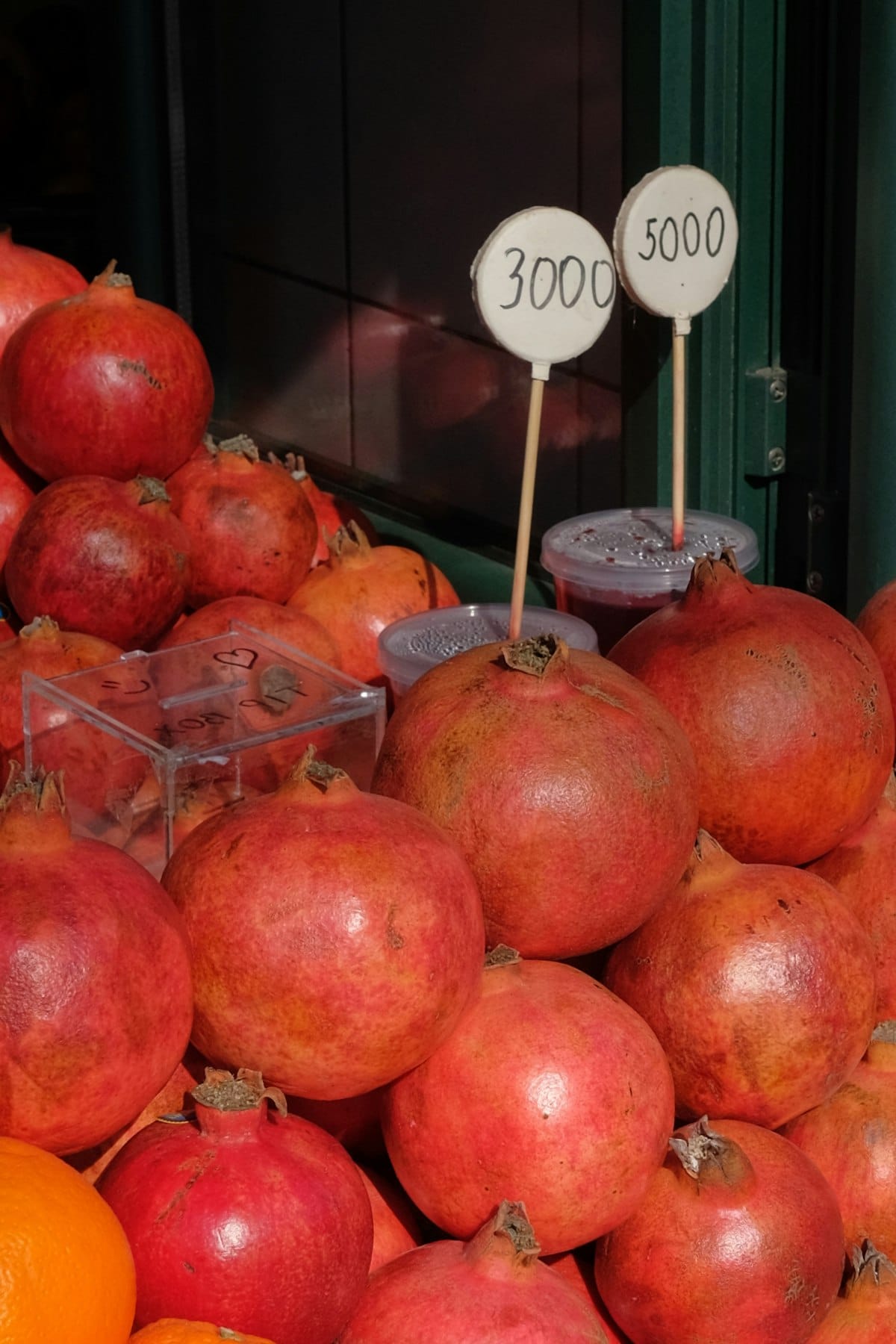
The Vernissage market in central Yerevan and the GUM covered market on Mashtots Avenue are the places to see this abundance. Both run on weekends; GUM has daily fresh produce stalls. Coming in summer also means street vendors selling fresh pomegranate juice pressed to order - a pomegranate costs between AMD 3,000–5,000 depending on size and seller.
Spring (April and May) brings excellent greens - sorrel, spinach, nettles, wild herbs - which appear in jingalov hats (herb-stuffed flatbread) and in the soup tradition. The variety of produce is lower than autumn but prices are good.
Winter is genuinely harder. The local produce market contracts, and traditional cooking shifts toward preserved and pickled foods, heavy stews, and meat-centred dishes. Yerevan’s permanent restaurant scene and supermarkets maintain supply year-round, but the seasonal diversity disappears.
Supermarket shopping and self-catering
Self-catering is easy in Yerevan and functional elsewhere. The major chains - SAS Supermarket (multiple branches across Yerevan, including Northern Avenue and Mashtots Avenue) and City Supermarket - carry most of what a plant-based traveller needs:
- Tahini and sesame paste
- Canned and dried chickpeas, lentils, and kidney beans
- Oat milk and soy milk (refrigerated section)
- Nut butters
- Dark chocolate (check labels - Armenian chocolate is good)
- A reliable fresh produce section year-round
- Frozen vegetables
Yeremyan Products (a local deli chain) sells excellent pre-made salads, pickles, and grain dishes that are often plant-based - worth checking labels, but the staff can usually tell you what’s in each dish.
Outside Yerevan, smaller supermarkets will have dried and canned legumes, bread, and fresh produce, but the variety of plant milks, nut butters, and international products drops sharply. Plan accordingly if you’re spending significant time outside the capital.
Useful language for plant-based eating
Armenian staff in tourist-oriented Yerevan restaurants often speak some English, but having a few phrases ready helps considerably, especially outside the capital.
| English | Armenian (transliterated) |
|---|---|
| I am vegan | Yes bnutagin artatrank chem utoom |
| No meat | Anasnatsk chka |
| No fish | Dzuk chka |
| No eggs | Dzu chka |
| No dairy / milk | Kath chka |
| Without yoghurt | Arants matsun |
| Do you have a fasting menu? | Unek pas menyu? |
| Is this dish vegan? | Ays utelik vegan e? |
One practical warning: Armenian cooking uses matsun (yoghurt) extensively and often invisibly - it arrives automatically as a condiment with manti dumplings, stuffed vegetables (dolma), and some soups without appearing on the dish description. If you’re strictly vegan, specify “arants matsun” (without yoghurt) when ordering.
Guesthouse and accommodation considerations
If you’re staying in family-run guesthouses - common in the Debed Canyon, Tatev corridor, and villages around Lake Sevan - communicate your dietary needs when booking rather than on arrival. Most hosts can prepare plant-based meals with advance notice; Armenian home cooking has the recipes, the question is whether they know to use them.
Good phrases for booking communication: “I eat only plant-based food - no meat, no fish, no dairy, no eggs. Can you accommodate this?” In Armenian contexts, referencing the pasi tradition is effective: “I eat as during pasi - no animal products.” Most Armenian hosts will immediately understand.
Budget
Eating vegan in Armenia is cost-effective when you lean into traditional cooking. A bowl of lobio (bean stew) with lavash and a herb salad at a traditional restaurant runs AMD 1,500–2,500 (approximately USD 3.50–6). Jingalov hats from a market stall costs AMD 600–900. Restaurant meals in mid-range Yerevan cafés come to AMD 3,000–6,000 per person.
Supermarket self-catering from local produce is the cheapest option - Armenian fruit and vegetables are inexpensive by any international standard, especially in season.
See our Armenia budget travel guide for full cost breakdowns across accommodation, transport, and food.
Further reading
- Vegetarian restaurants in Armenia - specific restaurant picks, traditional plant-based dishes explained in full, and ordering language
- Armenian food guide - the full picture of what Armenian cuisine looks like and how to navigate it
- Best time to visit Armenia - full seasonal breakdown for trip planning
- Food tours in Yerevan - guided food tours, some of which offer vegan-friendly routes through Yerevan’s markets and restaurants
- eSIM for Armenia - a data SIM active before you land, useful for navigating markets, translating menus, and locating plant-based restaurants
- Travel insurance for Armenia - practical cover to sort before departure
Plan Your Trip
✈️ Book your flights to Armenia 🛡️ Get travel insurance 📱 Stay connected with an eSIM 🚗 Rent a car