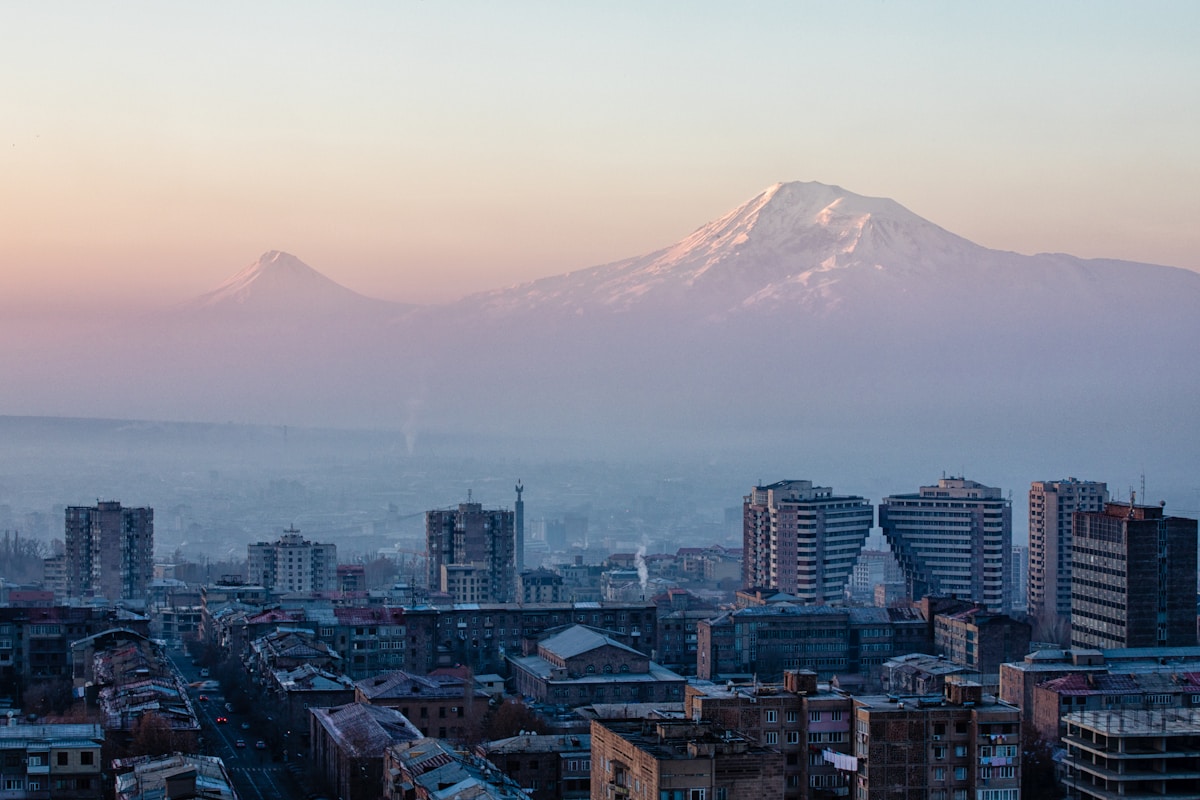
Armenia’s climate is more extreme than many visitors expect. Yerevan summers hit 38°C+; winters drop well below freezing. The highland monasteries add altitude - Haghpat and Sanahin sit at 900m, Tatev at 1,400m. Pack for the season, but always include one warm layer regardless of when you travel. See our best time to visit Armenia guide to plan your trip around seasonal conditions.
Clothing
Summer (June–August)
- Lightweight shirts and t-shirts for Yerevan city days
- Light trousers and a mid-layer for high-altitude monastery visits (even in summer, highland mornings are cool)
- A scarf or lightweight shawl for women - required for church entry year-round
- Comfortable walking shoes with grip for monastery paths
- Sunglasses and a sun hat - Yerevan UV is intense at altitude
Spring and Autumn (March–May, September–October)
- Light to medium-weight layers - temperatures swing significantly between morning and afternoon
- A rain jacket or compact umbrella (April is the wettest month)
- Versatile trousers - hiking and city-appropriate
- One warmer layer for evenings in Yerevan and daytime in the highlands
Winter (November–February)
- Thermal base layers
- Mid-layer fleece or down jacket
- Outer waterproof or windproof shell
- Warm hat, gloves, and scarf (not just the church scarf - a proper one)
- Waterproof boots with grip - Yerevan pavements are icy and uncleared in winter
- Warm socks, ideally wool
Monastery and Church Visits
All active Armenian Apostolic churches require:
- Women: covered head (a scarf, not a hat), covered shoulders, skirt or trousers below the knee
- Men: hats removed on entry, no shorts
Carry a lightweight scarf in your day bag. Many popular monasteries (Khor Virap, Geghard) have vendors selling scarves outside the gates, but don’t rely on it.
Practical Gear
- Power adapter: Armenia uses European two-pin plugs (Type C/F). No adapter needed if you’re travelling from Europe. UK and US visitors need one.
- Currency: ATMs in Yerevan are reliable. Outside Yerevan and at borders, carry Armenian dram in cash. Cards are not always accepted in villages or at small roadside guesthouses.
- Water: Tap water in Yerevan is drinkable and good quality. Outside the capital, carry a reusable bottle and refill from springs or guesthouses. Armenia has abundant fresh spring water.
- Phone SIM: Buy a Beeline or VivaCell-MTS SIM at Zvartnots Airport on arrival. Coverage is good in Yerevan and on main roads; patchy in remote highland areas. See our SIM card guide for Armenia for operator comparisons and data plans.
- Medications: Carry any prescription medicines with you - supply outside Yerevan pharmacies is limited. Basic over-the-counter medications are available in Yerevan city pharmacies.
For Hikers and Outdoor Travellers
Armenia’s best hiking - Dilijan, Lake Sevan’s surrounding trails, and Khosrov Forest - requires proper footwear and layering:
- Sturdy hiking boots with ankle support (not trail runners) for rocky monastery paths
- Trekking poles if you’re tackling Aragats or longer routes
- Sunscreen (UV is strong above 1,500m even on cloudy days)
- A basic first-aid kit - remote trails have no facilities
- Offline maps downloaded to your phone - signal is absent in highland forests
What You Don’t Need
- Malaria prophylaxis - Armenia has no malaria risk
- A guidebook in Armenian - English signage at major sites is good; Google Translate works well for menus and smaller signs
- Formal wear - Yerevan restaurants are smart-casual at most; even the better restaurants don’t enforce dress codes
Sort your travel insurance before you pack - it should cover medical evacuation given Armenia’s remote monastery circuit. A local eSIM from Airalo is worth activating before departure - it removes the need to find a physical SIM on arrival. Compare flight prices to Armenia via Aviasales to lock in the best fare before finalising your departure date.
Currency and Payments
Armenian dram (AMD) is the only accepted currency. Do not rely on foreign currency, Georgian lari, or Turkish lira being accepted - they are not outside of a few Yerevan currency exchanges. ATMs dispense dram and are widely available on the main streets of Yerevan (Northern Avenue, Mashtots Avenue). Outside of Yerevan, carry enough dram for the day. See our currency and money guide for ATM locations, exchange rates, and card acceptance.
Plan Your Trip
✈️ Book your flights to Armenia 🛡️ Get travel insurance 📱 Stay connected with an eSIM 🚗 Rent a car