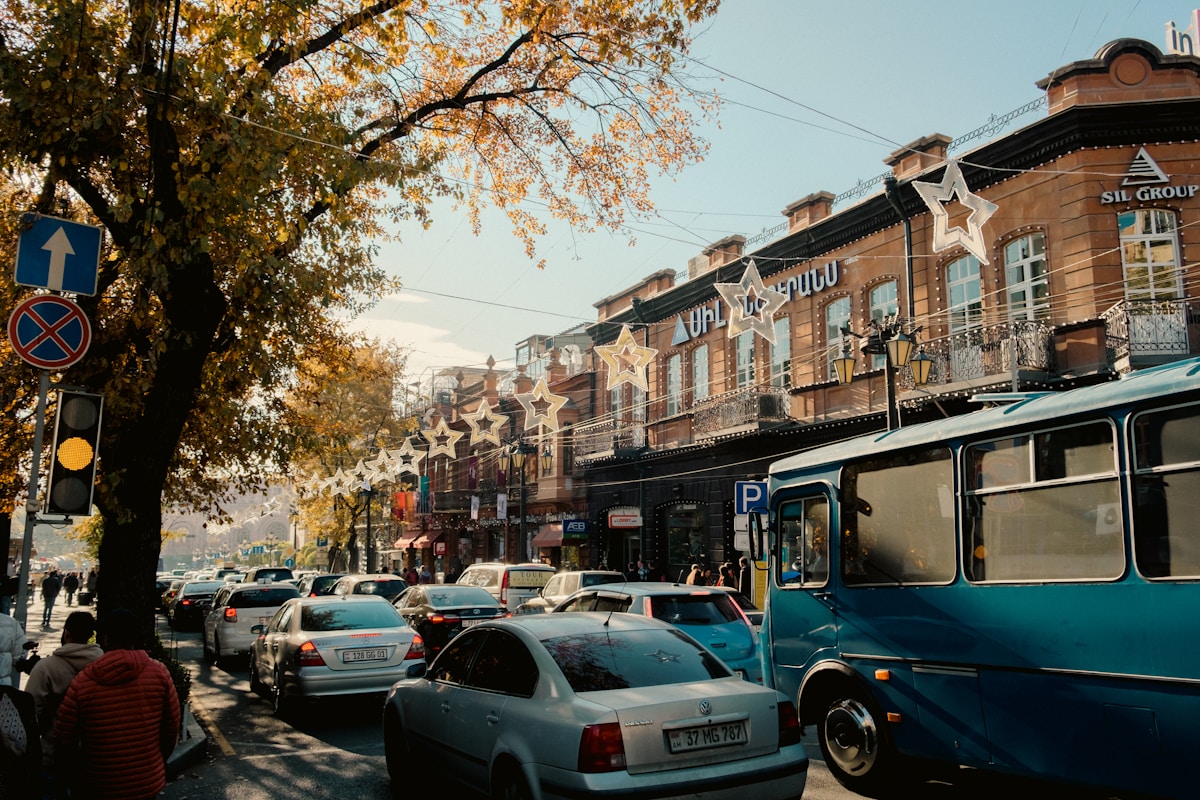
Armenia is generally a safe destination for travellers. The country has low levels of violent crime against tourists, a welcoming attitude toward visitors, and a strong tradition of hospitality - Armenians consider guests sacred, and you will regularly be invited for coffee, fruit, or homemade lavash by complete strangers. There are some specific factors worth understanding before you go.
Crime in Armenia
Violent crime against tourists is rare. Yerevan’s city centre - including Republic Square, the Cascade area, and the Northern Avenue district - is safe to walk at night. Pickpocketing and petty theft exist, as in any city, but are not at a level that should deter visitors. We have walked Yerevan at midnight many times without concern.
Car break-ins can occur in Yerevan, particularly in parking areas near popular tourist spots like Vernissage market or the Opera House. Don’t leave valuables visible in parked cars. If hiring a car in Armenia (from approximately AMD 15,000–25,000/day as of 2026 through local agencies like Rent a Car Armenia or Naniko), use guarded parking where available - most hotels offer free parking.
Scams are uncommon. The main risk is overcharging by unlicensed taxi drivers at Zvartnots Airport - use the GG Taxi or Yandex Go apps instead (airport to central Yerevan costs approximately AMD 2,500–4,000 by app, versus AMD 8,000–10,000 quoted by informal drivers).
The Regional Situation
Armenia has a complicated geopolitical situation that visitors should understand. For general first-time guidance, see our first time in Armenia guide.
Azerbaijan border: The 2020 and 2023 conflicts resulted in Azerbaijan retaking control of Nagorno-Karabakh. The border between Armenia and Azerbaijan remains tense and closed to tourists. Most tourist destinations in Armenia - Yerevan, Garni, Geghard, Dilijan, Lake Sevan, Tatev - are well away from these border areas. The southern road to Tatev via the Wings of Tatev cable car (the world’s longest reversible aerial tramway at 5.7 km) is fully safe and operates normally.
Turkey border: The Armenia–Turkey border has been closed since 1993 due to the dispute over Armenian Genocide recognition. Entry from Turkey is not possible by land. Flying from Istanbul to Yerevan is possible via connecting flights through Tbilisi or direct seasonal charters - check current routing options.
Georgia: The Armenia–Georgia border is fully open and the crossing at Sadakhlo/Bagratashen operates normally. Many visitors travel overland between Yerevan and Tbilisi (roughly 5–6 hours by marshrutka, approximately AMD 5,000–6,000, or approximately 4 hours by shared taxi, approximately AMD 8,000–10,000).
Iran: The Armenia–Iran border is open at Meghri/Norduz in the far south. Some adventurous travellers include this crossing in overland routes, but check your government’s current Iran travel advisories. The road from Yerevan to Meghri (approximately 370 km) takes 6–7 hours through dramatic mountain passes.
Driving Safety
Armenian driving standards differ from Western Europe. Mountain roads - particularly to Tatev, through the Selim Pass to Lake Sevan, and the northern route to Alaverdi - are winding, sometimes unpaved, and occasionally lack guardrails. Our getting around Armenia guide covers road conditions, marshrutka routes, and car hire in detail. Livestock on roads is common outside cities. If you are not comfortable with mountain driving, hiring a driver for the day (approximately AMD 20,000–35,000 including fuel) is a practical and affordable alternative.
Winter driving (November–March) requires particular caution. The Sevan Pass and roads to Dilijan can be icy. Snow chains are advisable. Some mountain roads close entirely in heavy snow - check conditions before setting out.
Emergency Contacts
| Service | Number |
|---|---|
| General emergency | 112 |
| Police | 102 |
| Ambulance | 103 |
| Fire | 101 |
Dial 112 first if you are unsure which service you need. Our Armenia emergency numbers guide covers each line and what to say when you call.
Hospitals: Yerevan has several hospitals that handle tourist emergencies. Nairi Medical Centre (Paronyan Street 21) and Armenia Medical Centre (Baghramyan Avenue 10) both have English-speaking staff and accept international insurance. A basic consultation costs approximately AMD 10,000–20,000 as of 2026. Pharmacies (marked with a green cross) are widespread - many medications available only by prescription elsewhere are sold over the counter.
Embassy contacts: The US Embassy is on American Avenue 1 in Yerevan (+374 10 464 700). The UK does not have an embassy in Yerevan - British citizens should contact the British Embassy in Tbilisi, Georgia (+995 32 227 4747).
Practical Safety Tips
- Keep a copy of your passport separate from the original - a photo on your phone is sufficient for daily use
- Use GG Taxi or Yandex Go (Armenian ride-hailing apps) rather than unmarked taxis at the airport - both show the fare upfront
- Carry some cash in Armenian dram - many smaller businesses, guesthouses, and marshrutka drivers don’t accept cards. ATMs are widely available in Yerevan (Bank of Georgia, Ameriabank, and Ardshinbank ATMs accept international cards) but scarce in rural areas
- Tap water in Yerevan is safe to drink - Armenia has abundant mountain spring water, and public drinking fountains (pulpulaks) are found throughout the city
- Travel insurance is strongly recommended. Armenia is not in the EU, so European Health Insurance Cards do not apply. See our recommended travel insurance for Armenia
If you are planning to visit alone, our guide to solo travel in Armenia covers safety in more depth alongside practical advice on getting around independently and the best bases to use. If you’re travelling with children, our Armenia family travel guide addresses family-specific safety considerations and what to expect with kids at the main sites.
LGBTQ+ Travel
Armenia is a socially conservative country and public expressions of same-sex relationships may attract unwanted attention. Same-sex partnerships are not legally recognised. Discretion is advised, particularly outside central Yerevan. Yerevan’s cafe and bar scene around Saryan Street is generally the most tolerant social environment.
Current Travel Advice
Always check your government’s travel advisory for Armenia before visiting. The UK Foreign Office (gov.uk/foreign-travel-advice/armenia) and US State Department (travel.state.gov) maintain current assessments. As of 2026, most Western governments rate Armenia at their standard advisory level with specific cautions for border regions only - the main tourist circuit (Yerevan, Garni, Geghard, Sevan, Dilijan, Tatev) is considered safe.
Plan Your Trip
✈️ Book your flights to Armenia 🛡️ Get travel insurance 📱 Stay connected with an eSIM 🚗 Rent a car