February is the last full month of deep winter in Armenia. Conditions are similar to January - cold, often snowy, with limited highland access - but by late February, the first hints of change appear. Days grow noticeably longer, and on clear afternoons Yerevan can feel almost mild in direct sunlight. Tourism remains minimal, making this one of the cheapest and quietest months to visit. For a seasonal overview, see our best time to visit Armenia guide.
Still Deep Winter: Cold Continuing, Snow Reliable Above 1,500 Metres
Yerevan temperatures range from −3°C to 6°C, with overnight lows often around −8°C. Snowfall remains possible throughout the month, though accumulation tends to be lighter than January. By late February, daytime temperatures occasionally reach 8-10°C on sunny days - a noticeable shift from the deep freeze of the preceding weeks.
The highlands remain firmly in winter. Dilijan’s forests are snow-covered and the Debed Canyon road to Haghpat and Sanahin can be icy. Lake Sevan is at its coldest - partially frozen around the shoreline, with bitter winds making the peninsula monastery a brief visit at best. Tatev and Goris in southern Armenia continue to see heavy snow, and the mountain passes above 2,000m are unreliable for driving.
Trndez: The Festival of Fire
The most distinctive reason to visit Armenia in February is Trndez, celebrated on 13 February. This pre-Christian festival - adopted and reinterpreted by the Armenian Church as the Feast of the Presentation of Jesus at the Temple - centres on bonfires. In the evening, fires are lit in churchyards and public spaces. Young couples traditionally jump over the flames together, believed to bring fertility and good fortune.
In Yerevan, the largest bonfires appear at Etchmiadzin and in neighbourhood churchyards across the city. The atmosphere is communal and distinctly Armenian - nothing like a tourist event. Trndez is a genuine window into Armenian folk tradition that few visitors witness.
Skiing Still Running, Yerevan Cafes Full, and Trndez Bonfires in Village Squares
Tsaghkadzor skiing: February typically has the most reliable snow cover of the season. The resort is busiest on weekends with Armenian families, but weekdays are quiet. A day trip from Yerevan is straightforward - the drive takes about an hour on a well-maintained road. See our Tsakhkadzor ski resort guide for details on lift passes and equipment rental.
Yerevan’s museum circuit: The Matenadaran (Institute of Ancient Manuscripts) holds one of the world’s great collections of medieval manuscripts. The Armenian Genocide Museum and Memorial on Tsitsernakaberd hill is an essential and sobering visit - see our things to do in Yerevan guide for hours and what to expect at the main city attractions. The National Gallery, housed in the main Republic Square building, covers Armenian art from medieval illuminated manuscripts to Soviet-era painting. In February, you will likely have these spaces almost to yourself.
Cafe culture: Yerevan’s cafe and restaurant scene is one of the best in the Caucasus, and winter is when it operates most authentically - packed with locals rather than tourists. The streets around Abovyan and Tumanyan are lined with coffee houses, wine bars, and restaurants serving traditional Armenian food. A February evening spent working through a spread of meze, khorovats, and Armenian wine is one of the genuine pleasures of a winter visit.
Same Winter Caution as January: Geghard and Khor Virap Reachable, Tatev Road Risky
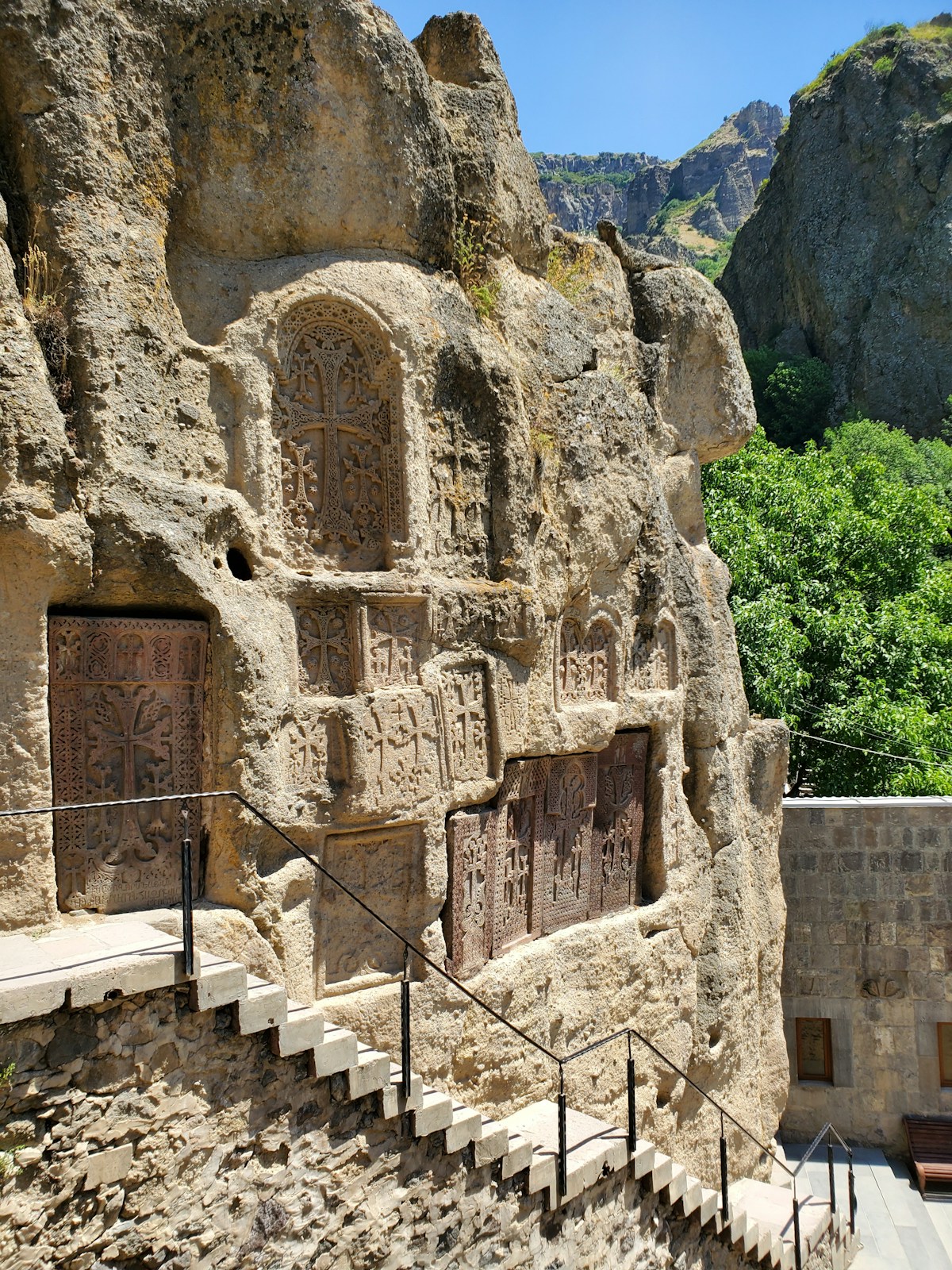
The same winter constraints as January apply. Geghard Monastery and Khor Virap are reliably accessible - both are reached by maintained roads from Yerevan. Noravank in the Amaghu gorge is usually reachable but the narrow gorge road can accumulate ice. In clear conditions, Khor Virap offers some of the year’s most dramatic Ararat views: the snow-covered mountain against a cold blue sky is striking.
For northern and southern monasteries, we recommend hiring a local driver who knows current conditions rather than attempting unfamiliar mountain roads in a rental car. The Debed Canyon road to Haghpat and Sanahin is paved but can be slippery, and the last stretch to each monastery involves steep, narrow roads. For a focused circuit of the reliably accessible sites - Geghard, Khor Virap, Garni - see our 5-day central Armenia itinerary as a starting framework.
Churchkhela, Dried Fruit, and Yerevan Cafes at Their Most Atmospheric
Winter comfort food continues from January. Khash is still in season (traditionally served only from late autumn through February). Armenian soups - spas (yoghurt and wheat soup), lentil soup, and borscht adapted to Armenian tastes - are staples. Lavash bread, baked in underground tonir ovens, is fresh daily and best eaten warm from bakeries in the GUM market or neighbourhood shops.
Dried fruits and preserves from the autumn harvest - apricot, walnut, quince jam - are winter table constants. February is the tail end of the preserves season before spring produce begins to appear.
Whatever month you visit, browse Armenia tours and activities - operators adjust itineraries seasonally. Arrange travel insurance before departure; Armenia’s mountain terrain and remoteness make medical cover worth having year-round. A prepaid eSIM from Airalo is the easiest way to get data on arrival without searching for a local SIM card.
Quietest Tourism Month of the Year: Off-Peak Prices Hold Through February
February matches January as Armenia’s cheapest month. Hotel rates in Yerevan remain at their lowest, flights are inexpensive, and there is no competition for restaurant tables or museum tickets. The only exception is the weekend around Trndez (13 February), when some Armenians travel domestically - though this has minimal impact on tourist-facing prices. For hotel recommendations in Yerevan, see our where to stay in Yerevan guide.
Zvartnots Airport operates year-round. Budget carriers including Wizz Air and Ryanair serve Yerevan with increasing frequency, though winter schedules may have fewer weekly flights than summer.
Book for February: Browse Armenia tours - winter departures offer the smallest groups and lowest prices of the year. Tsakhkadzor’s ski season runs through February; book a Tsakhkadzor hotel for a combined ski-and-monastery trip.
Plan Your Trip
The Trndez fire festival on 13 February is the standout reason to visit Armenia this month - bonfires lit in church courtyards across Yerevan, with the main ceremony at Etchmiadzin. Book flights for a mid-February arrival to land the day before and give yourself a full day in the city. February is the last reliably snowy month for Tsaghkadzor skiing - conditions are typically at their best now. If you plan to ski or attempt the northern monastery roads, renting a car with snow chains available is advisable. Travel insurance is essential in winter Armenia; mountain driving carries real risk. Get a data eSIM before you land - useful for navigating Yerevan at night when Trndez bonfires scatter across different neighbourhoods.